
Kawruh
Bagian Peralatan Uji Bukti Serat Optik: Komponen Rewind Mesin Kustom
Okt
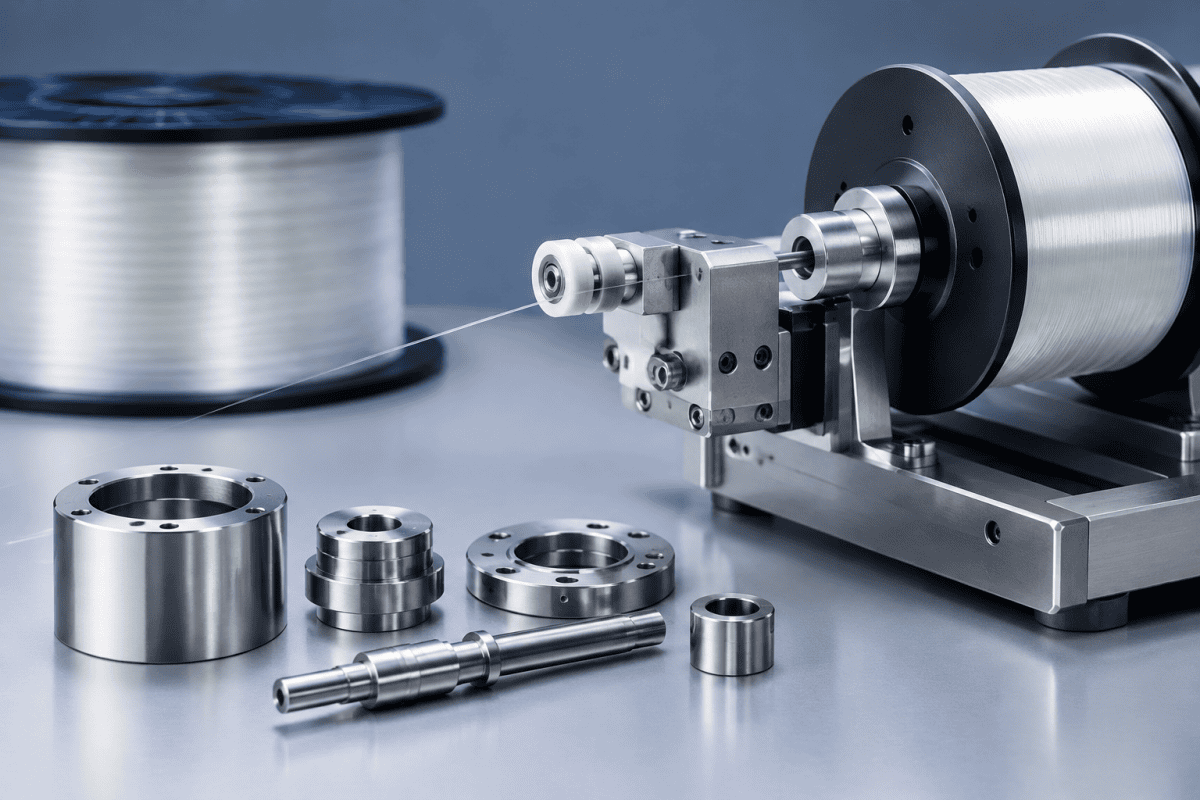
Optical Fiber Proof Test Equipment Parts dumunung ing titik ing ngendi fiber sing wis rampung divalidasi lan dikemas maneh, mula masalah mekanik ing kana mengaruhi kabeh jadwal produksi. Fiber ditarik kanthi tension sing dikontrol liwat capstans, sheaves, guide rollers, lan dancer assemblies, lan siji komponen sing aus utawa misaligned bisa nyebabake slips, kerusakan permukaan, utawa alarm proof-test palsu. Mula, sumber optical fiber proof test equipment parts sing dipercaya ora mung babagan golek pengganti sing paling murah, nanging luwih akeh babagan cocog saben komponen karo load path, wear mode, lan syarat alignment.
Kepiye Proof-Test lan Rewind Lines Beda karo Draw utawa Deposition Equipment
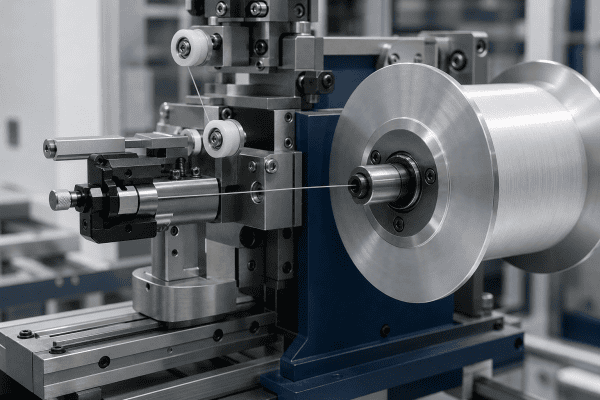
Proof-test equipment ngetrapake beban tensile sing dikontrol kanggo verifikasi yen fiber memenuhi spesifikasi kekuatan minimal, dene rewind machines mindhah fiber saka siji spool menyang spool liyane kanthi tension lan kacepetan sing dikontrol. Loro-lorone proses kasebut mekanik tinimbang termal, lan ora ana sing nggunakake burner suhu dhuwur utawa deposition torch sing ditemokake ing OVD, VAD, utawa MCVD preform manufacturing. Bedane penting amarga komponen sing apik ing lingkungan deposition panas ora otomatis dadi pilihan sing bener kanggo sistem tension lan guide suhu kamar.
Dibandhingake karo OVD utawa VAD equipment, proof-test lan rewind hardware cenderung didominasi dening:
- Rotating contact parts — capstans, sheaves, guide rollers, lan pulley assemblies
- Tension-control elements — dancer arms, load-cell mounting fixtures, lan brake utawa clutch interface parts
- Fibre-handling surfaces — guide grooves, ceramic utawa coated contact faces, lan entry/exit bushings
- Spool lan bobbin interfaces — chucks, adapters, clamping collars, lan take-up mandrels
- Cutter lan clamp mechanism parts sing digunakake nalika bobbin changeover
Amarga parts kasebut langsung sesambungan karo fiber sing gundhul utawa dilapisi, surface finish, concentricity, lan groove geometry asring luwih penting tinimbang kekuatan mentah. Roller sing mlaku bener nanging permukaan kontak sing kasar isih bisa ngrusak fiber, lan roller sing mulus banget sing dipasang off-axis bisa nyebabake variasi tension sing katon minangka noise ing data proof-test.
Tim maintenance sing uga ndhukung preform manufacturing kudu njaga loro donya kasebut kanthi kapisah. Mekanisme aus, syarat kebersihan, lan malah fasteners beda banget, mula nggunakake parts kanthi silang antarane optical fiber proof test equipment parts lan deposition hardware biasane nggawe luwih akeh masalah tinimbang ngrampungake.
Titik Gagal Umum lan Cara Nyelidiki
Nalika proof-test utawa rewind line wiwit ngasilake asil sing ora konsisten, panyebabe asring mekanik tinimbang listrik. Bagean ing ngisor iki misahake panyebab sing mungkin saka diagnosis sing dikonfirmasi, amarga ngganti part sadurunge ngonfirmasi akar panyebab mung bisa mindhah masalah menyang komponen sabanjure.
Ketidakstabilan tension lan maca proof-test palsu
Panyebab sing bisa: worn guide roller bearings, damaged dancer pivot, contamination ing permukaan capstan, utawa load-cell mount sing wis pindah.
Cara verifikasi: Isolasi zona tension kanthi ngliwati fiber sing wis dikenal apik liwat line lan mbandhingake tension sing diukur ing saben sensor. Yen tension beda-beda karo rotasi roller nanging ora karo grade fiber, roller minangka sumber sing mungkin. Priksa bearings kanggo roughness utawa axial play, lan priksa manawa roller grooves bebas saka embedded debris. Maca load-cell sing drift tanpa owah-owahan mekanik sing cocog kudu dipriksa marang mount lan cable routing sadurunge cell kasebut diganti.
Amarga zona iki nindakake sebagian besar karya ing mesin, kesalahan alignment cilik ing kene minangka panyebab paling umum ing mburi optical fiber proof test equipment parts sing ditolak sajrone overhaul sing direncanakake. Maca dial indicator sing dijupuk ing roller face asring bakal mbukak masalah sing katon listrik ing HMI.
Kerusakan permukaan fiber utawa tandha coating
Panyebab sing bisa: guide surface sing scored utawa chipped, entry bushing sing misaligned, utawa roller groove sing ora cocog maneh karo diameter fiber.
Cara verifikasi: Mlakuake fiber sing cendhak liwat jalur sing dicurigai lan priksa kanthi magnification ing saben titik kontak. Kerusakan sing katon ing posisi sing konsisten ing sadawane dawa fiber nuduhake roller utawa bushing tartamtu. Konfirmasi profil groove marang gambar tinimbang nganggep part sing katon padha bisa diganti.
Spool utawa bobbin slippage nalika rewind
Panyebab sing bisa: worn chuck jaws, clamping collar sing deformed, utawa adapter sing ora cocog maneh karo bobbin hub.
Cara verifikasi: Tandhani bobbin lan chuck, mlakuake siklus rewind sing cendhak, lan priksa gerakan relatif. Yen slippage dikonfirmasi, ukur dimensi chuck lan hub marang gambar asli sadurunge pesen pengganti. Ing akeh kasus, perbaikane yaiku adapter utawa collar anyar tinimbang full chuck assembly.
Kesalahan cutter utawa clamp nalika changeover
Panyebab sing bisa: dulled blade, worn pivot, utawa clamp sing ora nahan gaya sing konsisten maneh.
Cara verifikasi: Priksa pinggiran blade lan pivot kanggo aus, lan priksa clamp force marang dokumentasi peralatan. Cutter lan clamp assemblies asring dianggep minangka consumables, mula kudu dikonfirmasi apa kabeh assembly utawa mung blade sing kudu diganti.
Kanggo line sing uga nangani take-up lan bobbin changeover, komponen kayata komponen perakitan pemotong penggulung serat optik asring diganti minangka set sing cocog amarga clamp lan cutter aus bebarengan.
Pilihan Material lan Desain kanggo Rewind Mechanical Parts
Komponen mesin rewind fiber arang gagal amarga kurang kekuatan. Padha gagal amarga pilihan material ora cocog karo kondisi kontak. Nalika ngevaluasi penggantian utawa nemtokake bagean anyar, nimbang:
- Material kontak: Permukaan sing ndemek fiber kudu dipilih kanggo kelancaran, tahan aus, lan kompatibilitas karo lapisan. Logam sing bisa ngeculake partikel utawa ngembangake pinggiran landhep minangka pilihan sing ora apik kanggo kontak fiber langsung.
- Lapisan utawa perawatan permukaan: Lapisan bisa nambah umur aus, nanging kudu ditrapake kanthi konsisten. Lapisan sing ora rata bisa nggawe titik dhuwur sing ngrusak fiber.
- Pilihan bantalan: Jinis bantalan mengaruhi runout, seret, lan interval layanan. Jalur rewind kacepetan dhuwur bisa uga mbutuhake bantalan sing beda karo stasiun proof-test kacepetan rendah.
- Fitur alignment: Diameter pilot, locating shoulder, lan keyway yaiku sing njaga roller utawa capstan mlaku kanthi bener. Fitur kasebut kudu dipriksa lan ditemtokake ing gambar, ora dianggep.
- Balance lan concentricity: For rotating parts, imbalance shows up as vibration, which in turn shows up as tension noise. Concentricity tolerances should reflect the operating speed of the line.
- Cleaning and changeover: Parts that are easy to remove and clean reduce the risk of contamination being pushed into a fiber path.
Aluminum is frequently used for structural brackets and non-contact housings, but it is generally a poor choice for direct fiber contact surfaces unless a suitable surface treatment is applied. Where aluminum components are relevant to a rewind or handling assembly, they should be evaluated on function and surface condition rather than assumed suitable. The same principle applies across aluminum VAD burner hardware and other precision components: material suitability depends on the specific contact, load, and environment.
Contamination control is another design variable that is easy to overlook. A part that traps fiber dust or coating debris will eventually transfer that material back onto the fiber path, creating defects that appear intermittent and are difficult to trace. Whenever possible, specify radii, relief grooves, and drainage features that let debris fall away instead of collecting near a contact surface. That approach is standard practice in precision fiber handling, and it is the same logic behind our guide to poros rol panuntun serat optik and their assembly checks.
Ngimbangi biaya, lead time, lan umur pakai
Purchasing teams often face pressure to reduce the unit cost of optical fiber proof test equipment parts, but the cheapest option rarely wins over a full maintenance cycle. A low-cost roller that wears twice as fast may require two replacements and two line stoppages in the time a properly specified part lasts. When comparing quotes, it helps to evaluate cost per operating hour rather than cost per piece, and to ask suppliers how the material and tolerances were selected for the application.
Lead time matters just as much as price on a line that cannot run without a specific component. Keeping one or two wear-critical spares on the shelf is usually cheaper than an expedited custom run, and it gives maintenance time to inspect the failed part properly instead of reinstalling a marginal one.
Apa sing Kudu Dilebokake ing Panjaluk Sumber Pengganti
Rewind and proof-test parts are often non-standard, so a clear sourcing request saves time on both sides. A useful request typically includes:
- Gambar utawa sketsa with critical dimensions, tolerances, and surface finish requirements
- Material and surface treatment requirements, or a description of the operating conditions if no material is specified
- Quantity and application — prototype, spare, or production replacement
- Interface details — shaft diameter, mounting pattern, gas or fluid connections if applicable, and any keyway or locating features
- Operating conditions — speed, tension range, fiber type, and ambient environment
- Reference part number or photo of the existing component, where available
When an original drawing is not available, reverse engineering from a physical sample is often feasible. This usually involves measuring critical dimensions, identifying material and any surface treatment, and confirming fit with the mating parts before production. For non-standard or obsolete rewind components, custom machining services can produce parts from drawings or samples, provided the dimensions and application requirements are clearly defined.
It is also worth checking whether the component is part of a broader assembly. A guide roller that appears to be a standalone part may actually be one element of a tension-control module, and replacing only part of the module can leave a wear mismatch. Where a range of replacement options is needed, browsing the overall optical fiber equipment parts range can help confirm whether a standard item exists before committing to a custom run.
Specification details that are commonly forgotten include plating thickness, allowable runout after assembly, and the matching surface finish of the mating bore. Adding these to the request avoids a situation where a part arrives within its own drawing tolerance but still does not assemble correctly with the rest of the line. If tolerances on optical fiber proof test equipment parts are not clearly stated, suppliers may default to general machining tolerances that are too loose for a fiber contact application.
Praktek Maintenance sing Nambah Umur Rewind Component
Rewind and proof-test parts are mechanical rather than thermal, so maintenance practices differ from burner and torch care. Practical measures include:
- Recording runout and tension readings at each scheduled service so trends are visible before a failure occurs
- Inspecting fiber contact surfaces for scoring, embedded debris, or coating buildup
- Checking roller and capstan bearings for play, noise, or temperature rise
- Verifying that replacement parts match the original drawing before installation
- Keeping spares for the highest-wear items so a fault does not stop the line
Where the same fiber path handles multiple fiber types or diameters, it is worth reviewing whether the guide and roller geometry still suits the current product mix. A line that has changed fiber specifications may be running with components sized for a different range, which can cause tension variation even when the parts themselves are in good condition.
For readers who want to understand how mechanical parts degrade across different fiber processes, the Telecommunications Industry Association publishes the fiber optic test procedures that define many proof-test and measurement methods. Comparing the equipment requirements in that standard with the condition of the line’s mechanical hardware is a practical way to spot a drifting process before it produces out-of-spec fiber.
Service records are most useful when they are tied to specific part numbers and positions on the line. Recording which roller, bushing, or chuck was replaced, and at what running hours, makes it possible to compare wear rates between suppliers and to justify a change in material or coating when the data supports it.
Verifikasi Fit lan Kualitas Sawise Pengiriman
Receiving inspection is the last chance to catch a problem before it reaches the line. For optical fiber proof test equipment parts, a light but consistent inspection routine pays for itself quickly.
- Confirm the part number, revision, and quantity against the purchase order and drawing
- Check critical diameters, groove profiles, and locating features with calibrated instruments
- Inspect contact surfaces for tool marks, burrs, coating defects, or embedded debris
- Verify that any keyway, shoulder, or pilot diameter seats correctly on the mating part
- Rotate assembled rollers and capstans to confirm smooth running with no detectable play
Where a batch of replacement parts is being introduced for the first time, it is worth running a short qualification trial on the line and comparing tension readings against the previous baseline. This catches subtle differences in balance or surface finish that are hard to see by eye but show up clearly in measurement data.
Pitakonan sing Sering Ditakoni
Apa proof-test lan rewind parts bisa digunakake kanthi ganti karo OVD torch utawa burner parts?
No. Proof-test and rewind components operate at room temperature under mechanical tension and contact loads, while OVD and VAD burners operate under high-temperature deposition conditions. The materials, tolerances, and surface requirements are different, and parts should be specified for their actual application.
Kepiye aku ngerti apa rewind roller kudu diganti utawa mung diatur?
Measure runout and inspect the contact surface. If runout is within the equipment specification and the surface is undamaged, adjustment or cleaning may be sufficient. If runout exceeds the specification or the surface shows scoring or embedded debris, replacement is usually the more reliable option.
Informasi apa sing dibutuhake kanggo ngutip komponen rewind custom?
A drawing or sample, material and surface treatment requirements, critical dimensions and tolerances, quantity, and a description of the operating conditions. If a drawing is unavailable, a physical sample and the mating dimensions are usually enough to begin.
Apa aluminium parts cocok kanggo permukaan kontak fiber?
Aluminum is often used for structural and non-contact components where weight and machinability matter. For direct fiber contact, the surface condition and any applied treatment are the deciding factors, so the material should be selected based on the actual contact and wear requirements rather than on the metal alone.
Kepiye optical fiber proof test equipment parts kudu disimpen sadurunge instalasi?
Keep them in original packaging or clean protective covers until the line is ready, away from dust, moisture, and metalworking areas. Contact surfaces should be inspected again immediately before installation, since a part that sat open on a bench can pick up debris that is difficult to see.
Sepira kerep optical fiber proof test equipment parts kudu diganti?
There is no universal interval, because it depends on line speed, tension, fiber coating, and hours per week. The practical approach is to trend runout and tension readings at each service and replace an optical fiber proof test equipment parts item when the trend shows drift, rather than waiting for a failure or following a fixed calendar schedule.
Langkah Sabanjure
If a proof-test or rewind component is causing tension variation, fiber damage, or repeat changeover faults, the fastest route to a reliable replacement is to share the drawing, dimensions, material requirements, and operating conditions with the supplier. You can discuss your component requirements directly, including reverse-engineering from a sample where no drawing exists, and confirm fit against the mating parts before production begins.
Reliable optical fiber proof test equipment parts come from clear specifications and confirmed fits, not from guesswork. Whether the need is a single replacement roller or a batch of custom rewind mechanical parts, matching the component to its actual load path and contact conditions is what keeps a proof-test or rewind line running at spec.
