
Kawruh
VAD Core Deposition Burner Parts: Pandhuan Spesifikasi Manufaktur Kustom
Okt
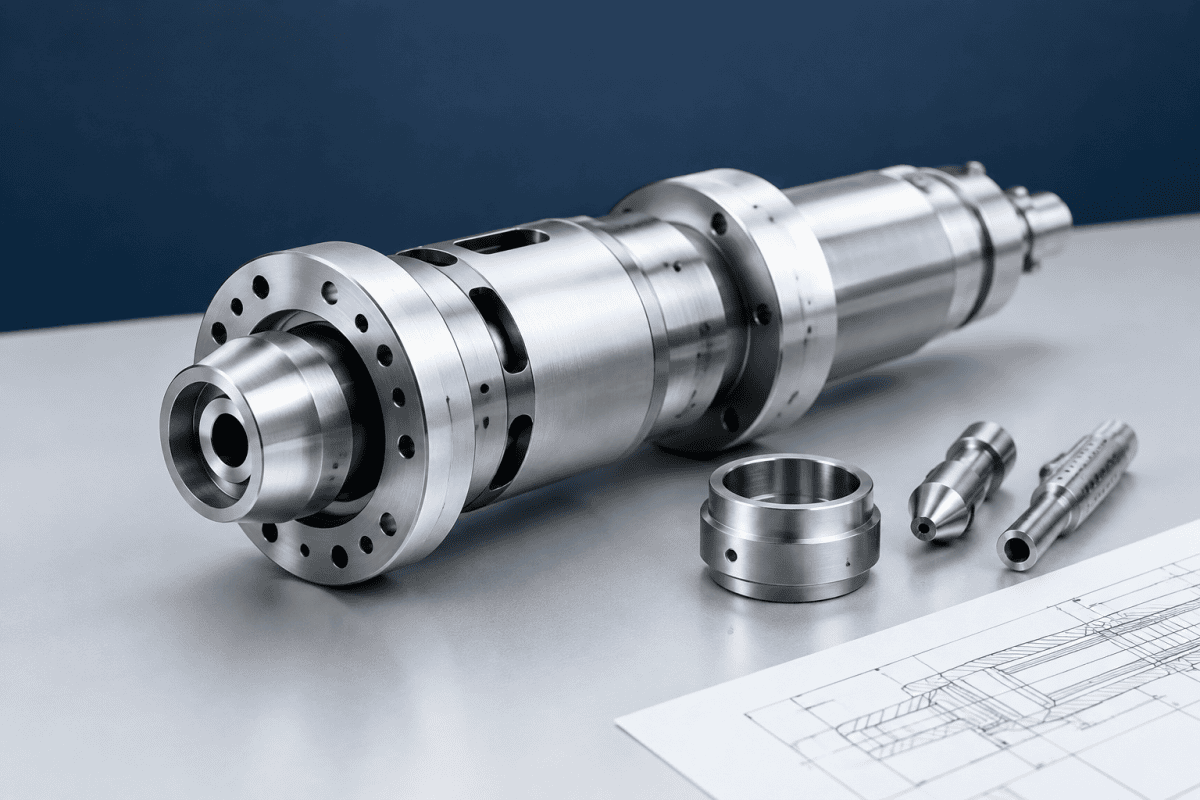
Nemtokake Bagéan pembakar deposisi inti VAD iku latihan engineering sing beda karo pesen torch consumables umum. Ing vapor axial deposition (VAD), core burner mbangun porous preform kanthi aksial — partikel soot disimpen ing end face saka target rod sing saya gedhe nalika burner lan rod obah relatif marang siji liyane. Core burner akeh banget nemtokake tingkat deposisi aksial, distribusi dopan radial, lan centering wilayah core ing preform. Mulane, custom VAD core deposition burner parts ora bisa dianggep minangka pengganti mekanik drop-in kanggo OVD burner utawa torch tip sing wis ana. Iki kudu dispesifikasi miturut fungsi deposisi sing ditindakake.
Pandhuan iki ditulis kanggo insinyur lan tim purchasing sing nyiapake spesifikasi manufaktur kanggo custom VAD core deposition burner parts. Iki nyakup parameter sing kudu ana ing paket spesifikasi, bahan lan keputusan fabrikasi sing ana gandhengane, lan kriteria inspeksi sing nemtokake apa VAD core deposition burner part sing dikirim bisa ditampa. Iki ora ngganti validasi part ing peralatan deposisi sampeyan dhewe.
Napa VAD core deposition burner parts mbutuhake spesifikasi dhewe
VAD lan outside vapor deposition (OVD) loro-lorone nggunakake flame hydrolysis kanggo mbentuk silica soot, nanging geometri deposisi lan tugas burner beda. Ing OVD, soot disimpen kanthi radial ing mandrel sing muter, lan burner array disusun ing sadawane dawa target. Ing VAD, deposisi kedadeyan ing end face saka boule sing saya gedhe, lan VAD core deposition burner part biasane diubengi dening burner tambahan sing mbentuk flame lan ngatur lingkungan termal.
Bedane kasebut ngganti apa sing penting ing spesifikasi burner. Kanggo VAD core burner, simetri aksial saka flame luwih langsung penting, amarga asimetri nerjemahake dadi core offset utawa ovality saka wilayah core sing disimpen. Keseimbangan aliran saluran-kanggo-saluran mengaruhi zona pencampuran lan mulane lingkungan pambentukan partikel. Geometri face lan jarak orifice mengaruhi ing ngendi aliran soot tiba ing end sing saya gedhe. Ora ana sing bisa diijolake karo asumsi desain OVD burner — ing Perbandingan nozzle OVD, VAD, lan MCVD nerangake ing ngendi prioritas desain beda-beda ing telung proses kasebut.
Konsekuensi praktis: nalika sampeyan nulis spesifikasi kanggo custom VAD core deposition burner parts, wiwiti saka asil deposisi sing sampeyan butuhake (target diameter core, keseragaman radial, tingkat deposisi sing stabil) lan bali menyang kebutuhan mekanik.
Nyalin gambar OVD sing wis ana lan nyetel dimensi minangka shortcut umum sing gagal, amarga geometri deposisi sing nyurung spesifikasi, dudu kosok balene. Kebutuhan fungsional — aliran soot sing stabil lan terpusat sing tiba ing end face sing saya gedhe — kudu diurai dadi kendala mekanik, aliran, termal, lan material sadurunge gambar apa wae diterbitake kanggo VAD core deposition burner parts.
Apa sing kalebu ing paket spesifikasi VAD burner
Dimensi antarmuka lan envelope
Spesifikasi kudu nemtokake antarmuka mounting kanthi lengkap: dawa sakabèhé, diameter body, geometri flange utawa thread mounting, lan posisi burner face relatif marang datum mounting. Pemilihan datum kudu eksplisit. Burner face sing dumunung saka referensi sing beda karo asline bakal nggeser posisi flame sanajan saben dimensi individu ana ing toleransi.
Nalika burner dipasang ing fixture sing duwe rantai datum dhewe, penting kanggo nyathet stack-up. Variasi sawetara atus milimeter ing mount bisa nerjemahake dadi offset sing katon ing end face deposisi, utamane yen VAD core deposition burner part dawa relatif marang diametere. Nemtokake posisi face minangka dimensi dhasar kanthi toleransi geometrik, tinimbang dimensi linear sing prasaja, ngilangi sebagian besar ambiguitas.
Arsitektur saluran lan sambungan gas
Dhaptar saben saluran gas kanthi fungsine (contone, pangiriman prekursor core, bahan bakar, oksigen, lan gas shroud utawa shaping), lan nemtokake jinis sambungan, ukuran port, lan clocking port kanggo saben. Posisi sudut port penting nalika burner dipasang ing manifold block — burner kanthi pola port sing bener sing diputar sawetara derajat bisa uga ora nyambung tanpa ngganggu feed lines.
Ing ngendi burner berinteraksi karo manifold distribusi, penting kanggo nemtokake loro kasebut minangka sistem. Komponen kayata oxygen distribution manifold mengaruhi keseimbangan saluran ing hulu burner, lan ora cocog antarane karakteristik tekanan manifold lan burner minangka sumber umum asimetri sing angel didiagnosis. Prinsip ing mburi interaksi iki dibahas ing pandhuan kanggo pressure balancing lan gas flow dynamics ing multi-channel OVD lan VAD torches.
Penomoran saluran kudu luwih digatekake tinimbang biasane. Wenehi saben saluran pengenal sing stabil ing gambar, lan gunakake pengenal sing padha ing tabel tes aliran sing dikirim karo VAD core deposition burner part. Nalika inspeksi mlebu mengko ndeteksi ketidakseimbangan, jeneng saluran sing umum ngidini supplier nglacak masalah menyang operasi mesin tartamtu tinimbang nguji maneh kabeh perakitan.
Geometri face lan orifice
Spesifikasi permukaan burner kudu nemtokake jumlah orifice lan susunane, diameter orifice individu kanthi toleransi, jarak antar orifice, geometri countersink utawa chamfer, lan kerataan permukaan. Yen permukaane ora rata, bidang metu orifice ana ing jarak sing beda saka zona deposisi, sing bisa ngrusak aliran soot sanajan orifice dhewe wis dimachining kanthi bener.
Kerataan permukaan lan perpendicularity interaksi karo datum pemasangan. Permukaan sing rata nanging uga miring relatif marang pemasangan tetep bakal ngasilake nyala api sing asimetris, mula penting kanggo nemtokake perpendicularity permukaan relatif marang sumbu pemasangan saliyane kerataan permukaan dhewe. Kanggo orifice cilik, nemtokake dimensi endi sing ngatur — diameter, posisi, utawa kondisi pinggiran — amarga proses manufaktur sing bisa njaga siji ora mesthi bisa njaga kabeh telu kanthi grade sing padha kanggo VAD core deposition burner parts.
Bahan lan kondisi permukaan
Pemilihan material dudu latihan checkbox; iku miturut tugas termal lan kimia burner. Permukaan VAD core burner ngalami suhu dhuwur lan siklus termal, mula material kudu njaga stabilitas dimensi sajrone interval layanan sing dikarepake. Yen saluran inti nggawa prekursor halida, resistensi kimia marang spesies kasebut lan produk dekomposisine uga relevan.
Finish permukaan ing saluran internal mengaruhi prilaku aliran, lan finish ing permukaan sealing mengaruhi integritas kebocoran. Amarga syarat beda-beda miturut saluran lan posisi ing burner, konstruksi campuran material kadhangkala cocok — contone, yen paduan tartamtu utawa grade machinable menehi kinerja sing luwih apik ing sawijining wilayah perakitan. Logika pemilihan material dibahas luwih rinci ing pandhuan kanggo sumber pembakar OVD lan VAD khusus, lan kasus spesifik kanggo komponen paduan titanium dibahas ing artikel babagan bagean obor OVD titanium.
Kebutuhan aliran lan tekanan
Tinimbang nemtokake nomer aliran siji, nemtokake kisaran aliran sing bisa ditampa saben saluran lan penurunan tekanan sing dikarepake ing VAD core deposition burner part ing kondisi perwakilan. Iki menehi target sing bisa diukur kanggo supplier kanggo ukuran saluran lan ngidini sampeyan verifikasi bagean sing wis rampung miturut kriteria sing padha. Yen proses sampeyan nggunakake keseimbangan tartamtu antarane saluran, sebutna — geometri burner bisa dioptimalake miturut iku.
Sebutna uga gas referensi. Koefisien aliran gumantung marang sifat gas, lan target aliran sing dituduhake ing nitrogen ora bakal cocog karo maca sing padha ing hidrogen utawa oksigen. Nyedhiyakake kondisi referensi nyegah supplier saka nguji miturut basis sing beda lan ngirim VAD core deposition burner part sing cocog karo gambar nanging ora karo syarat proses.
Keputusan fabrikasi sing mengaruhi part sing wis rampung
Sawise spesifikasi wis ditemtokake, rute manufaktur isih ninggalake keputusan sing mengaruhi kinerja VAD core deposition burner parts:
- Strategi machining kanggo saluran internal. Passage jero lan diameter cilik mbutuhake konstruksi sing dibor utawa dirakit. Burner sing dirakit (multi-piece) ngidini rute internal sing kompleks nanging ngenalake sambungan sing kudu kedap bocor lan stabil dimensi.
- Metode penyambungan. Brazing, welding, lan diffusion bonding saben-saben menehi watesan termal sing beda lan ngasilake tingkat distorsi sing beda. Metode penyambungan kudu disepakati ing spesifikasi amarga mengaruhi apa sing bisa ditahan burner ing layanan.
- Pembentukan orifice. Drilling, electrical discharge machining, lan proses laser ngasilake kualitas pinggiran lan repeatability diameter sing beda. Kanggo orifice cilik, band toleransi sing bisa digayuh nyepetake pilihan.
- Perawatan pasca-machining. Cleaning, deburring, lan relief stres apa wae kudu ditemtokake, amarga burr residual utawa kontaminasi ing saluran gas bisa ngganti karakteristik aliran sawise instalasi.
- Dimensional verification sequencing. Deciding which features are measured before and after joining prevents a situation where distortion from the joining step is discovered only at final inspection.
The relationship between orifice quality and deposition behavior is not marginal. Small deviations in orifice geometry propagate into the soot stream and ultimately into preform characteristics, as discussed in the article on presisi nozzle burner lan hasil preform.
An assembled construction is often the only way to reach internal routing that cannot be machined from solid. The trade-off is that every joint becomes a potential leak path, so the specification for VAD core deposition burner parts should state the leak test method and acceptance limit explicitly. Where the assembly is joined by brazing, the filler alloy should be listed alongside the base material, because a filler with a lower melting point can limit the maximum service temperature of the finished burner.
It is also worth specifying whether the supplier must submit first-article inspection data for VAD core deposition burner parts before volume production, because that single requirement converts an ambiguous acceptance conversation into a documented pass/fail decision.
Kriteria inspeksi kanggo VAD core deposition burner parts sing dikirim
A specification is only useful if acceptance criteria are attached. For custom VAD core deposition burner parts, a practical incoming inspection set includes:
- Dimensional verification of critical features. Mounting interface, face location from datum, orifice diameters, and port positions. Orifice diameter should be verified by a method that resolves the tolerance you specified — pin gauges, optical measurement, or flow-based methods, agreed in advance.
- Flow verification per channel. Measure flow or pressure drop against the specified range. Channel-to-channel comparison is often more informative than absolute values, because it exposes imbalance that absolute measurements can hide.
- Leak and pressure integrity. Confirm that internal channels and any joints hold pressure without measurable loss. This is especially important for assembled burners.
- Visual and dimensional check of the face. Look for burrs, dents, incomplete orifice break-through, and contamination. Verify face flatness if it was specified.
- Geometric symmetry check. Where your equipment permits, verify that the burner’s channel pattern and face features are symmetric about the intended axis and correctly clocked relative to the mount.
If a VAD core deposition burner part fails inspection, document which criterion failed before returning it. Flow imbalance and dimensional error are different problems with different root causes, and the distinction helps the supplier correct the process rather than guess.
Retaining the inspection record for each VAD core deposition burner part also builds a service history. Over several replacement cycles, a trend in flow drift or orifice wear can justify a specification change, and the original acceptance data is the baseline for that decision.
A short acceptance checklist that travels with the part, signed at each stage, is often more effective than a comprehensive procedure that stays in a binder. If a VAD core deposition burner part passes dimensional checks but fails the flow test, the checklist makes the failure visible before the burner reaches the deposition lathe.
Logika troubleshooting sadurunge nyalahake burner
When deposition results drift, the VAD core deposition burner part is a candidate cause but rarely the only one. A structured check sequence prevents unnecessary part replacement:
- Core offset or ovality. Possible causes include burner misalignment in the mount, face contamination, upstream flow imbalance, or a genuinely off-axis burner. Verify alignment and clean the face first; compare channel flows second; inspect the burner geometry third.
- Deposition rate decline. Soot accumulation on the face, gradual orifice wear, and changes in gas delivery all produce this symptom. Rate decline is not by itself proof of burner wear — the mechanisms behind soot collection on a deposition surface, including the role of thermophoresis as described in the NIST publication record, are worth understanding before replacing hardware.
- Radial profile changes. Profile drift is often traced to concentricity or symmetry, which connects back to burner centering and face geometry rather than to material choice.
In each case, the point is to separate causes you can confirm from causes you are inferring. Replace the VAD core deposition burner part only after the mechanical and flow-related causes have been ruled out.
It also helps to change one variable at a time. Replacing a VAD core deposition burner part while also adjusting gas flows or rod speed makes it impossible to attribute the resulting change, and the next time the symptom appears you will have no reliable reference point.
Nyiapake panjalukan sourcing
A complete request for VAD core deposition burner parts shortens the path from inquiry to quotation and reduces the risk of a part that does not match your process. Include the following with your enquiry:
- Drawings or sketches with the mounting interface, overall envelope, and datum references.
- Channel list with function, connection type, and port clocking.
- Orifice geometry: count, diameter with tolerance, pitch, and face requirements.
- Material requirements by region, with any service temperature or chemical exposure information you can share.
- Flow or pressure-drop targets per channel, including the reference gas.
- Inspection and documentation expectations.
Where an original drawing is unavailable, reverse engineering from a sample is often feasible, but the specification for VAD core deposition burner parts still needs the functional requirements above — dimensions alone do not define a burner’s behavior. Comparing replacement options against original drawings before committing to a route is the subject of OVD burner head replacement and drawing comparison, and OEM/ODM machining allows the geometry and materials to be defined around your process rather than around a catalogue part number.
A documented upgrade can also be considered where service life is the limiting factor. The experience of moving to titanium alloy consumables for a global fiber producer is set out in the titanium OVD burner parts case study.
For any VAD core deposition burner parts program, the quotation stage is also the right time to confirm which tolerances the supplier can actually measure, not just machine. A tolerance that cannot be verified in inspection is a risk carried into production.
To move a VAD core burner project forward, contact our team with your drawings, dimensions, material requirements, and operating conditions. A specification review before machining is the cheapest place to catch a mismatch.
Pitakonan sing Sering Ditakoni
Apa VAD core deposition burner parts bisa diganti karo OVD burner kanthi dimensi sing padha?
Not as a general practice for VAD core deposition burner parts. Even where mounting dimensions are similar, VAD and OVD burners are designed around different deposition geometries and different channel arrangements. Substituting one for the other would require verification against your equipment documentation and process requirements, and would normally change deposition behavior.
Kepiye cara nemtokake toleransi orifice yen aku ora duwe gambar asli?
Start from the deposition requirement — the soot stream characteristics your process needs — and set tolerances that the chosen orifice formation method can actually hold. Then confirm the achievable band with the supplier before committing. Measuring orifice diameters on a sample VAD core deposition burner part can provide a useful reference point, but it reflects one part, not the design intent.
Apa burner lan oxygen manifold kudu dispesifikasi bebarengan?
In many cases, yes. Channel balance depends on the interaction between manifold pressure characteristics and burner channel resistance. Specifying one without the other leaves the interface unverified.
Informasi apa sing dibutuhake kanggo VAD burner sing wis reverse-engineered?
A physical sample or detailed drawings, plus the functional data: gas types, approximate flow ranges, expected thermal exposure, and any known failure history of the original part. Reverse engineering reproduces geometry; the functional data determines whether that geometry is right for your process.
Kesimpulan
A manufacturing specification for VAD core deposition burner parts earns its value at the point of inspection, not on the drawing sheet. When the specification fixes the datum, the channel architecture, the face geometry, and the acceptance criteria together, both the supplier and the incoming inspection team are working from the same standard. That shared standard is what keeps a custom VAD core deposition burner part aligned with the deposition outcome it was ordered to produce.
