
지식
광섬유 와인더 샤프트 및 슬리브: 도면 기반 교체 소싱
10월
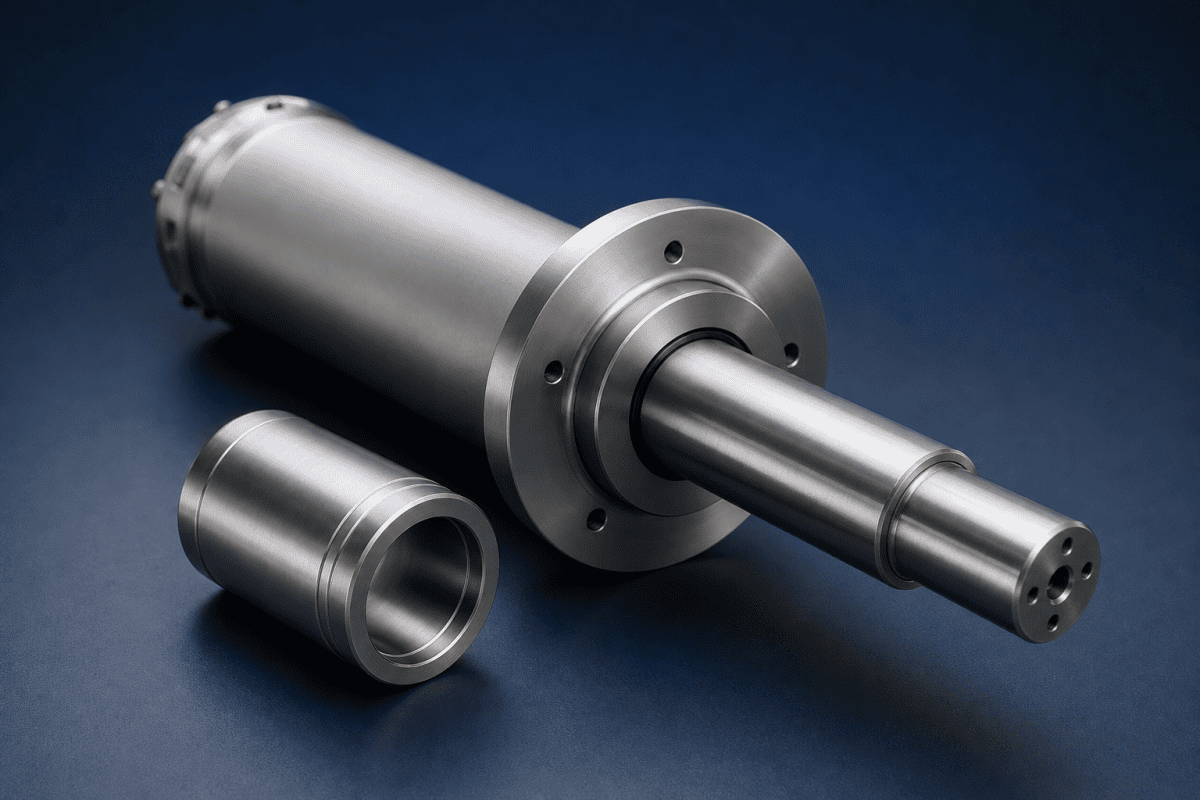
광섬유 권취기 샤프트가 마모되기 시작하면 첫 징후는 종종 기계가 아닌 권취된 패키지에서 나타납니다: 약간의 장력 드리프트, 층 불규칙성, 또는 시간이 지남에 따라 커지는 미세한 흔들림입니다. 섬유 권취는 완성된 섬유 품질을 조용히 결정하는 요소 중 하나입니다. 약간의 샤프트 런아웃, 마모된 슬리브 내경, 또는 부적합한 테이퍼는 훨씬 나중에 불균일한 장력, 보빈의 층 불규칙성, 또는 권취 중 섬유 표면 손상으로 나타날 수 있습니다. 유지보수 및 구매 팀에게 실질적인 과제는 광섬유 권취기 샤프트와 그 슬리브가 종종 오래되었고, 문서가 부족하며, 표준 카탈로그 부품으로 교체하기 어렵다는 점입니다. 도면 기반 교체 소싱 — 측정된 형상과 문서화된 운전 조건으로부터 새 샤프트 또는 슬리브를 제조하는 것 — 이 종종 가장 신뢰할 수 있는 경로입니다. 이 글에서는 무엇을 검사해야 하는지, 부품을 어떻게 지정하는지, 공급업체에 무엇을 문의해야 하는지를 설명하며, 관련된 경우 OVDParts의 맞춤형 제조 역량을 참조합니다.
광섬유 권취기 샤프트와 슬리브가 서로 다르게 마모되는 이유
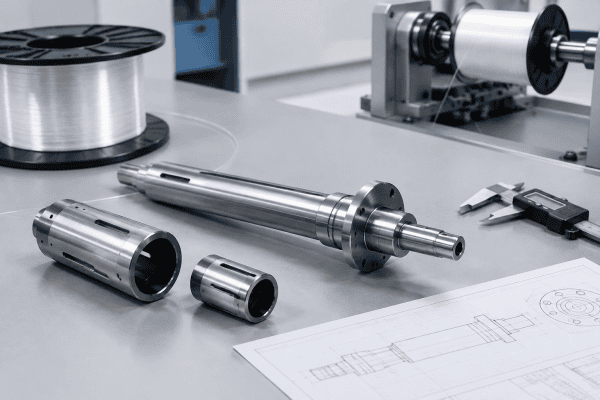
권취기 샤프트는 보빈 또는 릴에 회전을 전달하고 권취 중 섬유의 주행 위치를 유지합니다. 슬리브는 샤프트와 보빈 사이의 인터페이스로, 기계 설계에 따라 슬립 피트, 테이퍼 피트, 또는 확장 요소일 수 있습니다. 이 두 부품은 서로 다른 이유로 고장 나며, 이러한 구분은 광섬유 권취기 샤프트의 교체 사양서를 작성할 때 중요합니다.
샤프트는 고응력 위치에서 고장 나는 경향이 있습니다: 구동측 저널, 베어링 시트, 키홈, 테이퍼 전환부, 세트 스크류 접촉 영역 등입니다. 증상으로는 육안으로 보이는 프레팅, 저널 직경 감소, 스코어링, 또는 자체 베어링에서 회전시킬 때 감지되는 런아웃이 있습니다.
슬리브는 반복적인 보빈 장착으로 인한 내부 마모, 열 또는 기계적 손상 후의 변형, 내경과 외부 주행 표면 사이의 동심도 상실로 더 자주 고장 납니다. 두 부품은 일반적으로 서로 다른 재질과 열처리로 제작되므로, “권취기가 오래되었다”는 것은 충분한 교체 근거가 아닙니다. 각 부품은 자체 검사 기록과 자체 사양서가 필요합니다.
광섬유 권취기 샤프트 또는 슬리브 문제로 귀결되는 일반적인 권취 결함
모든 권취 결함이 샤프트에서 비롯되는 것은 아닙니다. 그러나 여러 반복적인 문제는 다른 원인을 추적하기 전에 샤프트와 슬리브 점검을 필요로 합니다.
- 점진적 런아웃: 권취된 패키지가 시간이 지남에 따라 축 방향 흔들림이 증가하면, 원인은 약간 휘어진 샤프트, 마모된 베어링 시트, 또는 샤프트에 더 이상 중심이 맞지 않는 슬리브일 수 있습니다.
- 불균일한 트래버스 또는 피치 변동: 이는 종종 제어 또는 가이드 문제이지만, 비정상적인 반경 방향 런아웃을 가진 광섬유 권취기 샤프트는 트래버스 시스템과 상호작용하여 불균일한 권취 피치를 발생시킬 수 있습니다.
- 보빈 슬립: 장력 부여 중 보빈이 샤프트에 대해 약간 회전하면, 슬리브 끼워맞춤 또는 클램핑 메커니즘이 마모되었을 수 있습니다.
- 접촉점에서의 섬유 손상: 손상된 슬리브 표면 또는 샤프트 숄더의 버는 시동 또는 정지 중 근처를 통과하는 섬유를 마모시킬 수 있습니다.
- 부하 시 진동: 마모된 저널 또는 느슨한 슬리브 끼워맞춤은 주기적 진동을 유발하여 공회전 시가 아닌 권취된 패키지에서 나타날 수 있습니다.
이러한 증상 중 여러 가지가 구동, 베어링, 장력 제어 문제와 겹치므로, 샤프트에 결함이 있다고 가정하기 전에 증상을 타이밍 및 운전 조건과 함께 문서화하십시오.
교체 소싱 전 검사 절차
자체 베어링에 장착된 상태로 샤프트 측정
런아웃은 정상 운전 시와 동일하게 샤프트가 지지된 상태에서 기계 내에서 측정해야 합니다. 베어링 지지대 없이 벤치에서 샤프트를 측정하면 오해의 소지가 있는 수치가 나올 수 있습니다. 길이 방향 여러 지점에서 반경 방향 런아웃을, 각 끝단에서 축 방향 런아웃을 기록하십시오.
모든 기능 직경과 끼워맞춤 기록
베어링 시트, 구동 커플링 인터페이스, 슬리브 장착 직경, 키홈 치수, 모든 테이퍼 각도를 측정하십시오. 원본 도면이 있는 경우 끼워맞춤 등급을 기록하고, 없는 경우 추측하지 말고 정상 상태의 동반 부품을 측정하십시오. 마모된 슬리브에서 측정한 테이퍼는 의도된 각도를 나타내지 않을 수 있습니다.
슬리브 내경과 외부 표면을 별도로 검사
슬리브의 경우 여러 깊이에서 내경, 외경 또는 주행 표면, 내경과 외부 표면 사이의 동심도, 끝면 직각도를 측정하십시오. 슬리브에 슬롯, 확장 기능, 또는 클램핑 형상이 있는 경우 해당 형상을 치수와 함께 기록하십시오.
재질과 상태 문서화
경도 또는 재질 데이터가 있는 경우 기록하십시오. 없는 경우 운전 환경 — 회전 속도 범위, 장력 부하 범위, 사용된 세정제, 열 노출 여부 — 을 기록하여 공급업체가 적합한 재질을 제안할 수 있도록 하십시오. 외관만으로 재질을 추정하지 마십시오.
2차 손상 여부 확인
샤프트 저널의 스코어링은 교정하지 않으면 새 샤프트를 손상시킬 베어링 또는 하우징 문제를 나타낼 수 있습니다. 교체 부품은 기계에 남아 있는 근본 원인을 해결하지 못합니다.
권취기 부품이 카탈로그 품목으로 거의 존재하지 않는 이유
버너 노즐이나 표준 증착 부품과 달리, 광섬유 권취기 샤프트와 슬리브는 일반적으로 기계 플랫폼, 보빈 형식, 권취 공정에 특화되어 있습니다. 샤프트 길이, 직경 변화, 테이퍼 형상, 내경 세부사항, 구동 커플링, 슬리브 끼워맞춤은 라인 간에 표준화되는 경우가 드물며, 교체품은 일반적으로 도면으로 주문하거나 샘플에서 역설계합니다.
이는 정상적인 소싱 조건이며 문제가 아닙니다. 필요한 것은 부품 번호를 기대하는 대신 측정 데이터, 스케치 또는 실물 샘플을 기반으로 작업할 수 있는 공급업체입니다. OVDParts의 OEM/ODM 가공 서비스는 이러한 도면 기반 및 샘플 기반 생산을 위해 구성되어 있으며, 표준 부품 카탈로그에 나타나지 않는 비표준 와인더 하드웨어도 포함합니다.
와인더가 더 광범위한 부품 교체 작업의 일부인 경우, 이용 가능한 광섬유 장비 부품의 더 넓은 범위를 검토할 가치가 있을 수 있지만, 샤프트 및 슬리브 작업은 측정 및 피팅 요건으로 인해 일반적으로 별도의 맞춤 프로젝트로 처리됩니다.
교체 사양서에 포함되어야 할 항목
기계 가공업체가 견적을 제시할 수 있는 사양서에는 최소한 다음이 포함되어야 합니다:
- 일반 배치도 또는 샤프트 및 슬리브의 치수 기입 스케치 — 전체 길이, 직경, 단차 전이 포함.
- 피팅 요건 베어링 시트, 구동 커플링, 슬리브 장착용 — 피팅이 압입, 슬립 또는 테이퍼인지 여부와 알려진 경우 의도된 피팅 등급 포함.
- 동심도 및 런아웃 요건 정성적으로 설명하는 것이 아니라 명시된 데이텀을 기준으로 합니다.
- Taper angle and gauge dimensions where tapered features exist, measured from a known-good reference if a drawing is unavailable.
- Surface finish requirements on running surfaces and sealing or clamping interfaces.
- Material and heat treatment where documented, or the operating conditions that will drive material selection if not.
- Balancing requirements if the shaft operates at higher rotational speeds.
- Quantity and lead-time context — a single replacement versus a stocked spare.
Where the original drawing does not exist, a physical sample with measured dimensions can be sent for reverse engineering. Clear marking of wear zones on the sample helps the supplier distinguish intended geometry from damage.
샤프트와 슬리브의 재질 선정
There is no universal material for fiber winder hardware. Suitability depends on the function of the specific feature, the rotational and load conditions, the chemical environment during cleaning, and whether the part contacts fiber directly. For optical fiber winder shafts, material choice often balances wear resistance at the journals against toughness at keyways and steps.
- Steel grades with appropriate heat treatment are common for load-bearing shafts and wear-resistant journals. Hardness and toughness need to be balanced; a shaft that is too hard may chip at keyways or steps.
- Aluminum or lighter alloys may be appropriate where inertia, weight handling, or non-magnetic behavior matters, provided the running loads permit it. In the broader OVD component range, aluminum OVD parts illustrate how material choice is driven by function rather than by habit.
- Surface treatments such as hard chrome, nitriding, or coatings can improve wear resistance on journal and sleeve running surfaces, but they must be compatible with the base material and the surrounding fits.
- Non-metallic or coated interfaces may be chosen for sleeves where fiber contact or friction control is a concern, subject to dimensional stability under load and temperature.
Material decisions should be confirmed with a supplier who can review the operating conditions and the specific features of the part, not selected from a generic preference list.
주문 전 공급업체에 문의해야 할 소싱 질문
Ask a prospective supplier to confirm:
- Whether they can manufacture from drawings, sketches, or physical samples, and how they handle incomplete drawings.
- How they inspect incoming samples and verify dimensions before machining.
- What measurement equipment they use for runout and concentricity verification.
- How material and heat treatment choices are proposed and documented.
- Whether they can produce both the shaft and the matching sleeve as a set to preserve fit.
- What inspection documentation is provided with delivery.
These questions are especially important when replacing an older part on a machine whose drawings may no longer reflect the as-built configuration.
도면 기반 소싱이 광범위한 권취기 시스템에 어떻게 부합하는가
Optical Fiber Winder Shafts rarely operate in isolation. They sit inside a winder subassembly that includes clamps, cutters, changeover components, and spool hubs. When a shaft or sleeve is replaced, it is worth checking the surrounding interfaces for wear that could affect the new part, or that the new part could affect in turn.
For example, the clamp that grips the shaft during operation may have lost grip or developed a burr. A guide to take-up winder clamp replacement covers dimensions and grip checks that pair well with a shaft inspection. Similarly, if the shaft is removed during a bobbin change, the bobbin changeover components — clamps, cutters, and related hardware — should be reviewed at the same time to avoid reinstalling a new shaft into a worn interface.
At the spool end, the spool hub bore and shaft interface determine how well the bobbin centers on the shaft. If the hub bore is worn, even a perfectly machined new shaft may not restore concentricity. Checking the hub at the same time as the shaft can prevent a repeat replacement.
In some lines, the winding section is part of a larger preform or draw process. The winder cutter assembly parts guide covers cutter and clamp replacement specifications that may share measurement data with the shaft project. For preform-related equipment, similar sourcing logic applies to Corning preform equipment parts, Sumitomo Electric preform equipment parts, 를 특징으로 하며, SG Controls preform replacement parts, where drawing-based sourcing is also standard.
Where a lathe or carriage is involved in the same production area, the SG Controls MCVD lathe spare parts guide shows how holders and carriage components are specified from drawings. The same measurement discipline applies to optical fiber winder shafts: record the geometry, note the fits, and describe the operating conditions.
밸런싱, 런아웃 및 속도 고려사항
As winding speeds increase, the tolerance budget for runout and balance tightens. A shaft that performed acceptably at low speed may show vibration at higher rpm if its residual imbalance or runout is marginal. When specifying optical fiber winder shafts, include the operating speed range and the acceptable vibration level if known.
Balance grade requirements should be stated on the drawing where the shaft operates above moderate speeds. If no grade is specified, a supplier may default to a general machining tolerance that is adequate for static operation but not for high-speed winding. For accuracy, ISO 1940-1 is a recognized reference for balance quality requirements of rigid rotors; see the ISO 1940-1 balance quality standard for the grade definitions that can be cited in a specification.
Runout should be referenced to a datum that reflects how the shaft is supported in the machine. If the datum is unclear, the supplier may measure from a convenient surface that does not match the machine’s actual axis of rotation.
납품 시 검증 및 문서화
When a new shaft or sleeve arrives, verification should match the specification that was sent. At minimum, check:
- Overall dimensions against the drawing or sketch.
- Functional diameters and fit classes at bearing seats, coupling interfaces, and sleeve mounting surfaces.
- Runout and concentricity readings, ideally with the same datum used in the specification.
- Surface finish on running and sealing surfaces.
- Material and heat treatment certificates where specified.
- Inspection records for taper angles and gauge dimensions.
If any measurement falls outside the specified tolerance, resolve it before installation. Installing a marginal part can damage the machine and complicate the supplier discussion afterward.
자주 묻는 질문
슬리브만 교체하고 기존 샤프트를 유지할 수 있습니까?
Sometimes, but only if the shaft has been measured and confirmed to be within acceptable runout and journal condition. A new sleeve fitted to a worn shaft will not restore winding accuracy. Measure the shaft first, then decide whether to replace one part or both.
원본 도면이 없을 때 테이퍼 끼워맞춤을 어떻게 처리합니까?
Measure the taper angle and gauge dimensions against a known-good reference. If the sleeve and shaft have both worn, the as-measured taper may not be correct. In that case, work from the machine’s documented taper standard if one exists, or record the measured value and flag it as unverified in the specification.
동일한 공급업체가 샤프트와 슬리브를 매칭 페어로 제작할 수 있습니까?
Yes, and this is often preferable. Producing both parts together allows the supplier to control the fit between them rather than matching a new part to an existing worn one. Provide both items or full dimensions for both when requesting a quotation.
맞춤형 권취기 샤프트 견적에 필요한 정보는 무엇입니까?
Drawings or a dimensioned sketch, measurement data on fits and concentricity, material and heat treatment requirements or operating conditions, and quantity. A physical sample speeds the process when drawings are not available.
다음 단계
If optical fiber winder shafts or sleeves are due for replacement, gather the inspection data first: runout readings, functional diameters, taper dimensions, material notes, and operating conditions. Send drawings, sketches, measured samples, or the worn parts themselves to request a quotation from OVDParts. Include what the part does, how it mounts, and what is wearing so the manufacturing review can address the actual failure mode rather than only the geometry.
