
지식
OVD 산소 분배 매니폴드: 맞춤형 가공 및 연결 검증
10월
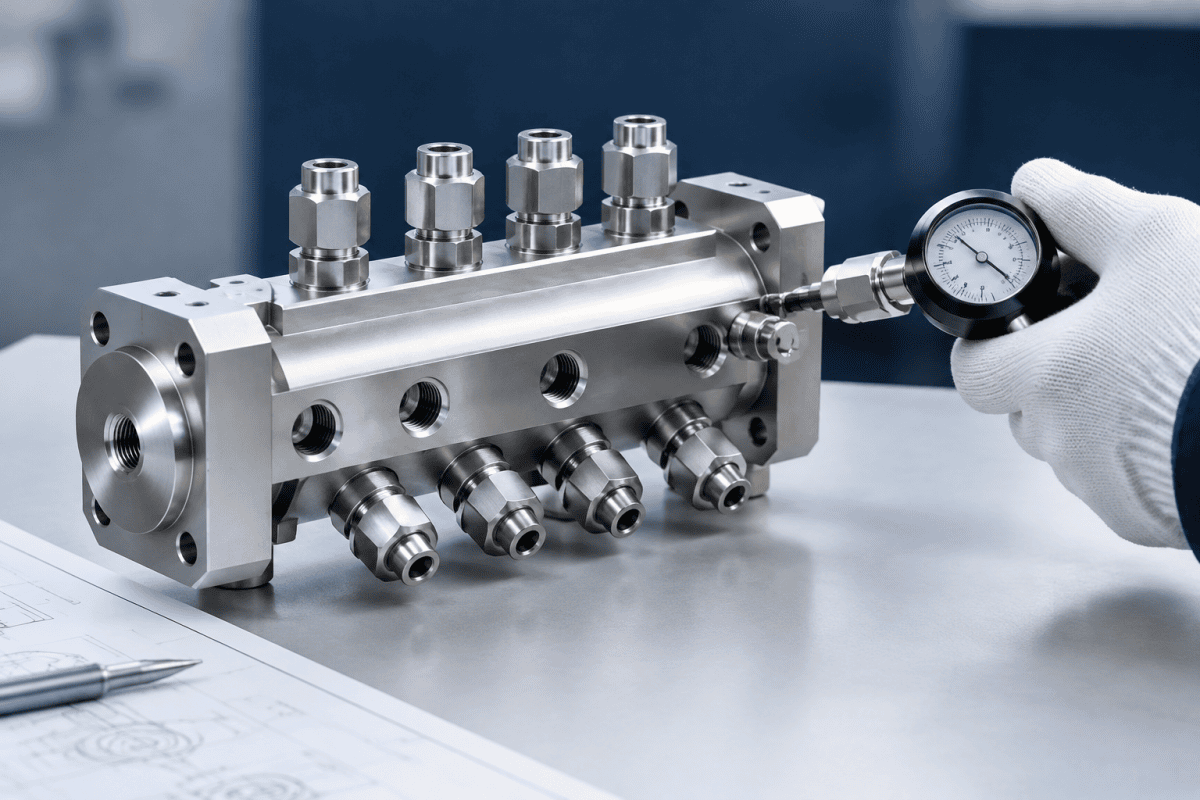
OVD oxygen distribution manifold는 무언가가 변동하기 전까지는 좀처럼 주목받지 못합니다. 이는 가스 공급 패널과 토치 또는 버너 어레이 사이에 위치하며, 산소를 여러 채널로 분배하고 각 버너 위치가 요구하는 유량과 압력으로 공급합니다. Outside vapor deposition 라인에서 OVD oxygen distribution manifold는 단일 공급 유입을 반복 가능하고 위치별로 특정된 유량으로 전환하는 부품입니다.
정확하게 가공되고 설치 전 연결이 검증되면, 증착 공정은 예측 가능하게 작동하는 경향이 있습니다. 그렇지 않으면 엔지니어들은 화염 불안정, 불균일한 soot 증착, 또는 단일 피팅으로 추적하기 어려운 느린 압력 감쇠를 쫓게 되는 경우가 많습니다. 이 글에서는 OVD oxygen distribution manifold의 기능, 맞춤 가공에서 중요한 사항, 그리고 교체품 또는 새 매니폴드가 outside vapor deposition 공정에 새로운 변수를 도입하지 않도록 연결을 검증하는 방법을 다룹니다.
OVD Oxygen Distribution Manifold의 역할
OVD oxygen distribution manifold는 다중 포트 가스 라우팅 부품입니다. 일반적인 OVD 설비에서 산소는 캐리어 가스와 반응 가스로 모두 사용되며, 증착 레이스(lathe)를 따라 여러 토치 또는 버너 위치에 분배되어야 합니다. 매니폴드는 단일 공급 유입을 받아 개별 출구 채널로 분할하며, 각 채널은 특정 오리피스 크기, 내부 유로 형상, 연결 유형을 요구할 수 있습니다.
단순한 파이프 티와 달리, 적절하게 가공된 OVD oxygen distribution manifold는 각 출구를 통한 유량이 반복 가능하고 필요한 경우 균형을 이루도록 설계됩니다.
내부 유로 직경, 유로 길이, 굽힘 형상, 표면 조도는 모두 가스가 입구에서 각 출구로 이동할 때 가스의 거동에 영향을 미칩니다. preform 장비 매니폴드 응용에서 이는 중요한데, 채널 간 유동 저항의 작은 차이가 preform 표면에서 화염 형상이나 증착 속도의 눈에 띄는 차이로 이어질 수 있기 때문입니다.
맞춤 OVD oxygen distribution manifold는 추가 기능을 포함할 수도 있습니다: 장착 특징, 센서 또는 게이지 포트, 퍼지 연결, 밀봉 인터페이스. 이러한 각각은 도면에 반영되고 생산 후 검증되어야 하는 가공 요건을 추가합니다.
맞춤 가공이 종종 필요한 이유
기성 매니폴드는 기존 OVD 플랫폼과 일치하는 경우가 드뭅니다. 버너 간격, 연결 표준, 캐비닛 레이아웃, 가스 패널 인터페이스는 장비 세대 간에 그리고 시간이 지나면서 라인을 개조한 fiber 생산업체 간에 다양합니다. 한 구성용으로 제작된 OVD oxygen distribution manifold는 일반적인 기능이 동일하더라도 다른 구성에 맞지 않을 수 있습니다.
도면 기반 생산과 역설계의 비교
원본 도면이 있는 경우, OVD oxygen distribution manifold의 맞춤 가공은 비교적 간단합니다: 부품은 명시된 치수, 재료, 연결 사양에 따라 제작됩니다. 도면이 없거나 불완전한 경우 역설계가 필요합니다. 여기에는 기존 부품 측정, 나사산 유형 및 밀봉 면 식별, 직접 보이지 않을 수 있는 내부 유로 형상 문서화가 포함됩니다.
역설계된 매니폴드의 경우, 중요한 산출물은 가공 업체와 최종 사용자가 생산 전에 합의할 수 있는 도면 세트입니다. 이는 기계적으로는 맞지만 서비스에서 다르게 작동하는 부품의 위험을 줄입니다. 다음을 제공하는 공급업체 맞춤 OVD 및 VAD 버너 소싱 및 역설계 는 일반적으로 이러한 도면 우선 접근 방식을 중심으로 작업을 구성하여 치수 및 재료 결정이 가정되지 않고 문서화되도록 합니다.
매니폴드 본체의 재료 선정
매니폴드 재료는 부품의 기능, 온도 노출, 화학적 환경, 특정 OVD 라인의 엔지니어링 요건에 따라 달라집니다. 스테인리스 강 등급은 내식성과 구조적 안정성이 필요한 곳에 일반적입니다. 알루미늄은 무게와 열적 거동이 허용되는 특정 장착 또는 구조 부품에 적합할 수 있지만, 산소 서비스에서 스테인리스의 범용 대체재는 아닙니다.
선택은 범주만으로가 아니라 도면, 가스 호환성 요건, 운전 조건에 따라 이루어져야 합니다. 알루미늄 부품이 지정된 경우, 일반적으로 스테인리스 부품과 동일한 도면 규율에 따라 생산 및 검사됩니다. 알루미늄 OVD 부품은 재료 선택이 편의성보다 기능을 따른다는 한 가지 예입니다.
OVD Oxygen Manifold의 핵심 가공 고려사항
여러 설계 및 생산 세부사항이 맞춤 OVD oxygen distribution manifold가 의도한 대로 성능을 발휘할지 결정합니다. 가장 중요한 것은 내부 형상, 포트 위치, 나사산, 밀봉 면입니다.
내부 유로 형상
OVD oxygen distribution manifold의 내부 보어는 oxygen이 inlet에서 각 outlet으로 이동하는 방식을 결정합니다. 날카로운 내부 모서리, 급격한 직경 변화, 거친 보어 표면 마감은 채널 간에 turbulence과 불균일한 유량을 발생시킬 수 있습니다. 잘 가공된 manifold는 부드러운 전환부, 설계가 요구하는 곳에서의 일관된 보어 직경, 그리고 통로 내부의 제어된 표면 마감을 사용합니다.
내부 형상은 조립 후 검사하기 어렵기 때문에 가공 단계에서 검증해야 합니다. 이는 manifold 생산이 일회성 즉흥 작업보다 안정적이고 문서화된 공정에서 이점을 얻는 이유 중 하나입니다.
포트 위치 및 방향
Port 위치는 mating components — inlet 측의 gas panel과 outlet 측의 torch 또는 burner 연결부 — 와 일치해야 합니다. 도면에서 작아 보이는 각도 방향 오류는 OVD oxygen distribution manifold가 협소한 캐비닛에 설치될 때 상당한 문제가 될 수 있습니다. 출하 전 도면 대비 port 위치와 방향을 검증하는 것은 기본적이지만 중요한 단계입니다.
나사산 및 밀봉 면
Thread type, pitch, sealing method (face seal, O-ring, gasket, 또는 conical seal)는 mating hardware와 대조하여 확인해야 합니다. 혼합되거나 잘못 식별된 thread 표준은 설치 중 누출과 cross-threading의 흔한 원인입니다. OVD oxygen distribution manifold의 sealing surfaces는 평평하고, tool marks가 없으며, 도면의 사양에 맞게 마감되어야 합니다.
장착 및 구조적 특징
Mounting hole patterns, bracket interfaces, 그리고 모든 구조적 보강은 도면에 따라 가공되어 OVD oxygen distribution manifold가 무리한 힘이나 shimming 없이 설치될 수 있어야 합니다. Manifold가 torch 영역 근처에 장착되는 OVD line의 경우, 열팽창과 진동이 mounting design에서 고려되어야 합니다.
Manifold가 종종 burner array에 가깝게 위치하기 때문에, 인접 부품을 평가하는 엔지니어들은 또한 다음을 검토할 수 있습니다 OVD 버너 전면판 홀 형상 및 검사 단계 를 동일한 interface review의 일부로 검토할 수 있습니다.
설치 전 연결 검증
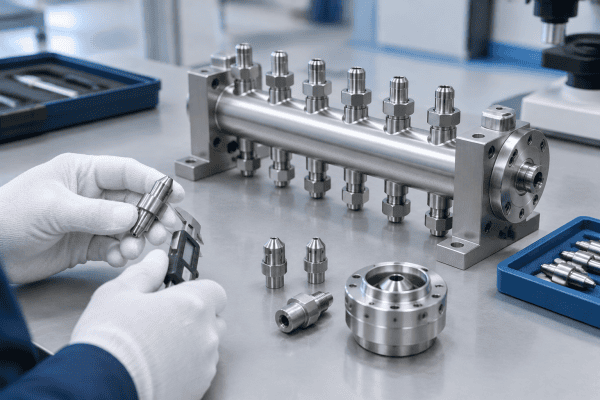
가공 정밀도가 누출 없는 설치를 보장하지는 않습니다. 연결 검증은 별도의 단계이며, OVD oxygen distribution manifold가 gas system에 설치되기 전에 bench에서 수행되어야 합니다. 다음 점검 사항은 일반적인 관행이며 특정 장비 문서와 현장 절차에 맞게 조정되어야 합니다.
- Threads 및 seals의 육안 검사. Burrs, debris, 또는 손상된 sealing surfaces가 있는지 확인하십시오. Oxygen 통로 내의 이물질은 oxygen-clean handling procedures에 부합하는 방법으로 제거해야 합니다.
- 나사 결합 확인. Torque를 가하기 전에 mating fittings가 손으로 부드럽게 나사 결합되는지 확인하십시오. 강제 결합은 일반적으로 thread 불일치를 나타냅니다.
- Dimensional verification. Measure port spacing, face-to-face dimensions, and mounting hole positions against the drawing. This catches machining errors before they become installation problems.
- Pressure or leak test. Follow the equipment manufacturer’s procedures and site safety requirements for pressure testing. The method, test pressure, and acceptance criteria should come from approved documentation, not from general assumptions.
- Flow verification where required. If the OVD oxygen distribution manifold is designed to balance flow across outlets, a flow check may be appropriate before installation. The test method should be defined by the process engineer.
Each of these steps produces information. If a check fails, the cause is identifiable — a dimensional error, a thread mismatch, a damaged seal face, or an assembly issue — rather than an unexplained leak after installation.
연결 문제가 주로 표면화되는 지점
In practice, most connection issues on an OVD oxygen distribution manifold appear at the outlet ports that mate with the torch or burner assembly, and at the inlet port that mates with the gas panel. These are the joints that see the most handling during installation and the most thermal cycling during operation.
For burner-side interfaces, the fit between the manifold outlet and the torch inlet is worth checking against the torch drawing, not just the manifold drawing. Related guidance on auxiliary tail burner replacement and interface checks covers similar mating-surface verification steps, and the same logic applies to any manifold-to-torch connection.
검증 결과 문서화
Recording the outcome of each check on an OVD oxygen distribution manifold creates a reference for future maintenance. A simple verification record — port dimensions, thread engagement notes, leak test results, and flow readings where applicable — shortens the next replacement cycle and gives maintenance teams a baseline if performance changes later.
The record should also note the cleaning method used and the ambient conditions during testing, since temperature and humidity can influence some leak-test methods.
일반적인 문제와 대처 방법
When an OVD line shows symptoms that could involve the manifold, the goal is to distinguish possible causes from confirmed diagnoses. Several symptoms are often attributed to the OVD oxygen distribution manifold, but not all of them originate there.
- Uneven flame or deposition across burner positions. Possible causes include manifold flow imbalance, partially restricted passages, or a problem at the burner itself. Verification involves comparing flow or pressure at each outlet and inspecting burner components separately.
- Pressure drift during a run. This can originate from the manifold, a regulator, a leaking connection, or a change elsewhere in the gas system. A staged leak check and flow comparison helps localize the source.
- Leak at a manifold connection. Often a sealing surface or thread engagement issue rather than a manifold body defect. Inspect the specific joint before replacing the OVD oxygen distribution manifold.
- Contamination in the oxygen path. Can come from the supply, the manifold, or downstream components. Sampling and inspection at multiple points helps identify the origin.
For issues that involve burner behavior rather than the manifold, related technical articles such as the discussion of pressure balancing and gas flow dynamics in multi-channel OVD and VAD torches and the analysis of 굴절률 프로파일 드리프트 및 버너 동심도 can help separate manifold-related causes from torch-related ones.
매니폴드 결함 의심 시 진단 순서
A structured diagnostic sequence reduces the chance of replacing an OVD oxygen distribution manifold that was not the actual source of the problem. Start by confirming the symptom — which burner position, which gas channel, and whether the deviation is constant or intermittent. Then compare outlet pressures or flows across all channels at a controlled supply condition.
If one outlet deviates, inspect the corresponding passage and connection. If all outlets deviate together, the cause is more likely upstream: supply pressure, regulator behavior, or a shared inlet connection. This split — single-channel versus all-channel — is often the fastest way to narrow the search before any component is removed.
맞춤 매니폴드 소싱 요청서 준비
A clear sourcing request shortens the path from inquiry to usable part. For a custom OVD oxygen distribution manifold, the following information is typically needed:
- Drawings or sketches, including port locations, internal passage geometry, and mounting features
- Dimensions and tolerances for all critical interfaces
- Connection types, thread standards, and sealing methods for inlet and outlet ports
- Material requirements and any surface finish or cleaning specifications
- Operating conditions: gas type, temperature range, and pressure range
- Quantity and whether the part is a one-time replacement or a recurring need
If drawings are not available, providing the existing part for measurement or clear photographs with dimensions can support reverse engineering. The more information provided upfront, the fewer assumptions enter the production process for the new OVD oxygen distribution manifold.
For readers also reviewing related components, the broader range of OVD 버너 부품 and torch components often needs to be evaluated alongside the manifold.
문서화할 가치가 있는 사양 세부사항
Beyond the basic list, a few specification details are worth writing down explicitly for any custom OVD oxygen distribution manifold. Recording the surface finish requirement for sealing faces, the maximum allowable leak rate, and the cleaning or oxygen-compatibility standard to be applied will remove ambiguity during production.
Documenting the reference dimensions used for reverse engineering is also useful. If a future replacement OVD oxygen distribution manifold is needed, the earlier drawing set becomes the starting point rather than a new measurement exercise.
Where manifolds are part of a larger multi-channel torch assembly, it also helps to confirm that the manifold outlet count and spacing match the current torch configuration. Related work on machining multi-channel OVD burner bodies addresses the matching side of that interface.
도면 승인 전 해결해야 할 질문
A short review before drawing approval can prevent most downstream surprises on an OVD oxygen distribution manifold. Confirm that the outlet count matches the current torch or burner configuration, that thread standards on both inlet and outlet sides are stated explicitly, and that any sensor or purge ports are included in the port schedule.
It is also worth confirming who will perform the final inspection and what acceptance criteria apply. When those points are settled before machining begins, the production stage tends to run without clarification delays.
재료 및 청정도 고려사항 상세
Oxygen service places additional demands on any component in the gas path. The OVD oxygen distribution manifold is not exempt from those demands simply because it is upstream of the torch. Standard industry guidance on oxygen system design, such as the EIGA oxygen pipeline systems guidance, is a useful reference for material compatibility, cleanliness, and ignition-risk considerations.
Stainless steel remains the default for oxygen-wetted passages in most OVD installations. The exact grade should follow the drawing and the site standard. Where aluminum is used on mounting or structural components, it is generally kept out of the oxygen-wetted path unless the application specifically allows it.
Cleanliness matters because contamination in the oxygen path can affect deposition chemistry and, in some circumstances, create a safety concern. Bench inspection and clean handling procedures after machining reduce that risk on an OVD oxygen distribution manifold before it is installed.
Practical cleanliness steps include capping all ports immediately after machining, storing the part in clean packaging, and re-inspecting sealing faces just before installation. These are simple actions, but they prevent the kind of contamination that is difficult to remove once the manifold is in service.
자주 묻는 질문
원본 도면 없이 OVD oxygen distribution manifold를 제작할 수 있습니까?
Yes, through reverse engineering. The existing part is measured, thread types and sealing surfaces are identified, and internal geometry is documented as far as practical. A drawing is produced and reviewed before machining begins. Some internal features may require assumptions, which should be clearly noted on the drawing.
매니폴드 재료가 산소 서비스에 적합한지 어떻게 알 수 있습니까?
Material suitability depends on the component’s function, temperature exposure, chemical environment, and the engineering requirements of the system. Oxygen service has specific compatibility and cleanliness considerations. The material decision for an OVD oxygen distribution manifold should be made against the drawing and the applicable site and equipment requirements, not by material category alone.
설치 후 새 매니폴드에서 누출이 발생하면 무엇을 먼저 점검해야 합니까?
Inspect the specific leaking joint: thread engagement, sealing surface condition, and whether the correct sealing method was used. A bench leak check before installation would have caught most joint-related issues. If the joint is correct and the leak persists, the manifold body or a passage may need inspection.
OVD oxygen distribution manifold를 교체 대신 개조할 수 있습니까?
In some cases, yes — for example, changing a port or adding a mounting feature. Modification requires the same drawing discipline as new production. Whether modification is appropriate depends on the material, the existing geometry, and the requirements of the application. It is usually evaluated case by case.
맞춤 매니폴드 제작에 일반적으로 얼마나 걸립니까?
Lead time depends on whether drawings exist, whether reverse engineering is required, the material selected, and the finishing and inspection steps. Once the drawing is approved, the machining stage itself is usually the shorter part of the schedule. Providing complete information upfront is the most reliable way to shorten the overall timeline.
다음 단계
If you are evaluating a replacement or a new OVD oxygen distribution manifold, the most useful starting point is a drawing or a set of measured dimensions with connection details and operating conditions. Providing these with your inquiry allows the machining requirements and material selection to be reviewed against your application before production. To discuss a specific OVD oxygen distribution manifold, you can use our contact page to share your drawing, dimensions, and requirements for review and quotation.
