
지식
티타늄 OVD 토치 부품: 재료 검증 및 가공
10월
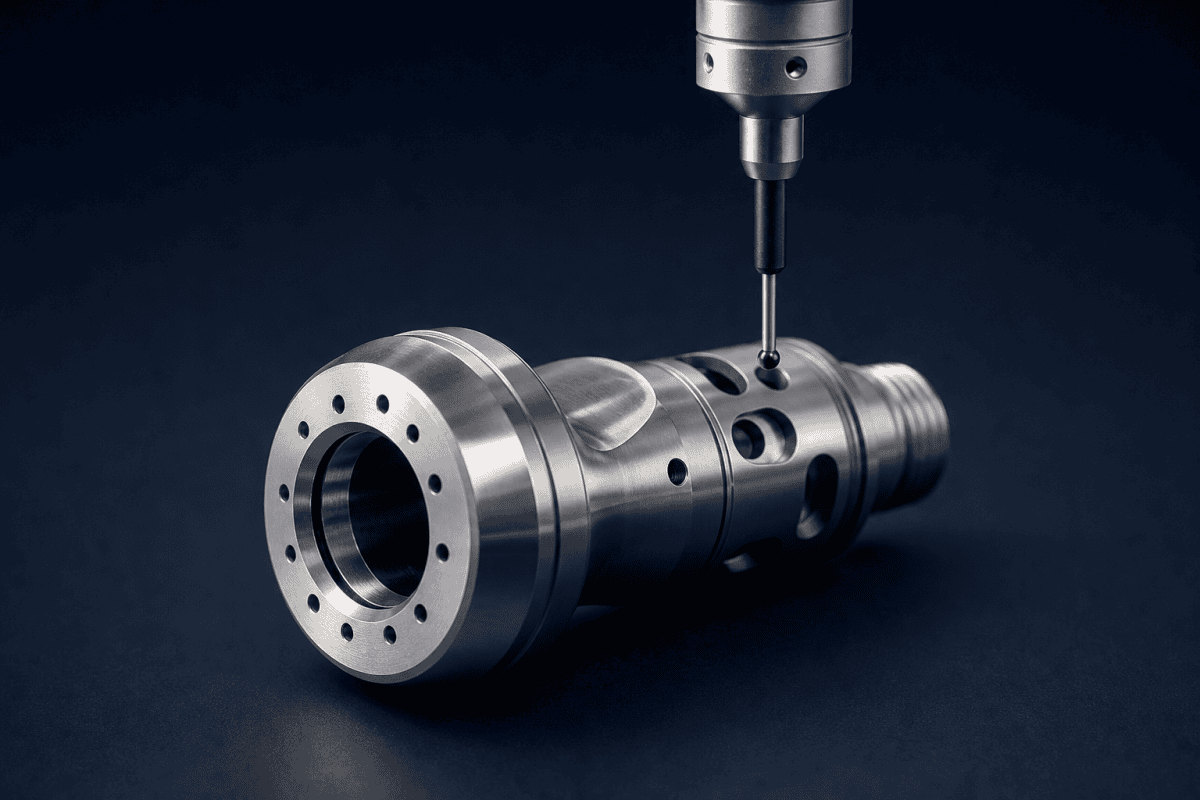
티타늄 OVD 토치 부품은 우수한 강도 대 중량비와 열적 거동으로 인해 사양에 포함되는 경우가 많지만, 티타늄 부품의 가치는 납품된 부품이 의도된 합금, 기하구조 및 표면 상태와 일치하는지 여부에 전적으로 달려 있습니다. 광섬유 프리폼 생산에서 벤치에서 올바르게 보이는 토치 또는 버너 부품이라도 화염 형상, 가스 분배 또는 장착 정렬에 변동성을 초래할 수 있습니다. 잘못된 등급으로 가공된 토치 본체나 노즐 보어가 축에서 벗어난 토치 본체는 육안 검사를 통과하더라도 화염을 충분히 이동시켜 그을음 증착에 영향을 미칠 수 있습니다. 이 글에서는 엔지니어와 유지보수 팀이 설치 전에 티타늄 버너 부품을 검증하는 방법, 입고 부품에서 확인해야 할 사항, 그리고 맞춤형 티타늄 가공을 위한 명확한 요청서를 준비하는 방법을 설명합니다.
OVD 토치 및 버너 응용 분야에 티타늄이 사용되는 이유
외부 증착법(OVD)은 화염과 반응성 증기를 회전하는 타겟 로드에 분사하여 다공성 실리카 그을음 프리폼을 형성합니다. 해당 화염을 생성하고 형상화하는 토치 하드웨어는 연료와 산소를 위한 정밀한 내부 유로를 유지하면서 반복적인 열 사이클을 견뎌야 합니다.
티타늄 및 티타늄 합금은 기계적 강도, 상대적으로 낮은 밀도, 그리고 많은 산업 환경에서의 내식성 조합으로 인해 버너 본체, 장착 하드웨어 및 구조용 토치 부품에 선택되는 경우가 있습니다. 이러한 조합은 부품이 취급 및 위치 결정 특성을 유지할 수 있을 만큼 충분히 견고하면서 가벼워야 할 때 중요할 수 있습니다.
그러나 티타늄이 토치의 모든 위치에 자동으로 적합한 선택이 되는 것은 아닙니다. 재료 적합성은 부품의 기능, 최고 및 반복 온도 노출, 화학적 환경, 그리고 장비 제조사가 정의한 엔지니어링 요구사항에 따라 달라집니다. 티타늄 본체가 한 위치에서는 적합할 수 있지만, 페이스플레이트나 노즐 팁에서는 다른 합금이나 다른 모재가 더 바람직할 수 있습니다. 구매자는 합금 선택을 기본값이 아닌 엔지니어링 결정으로 취급해야 하며, 특히 티타늄 OVD 토치 부품이 새로운 증착 라인에 대해 검증될 때는 더욱 그렇습니다.
승인 전 티타늄 OVD 토치 부품을 검증하는 방법
검증은 부품 가공 전에 시작되어 입고 검사까지 계속됩니다. 목표는 견적 시 제시된 재료와 실제 도착한 재료 사이의 차이를 좁히고, 부품이 가동 중인 라인에 설치된 후가 아니라 아직 입고장에 있을 때 불일치를 발견하는 것입니다.
단순한 “티타늄”이 아닌 합금 등급 확인”
상업용 티타늄은 서로 다른 불순물 한도와 기계적 거동을 가진 여러 등급을 포함합니다. 단순히 “티타늄”이라고만 기재된 발주서는 대체품 사용의 여지를 남깁니다. 도면이나 사양서에는 어닐링 또는 응력 제거와 같은 필요한 상태와 함께 등급이 명시적으로 식별되어야 합니다.
티타늄 OVD 토치 부품을 검증할 때는 밀 증명서 또는 재료 시험 성적서를 지정된 등급과 비교하십시오. 포장 전표에 기재된 일반적인 설명을 받아들이지 말고 보고된 화학 조성과 기계적 물성에 주의를 기울이십시오. 에 따르면 ASTM B265 티타늄 스트립, 시트 및 플레이트 사양, 등급 명칭과 화학 조성 한도는 등급별로 정의되므로, 생산 하드웨어에 사용되는 티타늄 OVD 토치 부품의 경우 도면에 정확한 등급 표기가 중요한 것입니다. 일반적인 계열명만 기재된 증명서는 입고 팀이 비교할 수 있는 것이 아무것도 없습니다.
열처리 번호 및 로트 식별 추적
생산 라인에서 작동하는 토치 부품의 경우 추적성이 중요합니다. 부품이 나중에 예상치 못한 마모나 변형을 보이는 경우, 열처리 로트를 알면 문제가 재료 관련인지 공정 관련인지 판단하는 데 도움이 됩니다. 공급업체에 재료가 어떻게 분리되고 티타늄 OVD 토치 부품 가공 전반에 걸쳐 로트 식별이 어떻게 유지되는지 문의하십시오.
로트 식별은 원자재 바 또는 플레이트에서 완성된 토치 부품에 이르기까지 모든 작업 단계를 거쳐 유지되어야 합니다. 작업장에서 여러 작업을 위해 동시에 소재를 절단하는 경우, 공정에 물리적 태깅이나 전용 용기가 포함되지 않으면 재료 혼합 위험이 높아집니다. 공급업체 자격 심사 중 검토되는 해당 흐름에 대한 서면 설명은 로트 관리가 신뢰할 수 있는지 아니면 비공식적인지 확인하기에 종종 충분합니다.
오염 및 표면 손상 검사
티타늄은 고온에서 오염에 민감하며, 표면 상태는 성능과 피로 거동 모두에 영향을 미칠 수 있습니다. 검사에서는 매립된 이물질, 열 손상을 시사하는 변색, 깊은 공구 자국, 그리고 중요한 밀봉 또는 접합 부위의 취급 흠집을 확인해야 합니다.
가공 잔류물, 절삭유 및 미세 파편은 도면의 청정도 요구사항에 따라 제거되어야 합니다. 가스 경로 부품의 경우 잔류 오염은 정당한 우려 사항이며, 이를 우연에 맡기지 않고 사양서에 명시하여 대응해야 합니다. titanium OVD torch parts를 가스 경로 하드웨어로 취급하는 수입 검사팀은 치수만 확인하는 팀보다 오염 문제를 더 일찍 발견하는 경향이 있습니다. 가스 통로에 대한 간단한 보어스코프 검사와 용제 와이프 테스트를 결합하면 어떤 치수 검사로도 드러낼 수 없는 문제를 발견할 수 있습니다.
도면 대비 치수 검증
치수 검증은 많은 titanium OVD torch parts 문제가 표면화되는 단계입니다. 주요 치수 특성은 일반적으로 다음과 같습니다:
- 전체 길이 및 장착 인터페이스 치수
- 토치 본체와 노즐 보어 간의 동심도
- 내부 통로 직경 및 그 전이부
- 실링 표면 (평탄도 및 표면 조도 포함)
- 나사산 형상, 가스 연결 형상 및 포트 방향
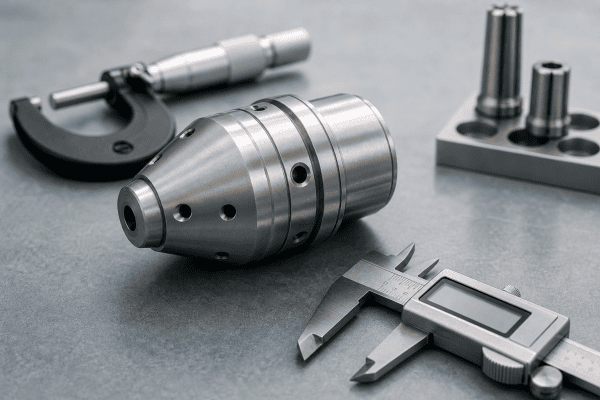
동심도 또는 통로 형상의 작은 편차는 가스 혼합 방식과 화염 형상을 변화시킬 수 있습니다. 치수 검사는 공차에 적합한 측정기기로 수행해야 하며, 결과는 도면 리비전에 대조하여 기록되어야 합니다. 가스 연결 세부사항의 경우, 납품된 형상을 본 가이드의 승인된 참조 기준과 비교하십시오. OVD 버너 헤드 교체. 이러한 검사는 초도품뿐만 아니라 모든 titanium OVD torch parts 배치에 적용됩니다.
도면 리비전 비교
Titanium 부품은 기존 부품으로부터 역설계되거나 재제조되는 경우가 빈번합니다. 이러한 경우, 가공에 사용된 도면 리비전이 장비에 현재 설치된 리비전과 일치하는지 확인하십시오. 폐기된 리비전에 따라 제작된 부품은 장착은 되지만 의도한 대로 성능을 발휘하지 못할 수 있습니다. 일반적인 원칙으로, 모든 장비 브랜드 또는 모델과의 호환성은 추정하지 말고 도면, 치수, 가스 연결, 재료 및 적용 요구사항에 대조하여 검증해야 합니다. 이는 titanium OVD torch parts를 레거시 도면으로 재주문할 때 가장 흔한 간과 사항 중 하나입니다.
티타늄 버너 부품의 가공 고려사항
Titanium은 가공 중 스테인리스강 및 알루미늄과 다르게 거동합니다. 열전도율이 낮아 절삭 날에 열이 집중되는 경향이 있으며, 탄성으로 인해 부하 하에서 공작물 또는 공구가 변형될 수 있습니다. 이러한 특성은 가공업체가 titanium OVD torch parts에 대한 공구, 속도, 고정구 및 검사 방식을 어떻게 접근하는지에 영향을 미칩니다.
토치 및 버너 부품의 경우, 여러 가공 관련 사항이 성능과 직접적으로 연결됩니다:
벽 두께 및 변형
박벽 및 길고 가느다란 형상은 토치 본체에서 흔히 볼 수 있습니다. 불균일한 재료 제거 또는 과도한 클램핑력은 가공 중 부품을 변형시킬 수 있으며, 변형은 고정구에서 부품을 분리한 후에야 해소될 수 있습니다. titanium OVD torch parts 공급업체는 고정구 접근 방식과 완성된 부품이 형상을 유지하는지 검증하는 방법을 설명할 수 있어야 합니다.
변형은 공정 중 검사에서 나타나지 않을 수 있기 때문에 특히 까다롭습니다. 부품이 아직 클램핑된 상태에서는 잔류 응력이 형상을 공차 내로 유지할 수 있지만, 고정구를 개방한 후에야 해소됩니다. 이 위험을 이해하는 공급업체는 종종 황삭과 정삭을 별도의 공정으로 계획하고, 그 사이에 응력 완화 또는 안정화 단계를 배치합니다.
내부 유로 품질
Gas passages require consistent cross-sections and clean transitions. Burrs, chips, or rough internal surfaces can disturb flow. In multi-channel torch designs, small variations in passage geometry can affect pressure balance and mixing behavior, which is why passage inspection on titanium OVD torch parts is worth specifying explicitly. Faceplate hole geometry and burr control are covered in this reference on OVD burner faceplate replacement.
Because internal features are hard to inspect after final machining, it is reasonable to require deburring and passage verification before the part leaves the shop. A visual record or a flow check against a reference value can serve as a baseline for later comparison.
밀봉면의 표면 조도
Sealing surfaces need finishes consistent with the sealing method used. A finish that is too rough may leak; one that is inappropriate for the seal type may also cause problems. The drawing should state the required finish, and inspection of titanium OVD torch parts should confirm it.
Flatness and finish interact. A face that is flat but lightly scored may still seal with a soft gasket, while a harder metal-to-metal seal may demand both tighter flatness and a finer finish. Knowing which sealing method applies helps the receiving team judge which measurements matter most.
동심도 및 정렬
Concentricity between the nozzle bore and the mounting axis influences flame symmetry. Because flame asymmetry can contribute to uneven soot deposition and profile drift, maintaining concentricity should be identified as a critical characteristic on the drawing rather than left to general tolerances. The relationship between burner concentricity and refractive index profile drift is discussed further in this article on burner concentricity and refractive index profile drift.
노즐 보어 세부 형상 및 맞춤 기하구조
Custom nozzle bores add another layer of machining risk. When a torch is built for a specific flame profile, the nozzle bore diameter, taper, and exit condition may be unique to that design. Fabricating titanium OVD torch parts to those drawings requires the shop to hold both the bore geometry and the surrounding mounting features, since a shift in either can move the flame off the intended axis.
공구 마모, 채터, 표면 건전성
Titanium also has a tendency to gall and to work-harden at the surface if a tool rubs instead of cutting. Chatter or a dull edge can leave a hardened, lightly torn layer that is difficult to detect visually but may affect fatigue life. A shop experienced with titanium will control tool wear, choose appropriate carbide grades and coatings, and replace edges on a predictable schedule rather than at the first sign of trouble. For gas-path hardware, surface integrity inside passages deserves the same attention as external faces.
일반적인 조달 문제 및 회피 방법
Most problems with titanium OVD torch parts trace back to incomplete specifications rather than machining skill. The following patterns are worth guarding against.
- Undefined alloy grade. The supplier selects a grade based on availability, and the delivered part may not match the engineering intent.
- Missing drawing revision. The shop machines to an old drawing, and the part does not match the current installation.
- Unspecified critical characteristics. Features that matter for gas flow or alignment are left to general tolerances.
- No inspection documentation. There is no record showing how critical dimensions were verified.
- Cleanliness not addressed. Residue remains in gas-path features after machining.
A practical way to reduce these risks is to attach a specification sheet to the RFQ that lists material grade, drawing revision, critical dimensions, required inspection records, and cleanliness expectations. Suppliers who work regularly with optical fiber equipment components can typically respond to that level of detail with a clearer quotation. When the same titanium OVD torch parts are ordered repeatedly, keeping a locked specification sheet on file prevents the requirements from drifting between purchase orders.
맞춤형 티타늄 가공을 위한 소싱 요청서 준비
When requesting custom OVD torch replacement parts, the more complete the input package, the fewer assumptions the supplier has to make about titanium OVD torch parts. A well-prepared request generally includes:
- A current 2D drawing with revision number, or a 3D model plus a drawing that defines tolerances
- Material grade and any required condition or heat treatment
- Critical dimensions and geometric tolerances, identified rather than implied
- Surface finish requirements for sealing faces and gas passages
- Cleanliness and packaging requirements
- Inspection documentation expectations, such as dimensional reports or material certificates
- Quantity, including any expected repeat demand
- Operating context that affects design, such as the surrounding assembly and how the part is mounted
If an original drawing is unavailable, reverse engineering from a physical sample is possible, but the sample should be in good condition and accompanied by information about how the part is used. A worn or modified sample can lead to a new part that reproduces the wear rather than the original design intent. Suppliers offering OEM/ODM 기계 가공 서비스 can typically advise on what measurements and photographs are needed to reconstruct a usable drawing for titanium OVD torch parts.
It also helps to say what will happen after delivery. A part that will be installed by a maintenance team during a short shutdown window deserves packaging and labeling that make it easy to identify and stage. A part that will be held in stores for months benefits from corrosion protection and clean handling. Those details are easy to add to the request and easy for a supplier to overlook when they are not stated.
부품과 공정의 매칭
OVD, VAD, and MCVD torches differ in how gases are delivered, how the flame interacts with the target, and what the surrounding hardware must withstand. Components are not interchangeable across these processes by default. A titanium component that performs well in one torch position may be unsuitable in another because of temperature exposure, mounting geometry, or gas-path requirements.
Before ordering, confirm which process and which torch position the component serves, and verify that the supplier understands the distinction. For a comparison of how nozzle and burner requirements differ across these processes, see this guide to 맞춤형 OVD 버너 노즐 교체. Teams that document process and torch position alongside the alloy grade tend to receive titanium OVD torch parts that match the intended duty.
검사 및 유지보수 계획
Titanium OVD Torch Parts should be inspected on a schedule tied to production experience rather than a fixed interval copied from another line. Useful inspection points include mounting interfaces, sealing surfaces, gas ports, and the nozzle or faceplate region where soot and thermal exposure are concentrated.
Records from incoming inspection become the baseline for later comparison. If a component begins to show dimensional change, seal degradation, or surface buildup, the original inspection data helps distinguish normal wear from a material or machining problem. Teams reviewing burner condition may also find relevant background in this article on preform end-taper thermal stress.
Maintenance planning also benefits from grouping components by replacement cycle. Faceplates, nozzles, and seals often wear on different timelines, and ordering them together wastes budget if one item outlasts the others by a wide margin. Tracking removal reasons for each position builds a picture of which parts justify stocking and which can be ordered as needed.
검증을 지원하는 품질 문서
Verification is strongest when it rests on documents created before, during, and after machining. Rather than treating paperwork as an afterthought, buyers can ask for a small set of records that make later investigation much easier.
| Record | What It Confirms | Typical Source |
|---|---|---|
| Material test report | Grade, chemistry, mechanical properties | Mill or material supplier |
| Certificate of conformance | Part meets the stated specification | Machining supplier |
| Dimensional inspection report | Critical features within tolerance | Quality department |
| Surface finish records | Sealing and passage finishes as specified | Quality department |
| Cleanliness statement | Gas-path components free of residue | Supplier process |
Not every order needs every record, but the set should be chosen deliberately. A first article usually justifies the full package. Repeat production lots may need only the certificate of conformance plus periodic dimensional checks, provided the supplier’s process is stable and previously reviewed.
자주 묻는 질문
OVD 토치 부품에 어떤 티타늄 등급이든 사용할 수 있습니까?
No. The appropriate grade depends on the component’s function, temperature exposure, chemical environment, and the mechanical requirements defined by the equipment design. The grade should be specified on the drawing or purchase order rather than selected by the supplier based on availability.
비파괴 검사 없이 티타늄 부품을 검증하려면 어떻게 해야 합니까?
Start with the material certificate from the mill or supplier, then confirm lot traceability. Dimensional inspection against the current drawing, visual examination for contamination and damage, and surface finish checks cover most incoming verification needs. Destructive testing is typically reserved for investigation rather than routine acceptance.
기존 토치 부품을 역설계하는 데 필요한 정보는 무엇입니까?
A clean, undamaged sample is the starting point, along with dimensional measurements of all critical features. Additional context about how the part mounts, how gases flow through it, and what surfaces seal against other components helps the supplier reconstruct a drawing that reflects design intent rather than the condition of the worn sample.
OVDParts에서 특정 장비 브랜드와의 호환성을 확인할 수 있습니까?
Compatibility should be verified against drawings, dimensions, gas connections, materials, and application requirements. Providing the current drawing revision and mounting details allows the supplier to evaluate fit and function without relying on brand-level assumptions. This review process applies equally to standard and custom titanium OVD torch parts.
다음 단계
If you are evaluating titanium OVD torch parts or planning a replacement program, the most useful first step is to assemble a complete technical package: current drawings, material grade, critical dimensions, surface finish requirements, and the operating context for each component. You can browse the standard range of OVD deposition parts or send your drawings and operating conditions to request a quotation for custom titanium machining. Including the details above helps ensure the quotation reflects the part you actually need, and it keeps the conversation focused on verified material and geometry instead of assumptions about titanium OVD torch parts in general.
