
Kawruh
Preform Rotation Shafts lan Couplings: Dimensi kanggo Verifikasi Sadurunge Panggantian
Okt
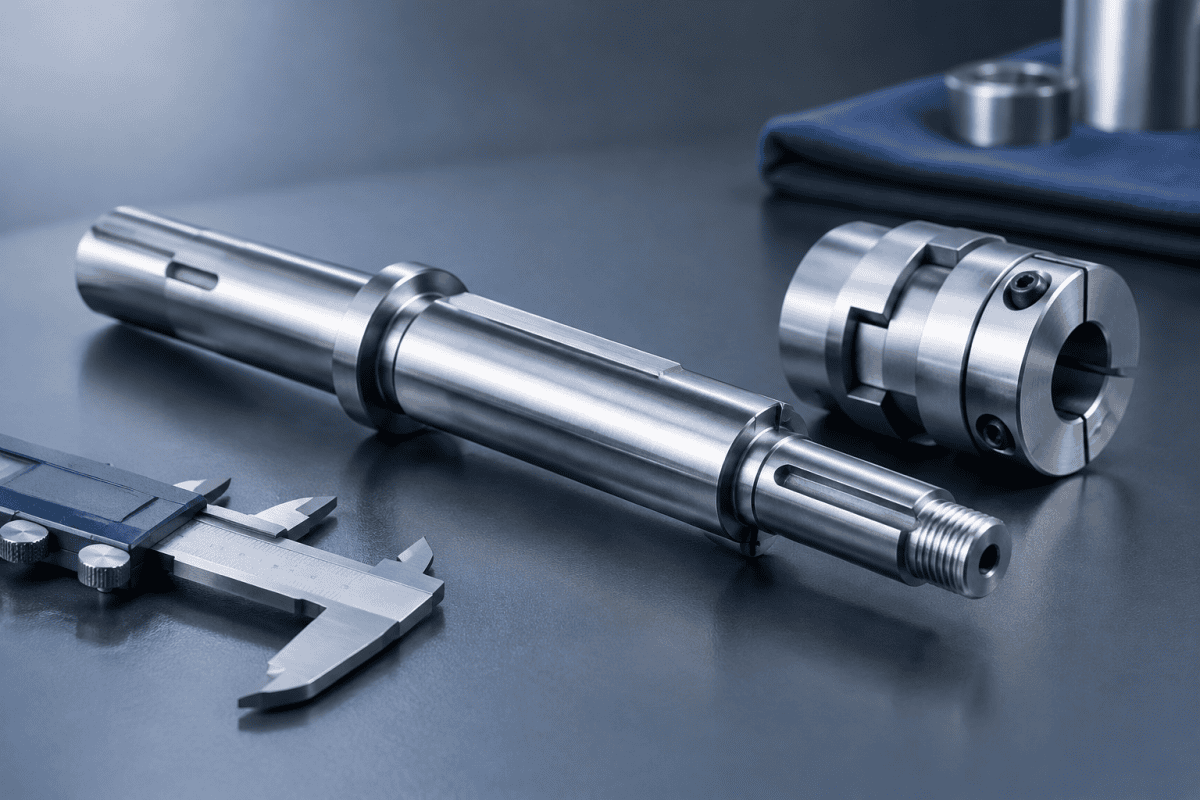
Ngganti preform rotation shafts utawa lathe coupling arang banget mung swap prasaja, sanajan bagean anyar katon identik karo sing lawas. Preform lathe nahan preform kaca sing bisa bobote puluhan kilogram nalika muter kanthi kacepetan sing dikontrol nganti pirang-pirang jam sajrone deposisi utawa konsolidasi, mula shaft lan coupling ana ing tengah loop mekanik sing nuntut. Ketidakcocokan dimensi cilik — sawetara atus milimeter ing runout, jembar keyway sing beda, diameter pilot flange sing salah — bisa katon mengko minangka getaran, drift aksial, utawa nyandhang cepet ing bantalan lan seal.
Artikel iki nerangake dimensi lan detail antarmuka sing kudu diverifikasi dening insinyur lan tim pangopènan sadurunge pesen preform rotation shafts, preform lathe couplings, utawa custom preform equipment shafts, lan carane nyiyapake spesifikasi sing jelas kanggo pengganti. Disiplin pangukuran sing padha sing diterangake ing pandhuan iki kanggo optical fiber winder shafts lan sleeves ditrapake ing kene, amarga loro rakitan kasebut gumantung marang data bore, seat, lan runout sing akurat sing dijupuk saka mesin nyata.
Napa Preform Rotation Shafts lan Couplings Luwih Penting Tinimbang Katon
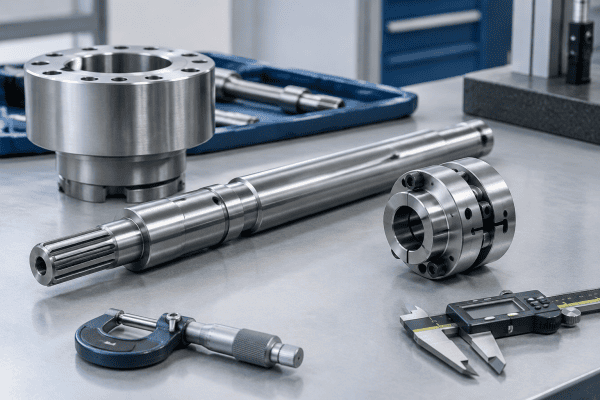
Rotation shaft ngirim torsi saka sistem drive menyang preform chuck utawa mekanisme penahan, lan coupling nyambungake shaft menyang motor utawa gearbox. Bebarengan padha nemtokake posisi aksial preform, stabilitas kacepetan rotasi, lan runout radial. Ing proses OVD lan VAD, preform tuwuh nalika soot disimpen, mula massa lan distribusi massa owah-owahan sajrone run. Ketidakseimbangan utawa misalignment ing rakitan rotasi berinteraksi karo beban sing owah-owahan kasebut, mula shaft sing tumindak apik ing kacepetan rendah bisa mbukak masalah ing kacepetan produksi.
Preform Rotation Shafts mung apik kaya fitur antarmuka ing saubengé. Coupling asring dadi komponen sing luwih diabaikan, lan ngganti siji jinis karo liyane mengaruhi beban bantalan lan getaran. Rigid coupling lan flexible coupling ngidinke misalignment kanthi cara sing beda, mula pilihan kasebut kudu cocog karo maksud desain asli.
Amarga preform lathes biasane mesin custom utawa semi-custom, ora ana standar pengganti universal. Verifikasi dimensi marang mesin nyata, utawa marang gambar sing dipercaya, minangka siji-sijine dhasar sing kuat kanggo pesen. Tim sing nganggep preform rotation shafts minangka komoditas tinimbang minangka bagean khusus mesin biasane mbayar mengko, ing rework, downtime, utawa preform sing dibuwang.
Iku uga mbantu mikir babagan mode kegagalan. Preform rotation shafts arang gagal ing tengah bagean silinder kosong; padha gagal ing step, groove, keyway, utawa bearing seat, ing ngendi stres konsentrasi lan fit penting. Coupling arang gagal mung ing unsur fleksibel; gagal ing ngendi hub clamp utawa key menyang shaft. Dadi upaya verifikasi kudu konsentrasi ing fitur antarmuka kasebut tinimbang ing dimensi outline sakabèhé sing wis dituduhake dening gambar apa wae. Nalika pengganti kudu cocog karo asli sing ora didokumentasikake, fitur antarmuka persis sing kudu dijupuk, lan iku bener apa sampeyan sumber preform rotation shafts utawa subassembly sing luwih cilik kayata bagean peralatan tes bukti serat optik.
Dimensi Shaft Inti kanggo Diukur lan Dikonfirmasi
Garap shaft fitur dening fitur, lan tulisake nomer sing diukur nyata karo instrumen sing digunakake. Calipers apik kanggo mriksa cepet, nanging micrometers, bore gauges, lan dial indicators menehi kapercayan sing dibutuhake kanggo keputusan tuku. Rekam suhu sekitar yen toko luar biasa anget utawa adhem, lan cathet apa pangukuran dijupuk ing bagean gratis utawa ing bagean sing isih dipasang, amarga clamping lan gravitasi bisa ngrusak shaft sing dawa lan langsing.
Diameter shaft lan zona toleransi
Ukur shaft ing saben diameter fungsional: bearing seats, coupling hub seat, fitur pemasangan chuck utawa collet, lan sembarang grooves seal utawa retaining ring. Rekam nilai sing diukur nyata tinimbang nganggep ukuran nominal, amarga nyandhang, rework, utawa revisi sing ora didokumentasikake bisa uga wis ngganti geometri. Cathet kelas toleransi utawa kisaran sing diukur ing saben seat, amarga bearing seat sing longgar banget ngidini creeping lan fretting, dene sing kenceng banget bisa ngrusak bantalan sajrone instalasi.
Ing preform rotation shaft bekas, ukur saben seat ing paling ora rong arah — contone, ing 0° lan 90° — kanggo ndeteksi ovality. Seat sing ukurane pas ing siji arah nanging ora bunder ing arah liyane isih bakal ngasilake fit longgar lan getaran. Kanggo bearing seats, uga priksa burr sing munggah utawa pita sing polesan lan mengkilat, sing biasane menehi tandha yen inner ring wis creeping.
Dawane antarane permukaan referensi
Dawane sakabèhé mung ora cukup. Identifikasi permukaan referensi sing nemtokake posisi aksial shaft — pundhak marang inner ring bantalan, step marang coupling hub, ujung berulir kanggo retaining nut — lan ukur jarak antarane. Kesalahan stack-up ing dimensi kasebut nggeser posisi aksial preform, sing bisa mengaruhi geometri deposisi lan engagement chuck.
Cara praktis yaiku milih siji permukaan lokasi utama, luwih becik pundhak sing nyetel posisi aksial ing omah, banjur ukur kabeh liyane saka iku. Banjur ukur saka ujung ngelawan uga, supaya gambar bisa dipriksa konsistensi internal. Yen rong set angka ora cocog ngluwihi ketidakpastian pangukuran, gambar asli mbokmenawa wis direvisi ing sawetara titik, lan bagean sing diukur kudu diutamakake.
Runout lan concentricity
Total indicated runout (TIR) yaiku variasi ing permukaan sing muter sing diukur nganggo dial indicator nalika bagean muter. Kanggo preform rotation shafts, runout ing coupling seat lan ing chuck interface langsung mengaruhi preform wobble. Ukur runout sing ana ing mesin sadurunge dicopot yen bisa, lan nemtokake syarat runout ing gambar kanggo pengganti. Yen runout minangka masalah sing dikenal ing peralatan sampeyan, artikel ing poros rol panuntun serat optik nerangake carane kesalahan rotasi lan alignment bisa nyebar menyang kualitas preform, sing migunani minangka konteks nalika nyetel toleransi shaft.
Nalika sampeyan ora bisa ngukur ing mesin, sokong shaft ing v-blocks utawa antarane centers lan indikasi saben permukaan fungsional. Cathet loro radial runout lan, yen relevan, face runout saka pundhak sing digunakake minangka datum aksial. Kanggo preform rotation shafts sing digunakake ing kacepetan sing luwih dhuwur, uga cathet apa rakitan kasebut asline seimbang lan nganti grade apa, amarga runout sing bisa ditampa sacara statis isih bisa nyebabake getaran sacara dinamis.
Keyways, splines, lan fitur torsi
Yen shaft nyopir liwat key, ukur ambane keyway, ambane, lan posisi relatif marang fitur referensi. Kanggo splined shafts, cathet jinis spline, jumlah, lan diameter major/minor. Fits ing kene nemtokake backlash; backlash sing gedhe banget nyebabake rotational lash sing bisa katon minangka speed ripple utawa tandha permukaan ing preform.
Ukur ambane keyway ing loro ujung lan tengah, amarga keyway sing aus asring luwih amba ing siji ujung. Cathet uga kondisi sudhut — keyway kanthi sudhut sing dibunderaké utawa rusak bisa ngidini key muter, sing katon minangka fretting ing sekitar key lan hubungan sudut sing rada owah antarane shaft lan hub. Yen mesin nggunakake shrink disc, clamp hub, utawa taper lock tinimbang key, cathet sudut taper lan dawa kontak tinimbang keyway, amarga fitur kasebut nggawa kabeh beban torsi liwat gesekan.
Threads lan fitur retensi
Dokumentasi wangun thread, pitch, diameter, lan tangan saka bagean threaded, bebarengan karo retaining ring grooves, lokasi set screw, lan fitur taper. Thread sing katon padha nanging saka standar pitch sing beda ora bakal bisa diganti kanthi aman ing beban. Gunakake thread gauges utawa pitch gauge tinimbang nganggep standar, lan cathet apa thread iku tangan tengen utawa kiwa, amarga thread tangan kiwa ing shaft sing muter gampang salah diwaca saka foto.
Dimensi Coupling lan Detail Antarmuka
Preform lathe couplings beda-beda banget: bellows couplings, jaw utawa spider couplings, disc couplings, rigid flanged couplings, lan custom machined hubs kabeh digunakake gumantung saka machine builder lan aplikasi. Sadurunge ngganti, verifikasi ing ngisor iki.
- Bore diameters lan toleransi ing loro sisih motor lan sisih shaft, diukur ing motor shaft lan rotation shaft sing nyata, ora dijupuk saka nameplate.
- Coupling length lan hub lengths, kalebu sepira saben hub melu shaft, amarga dawa engagement mengaruhi kapasitas torsi lan stabilitas alignment.
- Keyway utawa konfigurasi clamp, kalebu ukuran clamp screw, thread, lan jumlah kanggo clamp-style hubs.
- Pilot diameter lan bolt pattern kanggo flanged couplings, diukur minangka bolt circle lan dipriksa kanggo jarak sudut.
- Toleransi misalignment saka jinis coupling, amarga ngganti flexible coupling karo rigid siji nransfer misalignment menyang beban bantalan.
Nalika coupling minangka bagéan saka rakitan sing cocog karo shaft, ngganti mung siji setengah bisa uga ora praktis. Ing kasus kasebut, nyedhiyakake loro komponen bebarengan minangka set sing cocog nyederhanakake alignment lan nyuda risiko antarmuka. Kanggo desain coupling non-standar utawa sing ora diterusake, Sumitomo Electric preform equipment parts sourcing shows how the same drawing-based approach can be applied to legacy assemblies from a specific machine builder.
Pertimbangan Material lan Permukaan
Material selection for a rotation shaft or coupling depends on function, load, speed, and environment rather than on a single “best” choice. Common considerations include:
- Strength and stiffness relative to the torque and bending loads the shaft carries, including the changing preform mass.
- Wear resistance at bearing seats, keyways, and clamp interfaces, which may call for a specific alloy, hardening, or coating.
- Corrosion and cleanliness, since fiber production environments may expose parts to moisture, cleaning agents, or process residues. Stainless grades are often chosen for cleanliness reasons, but the appropriate grade depends on the actual exposure.
- Thermal behavior if the shaft or coupling is near a hot zone, because thermal expansion affects fits and alignment.
- Balance at operating speed, which depends on geometry and mass distribution as much as on material.
Do not infer the material of an existing part from its appearance or from a broad product category. If the original specification is unavailable, material can be confirmed by documentation, by hardness and composition testing, or by agreement with the machine builder. The article on Corning preform equipment parts sourcing describes a similar qualification logic, and the same discipline of confirming material and geometry applies to rotating parts such as preform rotation shafts.
Pilihan hardening lan perawatan permukaan
Where wear is the limiting factor, a shaft may be through-hardened, case-hardened, nitrided, or coated. Each approach produces a different depth of hardness and a different effect on dimensional stability. Nitriding, for example, changes dimensions only slightly and is often chosen when a seat must stay on size after treatment, while induction hardening can distort a slender shaft and requires finish grinding afterward. State the required hardness and depth on the drawing, and note which surfaces should be protected from treatment if threads or precision seats could be affected.
For couplings, the flexible element or the contacting surfaces may be the real limit. A jaw coupling spider, a disc pack, or a bellows will have a published torque rating and a recommended replacement interval. If the surrounding hubs are still within tolerance, replacing only the flexible element may restore performance at lower cost, provided the replacement element matches the original stiffness and misalignment characteristics. A softer or stiffer element changes the dynamics of the whole drive train, so match the original specification rather than upgrading by feel. The same interface discipline applies on preform rotation shafts, where a changed hub or element can shift alignment just enough to matter.
Alignment, Instalasi, lan Pemeriksaan Run-In
Dimensional correctness does not guarantee good performance if installation alignment is poor. After fitting a replacement shaft or coupling, verify angular and parallel alignment between the motor and shaft using the method recommended by the equipment documentation, and confirm that the coupling’s misalignment limits are respected. Check axial float and end-play against the machine’s requirements. Rotate the assembly by hand where possible before powered operation, and follow the equipment manufacturer’s procedures for any speed ramp or run-in.
Because preform lathes differ between builders and between process lines, do not assume that alignment values, torque settings, or run-in practices from one machine apply to another. Refer to the machine documentation and involve qualified personnel for drive parameters and any process-related settings. Good general guidance on shaft alignment practice is published by the U.S. Nuclear Regulatory Commission, and while the context differs, the measurement principles for rotating machinery are consistent.
Pemeriksaan sawise run pisanan
After the first powered run, inspect the coupling for unusual warmth, check the shaft seats for any sign of movement, and repeat the alignment check if the machine allows it. Re-measure runout at the chuck interface if a dial indicator setup is practical. Document the readings so that the next replacement has a baseline. On preform rotation shafts that run for long campaigns, a short log of vibration or runout readings taken at fixed intervals will show a trend long before a failure becomes obvious.
Mbangun Paket Spesifikasi Pengganti
A complete specification package reduces quotation cycles and the risk of a non-fitting part. Include:
- A marked-up drawing or sketch of the shaft and coupling with all functional dimensions and reference faces identified.
- Measured values for diameters, lengths, keyways, splines, threads, and grooves, with the measurement method noted.
- Runout, concentricity, and balance requirements if known, or the observed problem on the existing part.
- Material and surface treatment requirements, or a sample for reverse engineering if documentation is missing.
- Operating conditions: rotational speed range, preform mass range, duty cycle, and any thermal or chemical exposure.
- Photographs of the installed assembly and of any wear or damage observed during removal.
If the existing shaft is worn or damaged, the failure mode itself is useful information. A coupling that failed by fatigue cracking, a keyway that fretted, or a bearing seat that spun all point to different corrective priorities, and sharing that context helps a supplier recommend appropriate geometry, fits, and materials for preform rotation shafts.
Two more items are worth adding when available. First, the machine builder, model, and any drawing or part number that appears on a nameplate or in a maintenance record. Second, the acceptable substitution policy: whether the replacement must match the original exactly or whether a functionally equivalent change, such as a different but interchangeable coupling style, is acceptable. Clear answers on both points prevent a supplier from quoting to the wrong assumption. Suppliers who work regularly with preform rotation shafts will also ask which surfaces are datums, so marking those on the sketch saves a round of questions.
Kesalahan Umum sing Nyebabake Fit Ora Apik
Several recurring errors account for most fit problems on preform rotation shafts and couplings. Recognizing them in advance is cheaper than correcting them after delivery.
- Measuring the old part after it has already worn. A worn seat may read under nominal size, so the replacement is made too small and fits loosely. Compare against the drawing where possible, or note that the measurement includes wear.
- Trusting a nameplate or catalog number. Machine builders revise parts without changing the visible model designation, so the part on your machine may not match the catalog listing.
- Reusing a coupling that has already yielded. A coupling that has slipped, cracked, or taken a permanent set will not realign correctly and should be replaced with the shaft.
- Ignoring balance after machining. A replacement shaft that is dimensionally correct but not balanced can vibrate at speed, especially on longer spans.
- Mixing measurement systems. A drawing in inches matched to a part measured in millimeters invites conversion errors, so state the unit system explicitly on every dimension.
These mistakes are avoidable with a short verification routine, and the cost of the routine is a fraction of the cost of a scrapped preform or an unplanned stop. Whether the part is a large preform rotation shaft or a small machined hub, the principle is the same: measure the real interface, document it clearly, and specify it without ambiguity.
Pitakonan sing Sering Ditakoni
Apa aku bisa ngganti mung coupling tanpa ngganti shaft?
Often yes, if the shaft’s coupling seat is within tolerance and shows no wear, fretting, or damage. Measure the seat diameter, runout, and keyway condition first. If the seat is worn or out of round, a new coupling may not achieve a proper fit and the shaft should be repaired or replaced.
Kenapa shaft pengganti kadhangkala nyebabake getaran anyar?
Vibration after replacement usually points to runout, balance, coupling type, or alignment rather than to the shaft material. Verify that coupling misalignment limits are respected, that the assembly is aligned to the machine’s specification, and that runout at functional seats matches the original requirement. If runout is within tolerance and alignment is correct, check balance next, especially if the replacement was machined from a different stock size and the mass distribution changed.
Apa yen aku ora duwe gambar kanggo bagean asli?
A measured sample plus a dimensioned sketch can serve as the basis for reverse engineering. Record all functional dimensions, note the machine and its operating conditions, and confirm material by testing or documentation rather than assumption. A supplier can then quote against those inputs. If the part is small enough to ship, a physical sample plus a sketch is the fastest route to an accurate quotation.
Apa preform rotation shafts bisa diijolake antarane merek lathe sing beda?
Not as a rule. Shaft and coupling geometry is machine-specific, and even visually similar parts may differ in fits, keyways, or reference faces. Interchangeability must be verified against drawings, measurements, and the actual machine interface before ordering. A part that looks right on the bench can still be wrong at speed, so treat interchangeability as something to prove rather than assume.
Langkah Sabanjure
If you are planning a replacement, gather the measured dimensions, drawings or sketches, material requirements, and operating conditions for your preform lathe, then send them to our team. You can request a quotation for a custom preform equipment shaft or coupling, or review related parts such as optical fiber winder cutter assembly parts to see how the same drawing-based approach applies to other machine areas. Clear dimensional data at the start is the most reliable way to avoid fit problems at installation on preform rotation shafts.
