
Knowledge
Nextrom VAD Burner Replacement Parts: Drawing-Based Sourcing Guide
Oct
Sourcing Nextrom VAD burner replacement parts is rarely a simple catalog transaction. VAD (vapor axial deposition) torches operate in a narrow window of thermal and aerodynamic conditions, and the geometry that produces a stable soot preform on one line may not transfer directly to another. For maintenance engineers and purchasing teams, the practical question is not simply “where can I buy a replacement,” but “what information do I need to specify these parts correctly, and how do I verify them before they enter the deposition chamber?” This guide covers the drawing-based approach to sourcing custom Nextrom VAD burner replacement parts, from identifying the critical dimensions to preparing a complete request for quotation.
It is important to note at the outset that OVDParts is not an authorized representative of Nextrom or any other equipment manufacturer. Nextrom VAD burner replacement parts are produced to customer-supplied drawings, samples, or measured dimensions, and compatibility must always be verified against the actual assembly rather than assumed from a brand name.
Why VAD Burner Sourcing Differs from OVD and MCVD
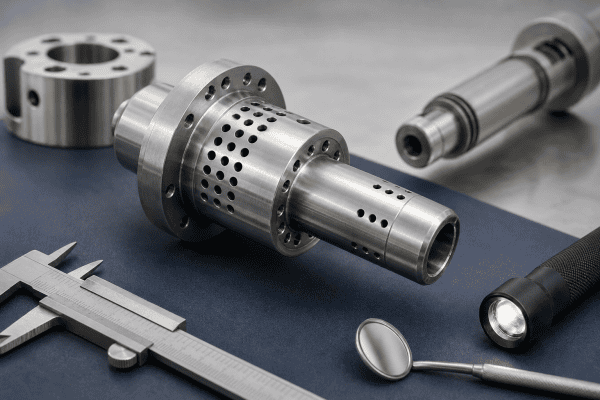
VAD and OVD both build soot, but they do it differently enough that consumable geometry and maintenance priorities are not interchangeable. In VAD, the torch typically fires upward or at a steep angle onto a rotating seed rod, and the deposition rate is strongly influenced by the thermal gradient along the growing boule. OVD usually deposits onto a rotating target rod from a more lateral orientation. MCVD is a wholly different process: the burner traverses an externally heated silica tube, and the torch interacts with the tube surface rather than a free-growing soot body.
That distinction matters when you are sourcing Nextrom VAD burner replacement parts. A VAD torch face, nozzle arrangement, and manifold design reflect the flow and cooling requirements of axial deposition. A part copied from an OVD or MCVD torch without accounting for those differences may fit mechanically and still underperform thermally. For a fuller process-by-process nozzle comparison, see the guide on OVD, VAD, and MCVD burner parts. The takeaway for sourcing is that these components are a process-specific requirement, not a generic torch category.
What “Drawing-Based Sourcing” Actually Requires for Nextrom VAD Burner Replacement Parts
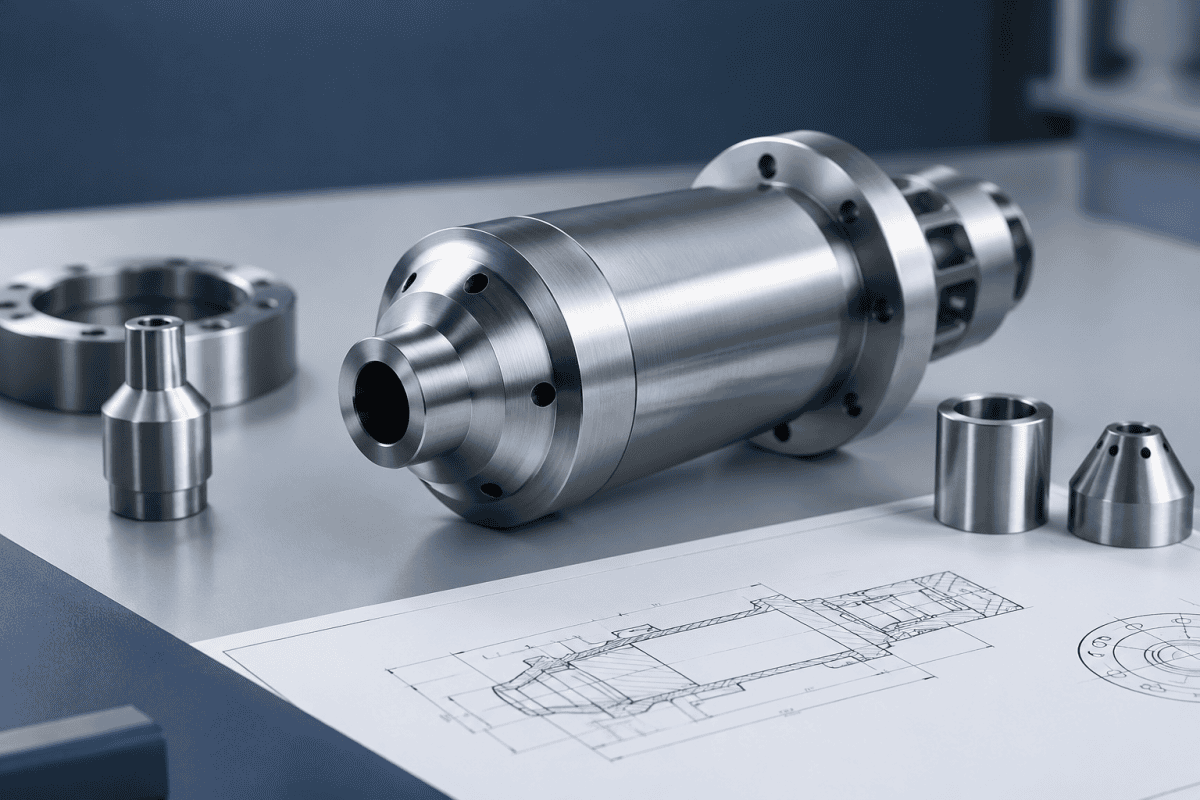
Drawing-based sourcing means the replacement is manufactured against documented geometry rather than selected from a standard list. For Nextrom VAD burner replacement parts, that documentation may take one of several forms, and the quality of the input directly determines the quality of the output.
Acceptable input for a custom quotation
- Original equipment drawings with dimensions, tolerances, and material callouts
- A physical sample component, measured and modeled by the supplier
- Reverse-engineered drawings created from a worn or failed original
- Partial drawings supplemented by measured dimensions from the installed assembly
When originals are unavailable, reverse engineering becomes the practical path. This is a normal situation in fiber preform manufacturing, where equipment may have been in service for many years and paper drawings have been lost. The material science and reverse engineering guide covers how this is typically approached, and it is directly applicable whether you are buying Nextrom VAD burner replacement parts or specifying components for another torch make.
Dimensions that matter most
Not every dimension on a burner drawing carries equal weight. For VAD torch components, the following are usually the first to verify:
- Nozzle bore diameters and spacing — these set gas velocity and mixing behavior at the flame
- Faceplate flatness and concentricity — runout here affects flame symmetry and thus soot distribution
- Gas passage cross-sections — changes in internal geometry alter pressure balance across channels
- Mounting interfaces and sealing surfaces — these determine fit and leak integrity
- Cooling channel geometry, where the torch is water-cooled — restriction or misalignment can cause hot spots
If measurement data is incomplete, it is better to flag the gaps explicitly than to let a supplier assume a value. An assumed concentricity tolerance or an inferred bore diameter can produce a part that installs cleanly but drifts from the intended deposition behavior. That is why a drawing review with the manufacturer before production matters more than a fast quotation.
Material Selection: Function, Not Category
It is common to see Nextrom VAD burner replacement parts described simply by a material name, as though one alloy or grade suits every VAD application. That is not a reliable approach. Material suitability depends on the specific function of the component, its temperature exposure, the chemical environment, and the engineering requirements of the assembly.
Consider the range of parts within a VAD torch assembly: a faceplate exposed directly to flame and radiant heat has different demands from a manifold block that carries gas at moderate temperature, which in turn differs from a structural bracket that sees little heat at all. A material that performs well in one position may be a poor choice in another, even within the same torch.
When specifying material for a custom Nextrom VAD burner replacement part, provide the supplier with:
- The component’s role and how it is loaded (thermal, mechanical, or both)
- Any known service environment details from your process documentation
- Original material callouts, if available
- Any constraints on weight, thermal expansion, or surface finish
This lets the manufacturer recommend or confirm a material rather than guess. Where the original specification is unknown, the discussion should be about matching function, not about defaulting to whatever material appears in an unrelated product listing. If your process documentation includes only partial temperature data, state that limitation in the inquiry; a machinist who knows a figure is approximate can build in margin, but one who assumes it is exact cannot.
Inspection and Failure Analysis Before You Reorder
The most common sourcing error is replacing a burner without understanding why the previous one failed. If the root cause was not the component itself, the replacement will fail the same way. Before compiling drawing requirements for Nextrom VAD burner replacement parts, inspect the removed part with the following in mind.
Points to verify on the failed component
- Is there localized erosion or pitting on the faceplate, or is wear distributed evenly?
- Are any gas passages partially blocked, and if so with what?
- Do sealing surfaces show fretting, cracking, or deformation?
- Is there evidence of overheating — discoloration, warping, or coolant-side deposits?
Each pattern points in a different direction. Localized faceplate erosion suggests a flow or alignment issue rather than a materials problem. Soot accumulation near the nozzles may relate to faceplate temperature or standoff distance from the deposition surface. A diagnosis based on visual inspection alone is a hypothesis rather than a conclusion, so treat each finding as a possible cause and look for corroborating evidence — process data trends, maintenance history, or the condition of mating parts — before committing to a redesign. A short note in the sourcing package explaining what you observed and what you suspect will help the supplier flag dimensions that are most likely to have changed.
Preparing the Sourcing Request
A well-prepared request shortens lead time and reduces the risk of a part arriving that does not match the installation. The following checklist covers what a manufacturer typically needs to quote Nextrom VAD burner replacement parts.
- Part identification: machine position, torch model where known, and any internal part number
- Documentation: drawings, 3D models, or a physical sample for reverse engineering
- Dimensions and tolerances: both nominal values and the tolerances you actually require
- Material requirement: original specification if known, or functional requirements if not
- Quantity and usage: one-off replacement versus recurring consumable demand
- Interface details: gas connection types, sealing method, and mounting features
- Operating context: the process conditions the part will see, at the level your documentation permits
For non-standard or discontinued components, this information feeds directly into CNC machining for preform burner components, where parts are produced to the supplied geometry rather than selected from a fixed catalog. Where only a worn original is available, reverse engineering can reconstruct the geometry, though the resulting drawing should be reviewed against the installed assembly before production. The ISO 2768 general tolerance standard provides a useful reference for default tolerances when original specifications are unclear, and it is worth citing in the inquiry so both parties work from the same assumptions.
Compatibility Verification
Brand association is not a compatibility guarantee. A component described as suitable for Nextrom VAD equipment still has to match the specific assembly it will enter, and assemblies vary with machine generation, configuration, and any modifications made over the equipment’s service life.
Verification of Nextrom VAD burner replacement parts should cover:
- Dimensional match to the mounting interface and gas connections
- Material suitability for the component’s actual thermal and chemical exposure
- Sealing method and surface finish requirements
- Any application-specific requirements documented by your process engineering team
Where a batch of Nextrom VAD burner replacement parts is planned, it is sensible to verify one unit against the assembly before committing to a full order. This is a low-cost step that catches interface mismatches early. Keep a record of the measurements taken during that first-article check; the same values become the baseline for the next replacement, which shortens future inquiries considerably.
Documentation Package: What to Include and What to Withhold
A complete documentation package is more than a single drawing. When preparing to source Nextrom VAD burner replacement parts, assemble the following into one folder or transmission so the supplier is not working from fragments:
- The current revision of each drawing, with a date and revision letter
- Any 3D model files in a neutral format, if available
- Photographs of the installed assembly and of the removed component
- Measured values for interfaces that are not fully dimensioned on the drawing
- The material callout, or a functional description if the callout is unknown
- Inspection findings from the failed part, with a note on which are confirmed and which are suspected
What you should withhold is equally clear: proprietary process parameters that are not necessary to manufacture the part. The geometry and fit requirements are what the manufacturer needs. Deposition recipes, gas flow setpoints, and internal performance targets are not required to machine a faceplate or a manifold and should stay inside your organization unless there is a specific engineering reason to share them.
If multiple parties are involved in the inquiry, nominate one point of contact on your side. Conflicting instructions from two engineers are a common cause of a part arriving with a dimension that one department measured differently from another.
How to Compare Quotations for Custom Burner Components
Quotations for Nextrom VAD burner replacement parts are not directly comparable unless the scope is the same. Two suppliers may quote different prices for what appears to be the same part while making different assumptions about tolerances, material certification, or inspection level. Before comparing figures, check the following.
- Tolerance basis: Is the quote built on the tolerances you specified, or on a general default?
- Material certification: Does the price include mill certificates or a material test report?
- Inspection report: Is a dimensional inspection report included, or is it an extra?
- Surface finish: Is the finish specified on the drawing being met, and is that stated?
- Lead time basis: Is the stated lead time from receipt of a complete package or from order confirmation?
- Quantity breaks: If recurring consumption is expected, does the quote show pricing at higher volumes?
A lower price built on looser tolerances is not a saving if the part has to be reworked or replaced after installation. Conversely, a quote that includes an inspection report may be worth more than a cheaper one that leaves verification entirely to you, particularly for a first article. For a broader look at how these factors are weighed on related hardware, see the questions listed for VAD cladding burner components; the same logic applies to any custom torch part.
Common Mistakes in Drawing-Based Sourcing
Most problems encountered when buying Nextrom VAD burner replacement parts trace back to a small number of recurring errors. Recognizing them in advance is cheaper than correcting them after delivery.
Reusing a drawing without checking its revision
Equipment is often modified over its service life, and a drawing that was correct five years ago may not reflect the current assembly. Confirm the revision against the machine before the drawing goes to the supplier.
Leaving tolerances to the supplier’s default
When tolerances are not stated, the manufacturer will apply a general default. That default may be perfectly reasonable for the material and process, but it may also be looser than the assembly requires. State the tolerances that matter and allow defaults only where the dimension is non-critical.
Specifying material by brand rather than by function
A brand name does not describe how a component behaves at temperature. Describe the loading and environment, and let the material follow from those requirements.
Skipping the first-article check
Verifying one unit before a full batch is inexpensive and catches interface problems while they are still easy to correct. Skipping it shifts the risk to the production line.
Frequently Asked Questions
Can a VAD burner component be reverse engineered if no original drawing exists?
Yes, in most cases. A physical sample can be measured and modeled to produce manufacturing drawings. The accuracy of the result depends on the condition of the sample; a heavily worn part may need measurements taken from the installed assembly to recover dimensions that have been lost to erosion or deformation. This applies whether you are sourcing Nextrom VAD burner replacement parts or components for other torch models.
How do I choose a material if the original specification is unknown?
Work from function rather than from a material name. Describe the component’s role, its temperature exposure, and any chemical environment details from your process documentation, then let the manufacturer propose a material for review. Avoid selecting a material based only on where it appears in an unrelated product listing.
What is the minimum information needed for a quotation?
A drawing and a material requirement are the essentials for Nextrom VAD burner replacement parts. If those are unavailable, a sample component plus the machine position and any known operating conditions will usually be enough to begin. Missing tolerances or interfaces should be identified explicitly so they can be measured rather than assumed.
Should I replace the whole torch assembly or just the worn component?
That depends on the inspection findings. If wear is confined to a single faceplate or nozzle insert, replacing only that component is often appropriate. If the failure involves distortion of the main body or degradation of sealing interfaces, a broader replacement may be the more reliable option. Base the decision on measured condition, not on a fixed replacement interval.
How long does a drawing-based order typically take?
Lead time depends on whether the drawing is complete, whether a sample must be measured, and whether the material is stocked. An inquiry that includes a current drawing, a stated material, and defined tolerances can usually be quoted and scheduled faster than one that begins with a worn sample and no dimensions, because the measurement work is already done.
Next Step
If you are sourcing Nextrom VAD burner replacement parts or custom VAD burner components, the fastest route to an accurate quotation is to send your drawings, dimensions, material requirements, and a description of the operating conditions. Where drawings are unavailable, a sample component or measured dimensions from the installed assembly can be used as the starting point. To discuss a specific requirement or request a quotation for Nextrom VAD burner replacement parts, provide the part details and any inspection findings you already have, and the geometry can be reviewed against your application before production begins. With the right documentation and verification steps, these components can be sourced efficiently and reliably.
Related Resources
For more detailed information on specific aspects of VAD and OVD burner component sourcing, explore these related articles:
- Nextrom OVD Torch Spare Parts: Component Sourcing and Fit Verification
- Nextrom OVD Burner Replacement Drawings for Custom Parts Sourcing
- OVD Burner Head Replacement: Comparing Drawings and Gas Connections
- Nextrom OVD Burner Nozzle Replacement: Dimensions and Connections to Verify
- OVD VAD MCVD Burner Parts: Which Components Need Separate Specifications
- VAD Cladding Burner Components: Key Questions Before Custom Machining
- CNC Machining Preform Burner Components for Small-Batch Production
