
지식
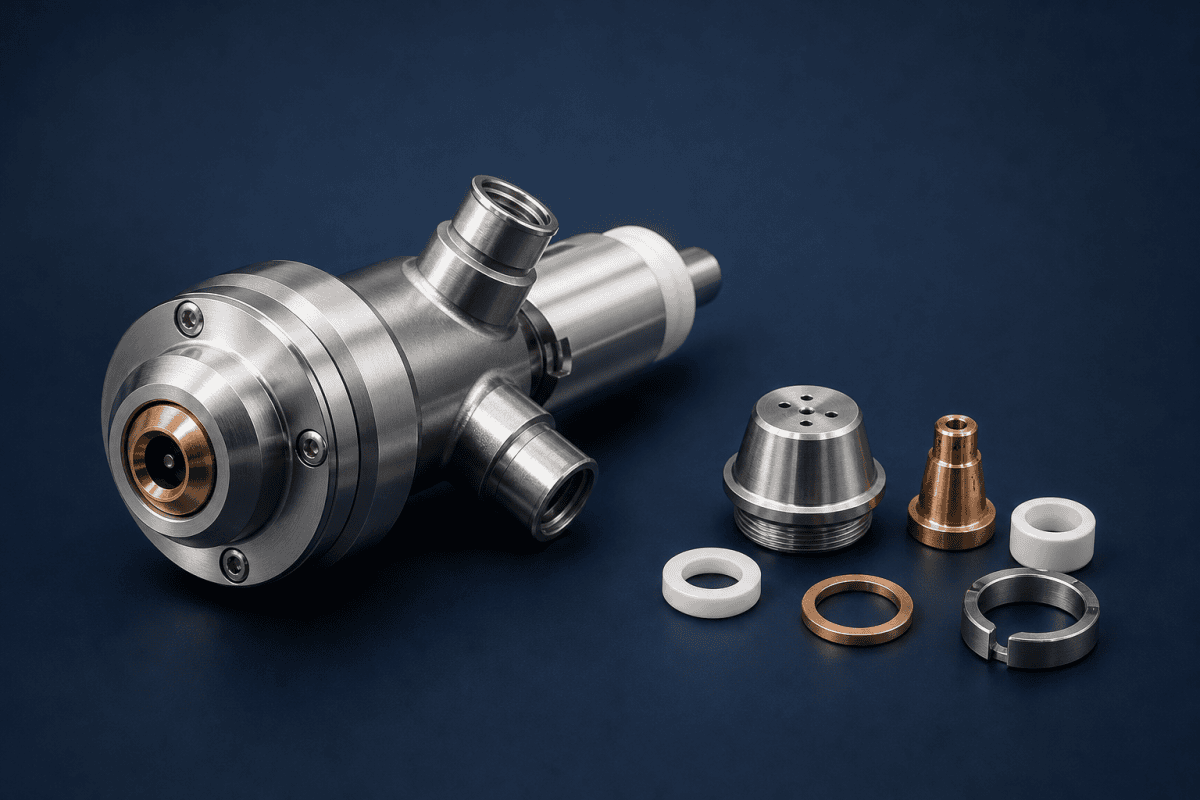
OVD 토치 예비 부품: 개별 구성품 또는 완전 조립체
10월
OVD 증착 토치가 예상대로 작동하지 않으면 유지보수 팀은 실질적인 결정에 직면합니다. 마모되거나 손상된 구성품만 교체할 것인지, 아니면 완전한 버너 어셈블리를 설치할 것인지입니다. 정답은 모든 셧다운마다 동일하지 않습니다. OVD 토치 예비 부품은 단일 노즐과 개스킷에서 완전히 조립된 토치 헤드에 이르기까지 연속선상에 존재하며, 올바른 선택은 다운타임, 비용, 공정 안정성, 그리고 가동 중인 증착 공정에 새로운 변수를 도입할 위험에 영향을 미칩니다.
이 글에서는 광섬유 프리폼 제조를 위한 해당 결정을 평가하는 방법, 주문 전에 점검해야 할 사항, 그리고 공급업체가 정확하게 견적을 제시할 수 있을 만큼 충분한 정보를 제공하는 소싱 요청을 준비하는 방법을 설명합니다.
OVD에서 OVD 토치 예비 부품 결정이 중요한 이유
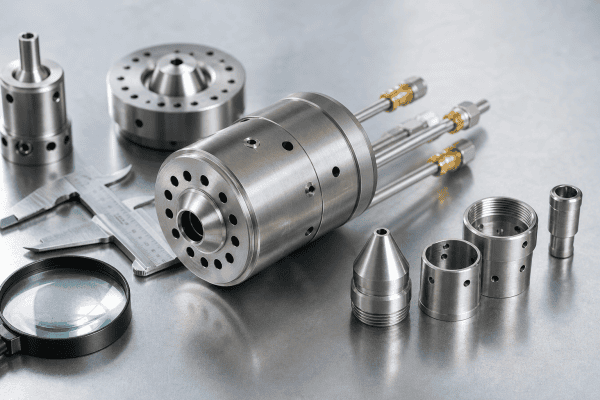
외부 증착(OVD)은 회전하는 타깃 로드에 대해 상대적으로 움직이는 다채널 토치를 통해 가스를 공급하여 다공성 실리카 수트 프리폼을 형성합니다. 각 채널은 뚜렷한 기능을 가지며, 일반적으로 연료, 산소, 증기 함유 캐리어 가스입니다. 노즐 출구의 형상은 화염 모양, 혼합, 그리고 수트가 안착하는 위치에 강한 영향을 미칩니다. 토치가 해당 공정의 중심에 있기 때문에, 토치에 대한 모든 변경은 단순한 하드웨어 교체가 아니라 공정 변경입니다.
이것이 핵심적인 긴장 관계입니다. 완전한 어셈블리 교체는 여러 변수를 한 번에 재설정하며, 이는 토치가 수명 말기에 있을 때 도움이 될 수 있습니다. 그러나 동시에 모든 채널에 걸쳐 새로운 공차를 도입합니다. 단일 구성품 교체는 덜 방해적이지만, 고장이 진정으로 국부적이고 교체품이 원래 형상 및 재질과 일치하는 경우에만 해당합니다.
어느 접근 방식도 보편적으로 옳지 않습니다. 올바른 선택은 무엇이 고장났는지, 토치가 어떻게 사용되는지, 유지보수 이력이 무엇을 보여주는지에 달려 있습니다. 실제로 대부분의 광섬유 작업장은 OVD 토치 예비 부품을 긴급 구매가 아닌 전략적 재고 품목으로 취급합니다. 리드 타임과 검증 단계 모두 선반이 생산으로 복귀하는 속도에 영향을 미치기 때문입니다.
개별 증착 토치 구성품이 더 나은 선택인 경우
구성품 수준 교체는 문제가 명확하게 격리되어 있고 토치의 나머지 부분이 허용 가능한 상태에 있을 때 타당합니다. 일반적인 후보는 다음과 같습니다.
- 페이스플레이트 또는 노즐 출구 마모. 수트 축적, 열 사이클링, 세정은 다른 채널은 안정적으로 유지되는 동안 한두 채널의 출구 형상을 점진적으로 변화시킬 수 있습니다.
- 씰, 개스킷, O-링. 이들은 본질적으로 소모품이며 일반적으로 일정에 따라 또는 토치를 열 때마다 교체됩니다.
- 가스 공급 피팅 및 연결부. 단일 입구의 누출 또는 손상된 나사산은 토치 전체를 교체할 정도로 정당화되지 않는 경우가 많습니다.
- 체결구 및 위치 결정 형상. 마모된 다웰 핀 또는 클램핑 면은 가스 운반 본체를 건드리지 않고 복원할 수 있는 경우가 있습니다.
장점은 여전히 잘 작동하는 채널을 보존하고, 변경을 작게 유지하며, 한 번에 도입되는 새로운 공차의 수를 줄인다는 것입니다. 요구 사항은 규율입니다. 결함이 국부적이라고 확신해야 합니다. 여러 채널이 드리프트하고 있거나 토치 본체 자체가 변형된 경우, 한 부품을 교체하는 것은 문제를 해결하기보다 단순히 문제를 이동시킬 수 있습니다.
OVD 토치 예비 부품을 소량 재고로 보유한 작업장의 경우, 구성품 수준 경로는 주말이나 야간 근무 시 대응 시간도 단축합니다. 동일한 토치의 살아남은 채널과 비교하여 교체품을 검증할 수 있기 때문입니다. 예비품 자체가 원본 도면으로 추적 가능하지 않으면 이러한 속도 이점은 사라지므로, 문서화는 선택적 추가 사항이 아니라 가치의 일부입니다.
버너 어셈블리 교체가 정당화되는 경우
전체 어셈블리 교체는 증거가 단일 마모 부품이 아닌 시스템 수준 열화를 가리킬 때 더 방어 가능한 옵션이 됩니다. 지표는 다음과 같습니다.
- 여러 채널이 동시에 동심도 또는 정렬 드리프트를 보이는 경우.
- 일관된 세정 관행에도 불구하고 페이스플레이트 전반에 걸쳐 반복적인 수트 막힘이 발생하는 경우.
- 개별 구성품 점검 후에도 화염 기울기 또는 비대칭이 지속되는 경우.
- 토치 본체, 장착 인터페이스 또는 냉각 통로의 물리적 손상.
- 토치가 이미 한 번 이상 재생된 이력을 보여주는 유지보수 이력.
이러한 경우 개별 부품을 계속 추적하는 것은 단일 계획 교체보다 누적 다운타임 측면에서 더 많은 비용이 들 수 있습니다. 완전한 어셈블리는 또한 설치 전에 벤치에서 핏, 정렬, 누출 무결성을 검증할 수 있게 해주며, 이는 현장에서 부품을 교체할 때 더 어렵습니다.
트레이드오프는 공정 재검증입니다. 새 어셈블리는 동일한 도면으로 제작된 경우에도 자체 공차 스택을 갖습니다. 설치 후 화염 외관, 증착 속도, 프리폼 품질 지표를 다시 확인할 것으로 예상하고, 즉각적인 동등성을 가정하기보다 첫 실행을 검증 기간으로 취급하십시오. 노즐 형상이 결과에 어떻게 영향을 미치는지에 대한 배경은 다음 논의를 참조하십시오 버너 노즐 정밀도와 프리폼 수율.
이 결정은 예비 부품 예산 주기에도 영향을 미칩니다. 완전한 어셈블리는 더 큰 단일 항목인 반면, 구성품 수준 프로그램은 비용을 연간에 걸쳐 분산합니다. 두 모델 모두 정당합니다. 중요한 것은 교체 주기가 계획할 수 있을 만큼 충분히 예측 가능한지, 아니면 증착 실행이 이미 사양을 벗어난 후에야 고장이 발견되는지입니다.
결정을 내리기 전 점검 단계
좋은 예비 부품 결정은 습관이 아니라 검사 데이터에서 나옵니다. 무엇이든 주문하기 전에 다음 점검 사항을 검토하고 발견한 내용을 기록하십시오. 이 단계들은 일반적인 검사 논리를 설명합니다. 항상 장비 문서와 현장 안전 절차를 따르고, 고온 표면, 가스 라인 및 모든 공정 화학물질은 자격을 갖춘 인력이 취급하도록 하십시오.
증상을 정확히 기록하십시오
“토치가 제대로 작동하지 않는다”는 것은 실행 가능한 정보가 아닙니다. 무엇이, 언제, 어떻게 변화했는지 기록하십시오—예를 들어, 증착 속도의 점진적 저하, 화염 형상의 육안으로 확인 가능한 변화, 또는 측정된 프리폼 파라미터의 변동 등입니다. 이 기록은 교체가 실제로 문제를 해결했는지 판단하기 위한 기준선이 됩니다.
페이스플레이트와 노즐 출구를 점검하십시오
그을음 축적, 변색, 침식 또는 기계적 손상을 확인하십시오. 축적이 균일한지 특정 채널에 집중되어 있는지 기록하십시오. 국부적인 패턴은 단일 채널 문제를 시사하는 반면, 광범위한 패턴은 시스템 수준의 원인을 가리킵니다. 버너 페이스플레이트의 실리카 그을음 막힘 방지에 관한 저희 기사에서 이 검사를 더 자세히 다루고 있습니다. 이 검사를 더 자세히 다룹니다.
정렬과 동심도를 확인하십시오
절차와 공구가 허용한다면, 채널이 동심도를 유지하는지 그리고 토치가 대상 로드에 대해 올바르게 위치하는지 확인하십시오. 동심도 이탈은 프로파일 문제의 흔한 원인이며, 바디나 마운팅이 이동한 경우 단일 노즐 교체로는 교정하기 어렵습니다. 관련 논의는 열영동 현상과 오리피스 마모로 인해 OVD 그을음 증착 속도가 저하되는 이유에 관한 저희 가이드에서 확인할 수 있습니다. 열영동과 오리피스 마모로 인해 OVD 그을음 증착 속도가 감소하는 이유.
가스 연결부와 밀봉면을 검토하십시오
Inspect inlets, fittings, and sealing faces for leaks, corrosion, or thread damage. Leak checks should follow your established procedures. A persistent leak at one inlet is a strong argument for component-level repair; leaks at multiple inlets suggest the assembly has reached the end of its service interval.
유지보수 이력과 비교하십시오
If the torch has been rebuilt repeatedly, the cumulative record may justify replacement even when no single inspection item looks catastrophic. Conversely, a torch with a short service history and one clear fault is usually a candidate for targeted part replacement.
교체 부품의 재질 및 형상 요소
OVD torch components operate under thermal cycling, reactive gas exposure, and repeated cleaning. Material selection therefore depends on the specific function of each part—its temperature exposure, chemical environment, and mechanical role—rather than on a single “best” material. Two parts on the same torch may reasonably use different materials because they see different conditions.
This is why matching a replacement part requires more than a part number. The material, surface finish, exit geometry, and channel dimensions all need to correspond to the original design intent, or the replacement will behave differently even if it physically fits. Sourcing OVD torch spare parts without verified drawings usually means committing to a reverse-engineering study first, which adds time but prevents a mismatch that only shows up mid-run.
A few practical points:
- Do not assume a material from a product category or part name. Confirm it against the drawing, the application, and the supplier’s specification.
- If the original material is unknown, treat reverse engineering as a project: measure, characterize, and document before committing to production.
- For parts where weight, thermal conductivity, or machinability matter, aluminum may be appropriate for some OVD components but not for high-temperature gas-path parts. Suitability is application-specific.
정확한 견적을 받을 수 있는 소싱 요청 작성
Whether you need a single nozzle or a full replacement assembly, the quality of your inquiry determines the quality of the response. A useful request typically includes:
- Drawings or models for the original part, if available. Even partial drawings help.
- Key dimensions if drawings are missing—channel diameters, exit geometry, overall length, mounting interfaces, and connection types.
- Material requirements as known, plus the operating conditions the part sees.
- Quantity and usage pattern, including whether the part is a routine consumable or a one-time replacement.
- Application context—which process and which position on the torch the part serves.
For components that are no longer available from the original equipment source, or that need modification, a drawing-based manufacturing approach is often the most practical route. Review the guide to custom OVD burner nozzle replacement to see how critical specifications are confirmed on non-standard parts, and compare against standard catalog items when a stock spare may already match your requirement.
When the assembly approach is preferred, the drawing comparison step becomes even more important, because the mounting interface and gas connections must match at the assembly level rather than at a single channel. A proven process for this verification is described in our post on comparing OVD burner head drawings and gas connections. Suppliers that already serve OVD lines tend to recognize the same specification set, which shortens the back-and-forth and reduces the chance of a misquote.
작업장 전체의 OVD 토치 예비 부품 표준화
Many fiber producers operate more than one lathe, and not all of those lathes carry identical torch hardware. Building a small controlled library of OVD torch spare parts—with drawings, material records, and inspection results stored together—makes the component-versus-assembly decision faster each time it comes up. A spare that has a documented history is far easier to justify than one that only has a catalog number.
A useful convention is to classify each spare part by criticality. Parts whose failure stops production immediately, such as faceplate assemblies and gas-path seals, may deserve both a shelf spare and a qualified alternative source. Parts that can tolerate a short interruption, such as mounting hardware or locating features, can often be handled with a shared shop inventory. This classification also clarifies which OVD torch spare parts should be inspected on receipt and which can be stocked as-is.
Traceability is the other half of that discipline. If a component is replaced and the process later drifts, the maintenance record needs to show which part went in, when, and against which drawing it was verified. Without that record, a later investigation has to rely on memory, and the cause of the drift is often ambiguous. Treating OVD torch spare parts as documented assets rather than anonymous consumables makes it possible to separate a genuine hardware problem from an unrelated process change.
Shops that maintain this discipline usually find that the component-versus-assembly question becomes easier to answer, because the data needed to justify either route is already on file. The decision then rests on real evidence—inspection results and service history—rather than on the urgency of the moment.
비용, 다운타임, 총 소유 비용
Comparing a single part price against an assembly price is misleading if downtime is excluded. The relevant comparison is total cost of ownership over the service interval, which includes the part itself, the labor to install and verify it, the process runs lost to re-qualification, and the risk of a repeat failure. A cheaper component that fails early can be more expensive than a full assembly that runs to its planned replacement interval.
The OVD torch spare parts program should therefore be reviewed with the same rigor as any other consumable category. Track failure modes, replacement frequency, and the observed effect on deposition results. Over time, those records show whether component-level repair is holding the line or whether the torch is drifting toward a replacement point. Public reference material from standards bodies and equipment documentation can help frame this review; for general guidance on thin-film and vapor deposition terminology and practices, the ASM International technical resources are a legitimate starting point for shared vocabulary.
One practical rule: never let a cost comparison drive a decision that the inspection data does not support. If the evidence points to localized wear, component-level replacement is the appropriate step, regardless of assembly pricing. If the evidence points to system-level degradation, an assembly replacement is the honest answer even if the line item is larger.
피해야 할 일반적인 주문 실수
Most sourcing problems with OVD torch spare parts trace back to a small number of preventable errors. Being aware of them shortens quoting cycles and reduces the chance of a return or rework:
- Ordering by description instead of drawing. A part described as the same nozzle may have a different exit geometry or material grade.
- Omitting the operating position. Two nozzles on the same torch can look identical but serve different gas channels.
- Leaving material blank. Suppliers will assume a default, which may not match the original specification.
- Ignoring lead time in the maintenance plan. A replacement that arrives after the next scheduled shutdown has not solved the problem.
- Skipping receipt inspection. Verifying critical dimensions on arrival catches errors while there is still time to react.
Avoiding these mistakes is less about supplier selection and more about internal discipline. The information needed to order OVD torch spare parts correctly usually exists inside the plant; the task is to assemble it into a clear, reviewable package before the inquiry goes out.
자주 묻는 질문
단일 노즐을 교체해야 하는지, 토치 전체를 교체해야 하는지 어떻게 알 수 있습니까?
Start with inspection evidence. If the fault is confined to one or two channels and the torch body, mounting, and other channels are within specification, component-level replacement is usually reasonable. If multiple channels have drifted, if the body shows damage, or if the torch has already been rebuilt several times, a complete assembly is often the more cost-effective path once downtime is included.
하나의 토치에 서로 다른 공급업체의 교체 부품을 혼용할 수 있습니까?
Technically it may be possible, but it introduces additional variables. Different suppliers may interpret tolerances differently, use different materials, or apply different surface finishes. If you do mix sources, verify dimensions, materials, and fit against the original specification for each part, and re-check process performance after installation.
원본 도면이 없는 경우 어떤 정보가 필요합니까?
At minimum: measured dimensions of the critical features, the material or its known properties, connection and mounting details, and the operating conditions the part experiences. Photographs and a description of the failure also help. A supplier performing reverse engineering will typically need to confirm these details before production.
새 어셈블리에 공정 재검증이 필요합니까?
Treat it as a process change. Even a correctly manufactured assembly has its own tolerance stack, so verify flame characteristics, deposition behavior, and preform quality indicators during initial runs. Follow your facility’s qualification procedures and equipment documentation.
다음 단계
The most reliable way to get the right OVD torch spare parts is to provide the details that let a supplier match your design intent. Share your drawings, critical dimensions, material requirements, and operating conditions, and contact our team to discuss whether individual components or a complete assembly best fits your maintenance plan.
