
Kawruh
OVD Torch Spare Parts: Individual Components or Complete Assemblies
Okt
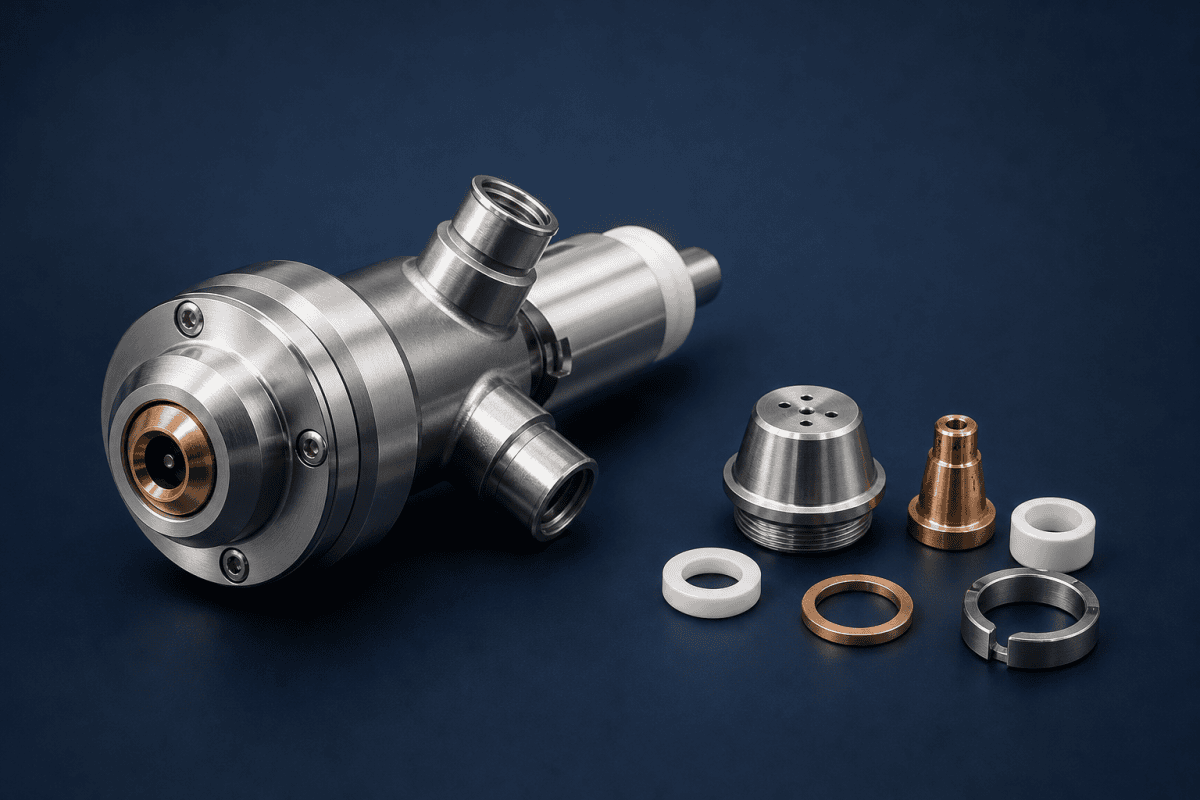
When an OVD deposition torch stops performing as expected, maintenance teams face a practical decision: replace only the worn or damaged component, or install a complete burner assembly. The answer is rarely the same for every shutdown. OVD torch spare parts exist along a continuum—from single nozzles and gaskets to fully assembled torch heads—and choosing correctly affects downtime, cost, process stability, and the risk of introducing new variables into a running deposition process.
This article explains how to evaluate that decision for optical fiber preform manufacturing, what to inspect before ordering, and how to prepare a sourcing request that gives a supplier enough information to quote accurately.
Why OVD Torch Spare Parts Decisions Matter in OVD
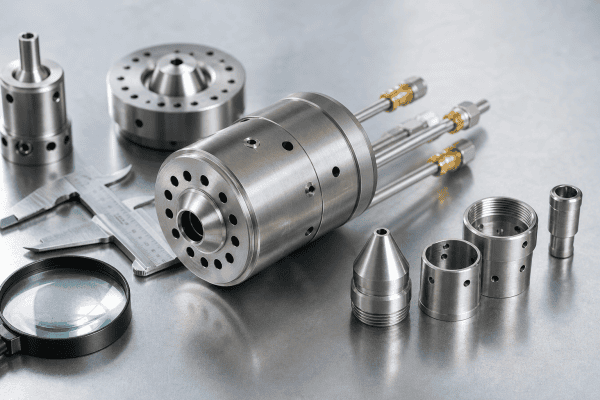
Outside vapor deposition (OVD) builds a porous silica soot preform by feeding gases through a multi-channel torch that moves relative to a rotating target rod. Each channel has a distinct function—typically fuel, oxygen, and vapor-bearing carrier gas—and the geometry of the nozzle exits strongly influences flame shape, mixing, and where soot lands. Because the torch sits at the center of that process, any change to it is a process change, not just a hardware swap.
That is the core tension. A complete assembly replacement resets many variables at once, which can be helpful when a torch is at the end of its life. But it also introduces new tolerances across every channel simultaneously. Replacing a single component is less disruptive, but only if the failure is genuinely localized and the replacement matches the original geometry and material.
Neither approach is universally correct. The right choice depends on what failed, how the torch is used, and what the maintenance history shows. In practice, most fiber shops treat OVD torch spare parts as a strategic inventory item, not an emergency purchase, because lead times and verification steps both affect how quickly a lathe can return to production.
When Individual Deposition Torch Components Are the Better Choice
Component-level replacement makes sense when the problem is clearly isolated and the rest of the torch is within acceptable condition. Typical candidates include:
- Faceplate or nozzle exit wear. Soot buildup, thermal cycling, and cleaning can gradually change the exit geometry of one or two channels while others remain stable.
- Seals, gaskets, and O-rings. These are consumable by nature and are normally replaced on a schedule or whenever the torch is opened.
- Gas feed fittings and connections. Leaks or damaged threads at a single inlet often do not justify replacing the whole torch.
- Fasteners and locating features. Worn dowel pins or clamping surfaces can sometimes be restored without touching the gas-carrying body.
The advantage is that you preserve the channels that are still performing well, keep the change small, and reduce the number of new tolerances introduced at once. The requirement is discipline: you must be confident the fault is localized. If several channels are drifting, or if the torch body itself has been distorted, replacing one part may simply move the problem rather than solve it.
For shops that keep a small stock of OVD torch spare parts on the shelf, the component-level route also shortens the response time on a weekend or night shift, because the replacement can be verified against the surviving channels on the same torch. That speed advantage disappears if the spare itself is not traceable to the original drawing, so documentation is part of the value, not an optional extra.
When a Burner Assembly Replacement Is Justified
A full assembly replacement becomes the more defensible option when the evidence points to system-level degradation rather than a single worn part. Indicators include:
- Multiple channels showing concentricity or alignment drift at the same time.
- Repeated soot clogging across the faceplate despite consistent cleaning practice.
- Flame tilt or asymmetry that persists after individual component checks.
- Physical damage to the torch body, mounting interface, or cooling passages.
- A maintenance history showing that the torch has already been rebuilt more than once.
In these cases, continuing to chase individual parts can cost more in cumulative downtime than a single planned replacement. A complete assembly also lets you verify fit, alignment, and leak integrity on a bench before installation, which is harder to do when swapping parts in situ.
The trade-off is process re-qualification. A new assembly—even one built to the same drawing—will have its own tolerance stack. Expect to re-check flame appearance, deposition rate, and preform quality indicators after installation, and treat the first runs as a verification period rather than assuming instant equivalence. For background on how nozzle geometry influences outcomes, see this discussion of burner nozzle precision and preform yield.
The decision also affects the spare-parts budget cycle. A complete assembly is a larger single line item, while a component-level program spreads cost across the year. Both models are legitimate; what matters is whether the replacement interval is predictable enough to plan for, or whether failures are being discovered only after a deposition run has already drifted out of specification.
Inspection Steps Before You Decide
Good spare-parts decisions come from inspection data, not from habit. Before ordering anything, work through the following checks and record what you find. These steps describe general inspection logic; always follow your equipment documentation and site safety procedures, and have qualified personnel handle hot surfaces, gas lines, and any process chemicals.
1. Document the symptom precisely
“The torch is running badly” is not actionable. Record what changed, when, and how it was detected—for example, a gradual drop in deposition rate, a visible change in flame shape, or a shift in a measured preform parameter. This record becomes the baseline for judging whether a replacement actually fixed the problem.
2. Inspect the faceplate and nozzle exits
Look for soot accumulation, discoloration, erosion, or mechanical damage. Note whether buildup is uniform or concentrated on specific channels; localized patterns suggest a single-channel issue, while broad patterns point toward system-level causes. Our article on preventing silica soot clogging on the burner faceplate covers this inspection in more detail.
3. Check alignment and concentricity
If your procedure and tooling allow, verify that channels remain concentric and that the torch sits correctly relative to the target rod. Concentricity drift is a common contributor to profile problems and is difficult to correct by replacing a single nozzle if the body or mounting has moved. A related discussion appears in our guidance on why OVD soot deposition rates drop due to thermophoresis and orifice wear.
4. Review gas connections and sealing surfaces
Inspect inlets, fittings, and sealing faces for leaks, corrosion, or thread damage. Leak checks should follow your established procedures. A persistent leak at one inlet is a strong argument for component-level repair; leaks at multiple inlets suggest the assembly has reached the end of its service interval.
5. Compare against maintenance history
If the torch has been rebuilt repeatedly, the cumulative record may justify replacement even when no single inspection item looks catastrophic. Conversely, a torch with a short service history and one clear fault is usually a candidate for targeted part replacement.
Material and Geometry Factors in Replacement Parts
OVD torch components operate under thermal cycling, reactive gas exposure, and repeated cleaning. Material selection therefore depends on the specific function of each part—its temperature exposure, chemical environment, and mechanical role—rather than on a single “best” material. Two parts on the same torch may reasonably use different materials because they see different conditions.
This is why matching a replacement part requires more than a part number. The material, surface finish, exit geometry, and channel dimensions all need to correspond to the original design intent, or the replacement will behave differently even if it physically fits. Sourcing OVD torch spare parts without verified drawings usually means committing to a reverse-engineering study first, which adds time but prevents a mismatch that only shows up mid-run.
A few practical points:
- Do not assume a material from a product category or part name. Confirm it against the drawing, the application, and the supplier’s specification.
- If the original material is unknown, treat reverse engineering as a project: measure, characterize, and document before committing to production.
- For parts where weight, thermal conductivity, or machinability matter, aluminum may be appropriate for some OVD components but not for high-temperature gas-path parts. Suitability is application-specific.
Building a Sourcing Request That Gets an Accurate Quote
Whether you need a single nozzle or a full replacement assembly, the quality of your inquiry determines the quality of the response. A useful request typically includes:
- Drawings or models for the original part, if available. Even partial drawings help.
- Key dimensions if drawings are missing—channel diameters, exit geometry, overall length, mounting interfaces, and connection types.
- Material requirements as known, plus the operating conditions the part sees.
- Quantity and usage pattern, including whether the part is a routine consumable or a one-time replacement.
- Application context—which process and which position on the torch the part serves.
For components that are no longer available from the original equipment source, or that need modification, a drawing-based manufacturing approach is often the most practical route. Review the guide to custom OVD burner nozzle replacement to see how critical specifications are confirmed on non-standard parts, and compare against standard catalog items when a stock spare may already match your requirement.
When the assembly approach is preferred, the drawing comparison step becomes even more important, because the mounting interface and gas connections must match at the assembly level rather than at a single channel. A proven process for this verification is described in our post on comparing OVD burner head drawings and gas connections. Suppliers that already serve OVD lines tend to recognize the same specification set, which shortens the back-and-forth and reduces the chance of a misquote.
Standardizing OVD Torch Spare Parts Across a Shop
Many fiber producers operate more than one lathe, and not all of those lathes carry identical torch hardware. Building a small controlled library of OVD torch spare parts—with drawings, material records, and inspection results stored together—makes the component-versus-assembly decision faster each time it comes up. A spare that has a documented history is far easier to justify than one that only has a catalog number.
A useful convention is to classify each spare part by criticality. Parts whose failure stops production immediately, such as faceplate assemblies and gas-path seals, may deserve both a shelf spare and a qualified alternative source. Parts that can tolerate a short interruption, such as mounting hardware or locating features, can often be handled with a shared shop inventory. This classification also clarifies which OVD torch spare parts should be inspected on receipt and which can be stocked as-is.
Traceability is the other half of that discipline. If a component is replaced and the process later drifts, the maintenance record needs to show which part went in, when, and against which drawing it was verified. Without that record, a later investigation has to rely on memory, and the cause of the drift is often ambiguous. Treating OVD torch spare parts as documented assets rather than anonymous consumables makes it possible to separate a genuine hardware problem from an unrelated process change.
Shops that maintain this discipline usually find that the component-versus-assembly question becomes easier to answer, because the data needed to justify either route is already on file. The decision then rests on real evidence—inspection results and service history—rather than on the urgency of the moment.
Cost, Downtime, and Total Ownership
Comparing a single part price against an assembly price is misleading if downtime is excluded. The relevant comparison is total cost of ownership over the service interval, which includes the part itself, the labor to install and verify it, the process runs lost to re-qualification, and the risk of a repeat failure. A cheaper component that fails early can be more expensive than a full assembly that runs to its planned replacement interval.
The OVD torch spare parts program should therefore be reviewed with the same rigor as any other consumable category. Track failure modes, replacement frequency, and the observed effect on deposition results. Over time, those records show whether component-level repair is holding the line or whether the torch is drifting toward a replacement point. Public reference material from standards bodies and equipment documentation can help frame this review; for general guidance on thin-film and vapor deposition terminology and practices, the ASM International technical resources are a legitimate starting point for shared vocabulary.
One practical rule: never let a cost comparison drive a decision that the inspection data does not support. If the evidence points to localized wear, component-level replacement is the appropriate step, regardless of assembly pricing. If the evidence points to system-level degradation, an assembly replacement is the honest answer even if the line item is larger.
Common Ordering Mistakes to Avoid
Most sourcing problems with OVD torch spare parts trace back to a small number of preventable errors. Being aware of them shortens quoting cycles and reduces the chance of a return or rework:
- Ordering by description instead of drawing. A part described as the same nozzle may have a different exit geometry or material grade.
- Omitting the operating position. Two nozzles on the same torch can look identical but serve different gas channels.
- Leaving material blank. Suppliers will assume a default, which may not match the original specification.
- Ignoring lead time in the maintenance plan. A replacement that arrives after the next scheduled shutdown has not solved the problem.
- Skipping receipt inspection. Verifying critical dimensions on arrival catches errors while there is still time to react.
Avoiding these mistakes is less about supplier selection and more about internal discipline. The information needed to order OVD torch spare parts correctly usually exists inside the plant; the task is to assemble it into a clear, reviewable package before the inquiry goes out.
Pitakonan sing Sering Ditakoni
How do I know whether to replace a single nozzle or the whole torch?
Start with inspection evidence. If the fault is confined to one or two channels and the torch body, mounting, and other channels are within specification, component-level replacement is usually reasonable. If multiple channels have drifted, if the body shows damage, or if the torch has already been rebuilt several times, a complete assembly is often the more cost-effective path once downtime is included.
Can I mix replacement parts from different suppliers on one torch?
Technically it may be possible, but it introduces additional variables. Different suppliers may interpret tolerances differently, use different materials, or apply different surface finishes. If you do mix sources, verify dimensions, materials, and fit against the original specification for each part, and re-check process performance after installation.
What information do I need if the original drawings are unavailable?
At minimum: measured dimensions of the critical features, the material or its known properties, connection and mounting details, and the operating conditions the part experiences. Photographs and a description of the failure also help. A supplier performing reverse engineering will typically need to confirm these details before production.
Does a new assembly require process re-qualification?
Treat it as a process change. Even a correctly manufactured assembly has its own tolerance stack, so verify flame characteristics, deposition behavior, and preform quality indicators during initial runs. Follow your facility’s qualification procedures and equipment documentation.
Langkah Sabanjure
The most reliable way to get the right OVD torch spare parts is to provide the details that let a supplier match your design intent. Share your drawings, critical dimensions, material requirements, and operating conditions, and contact our team to discuss whether individual components or a complete assembly best fits your maintenance plan.
