
지식
Nextrom MCVD 가열 버너 구성품: 맞춤형 교체 평가
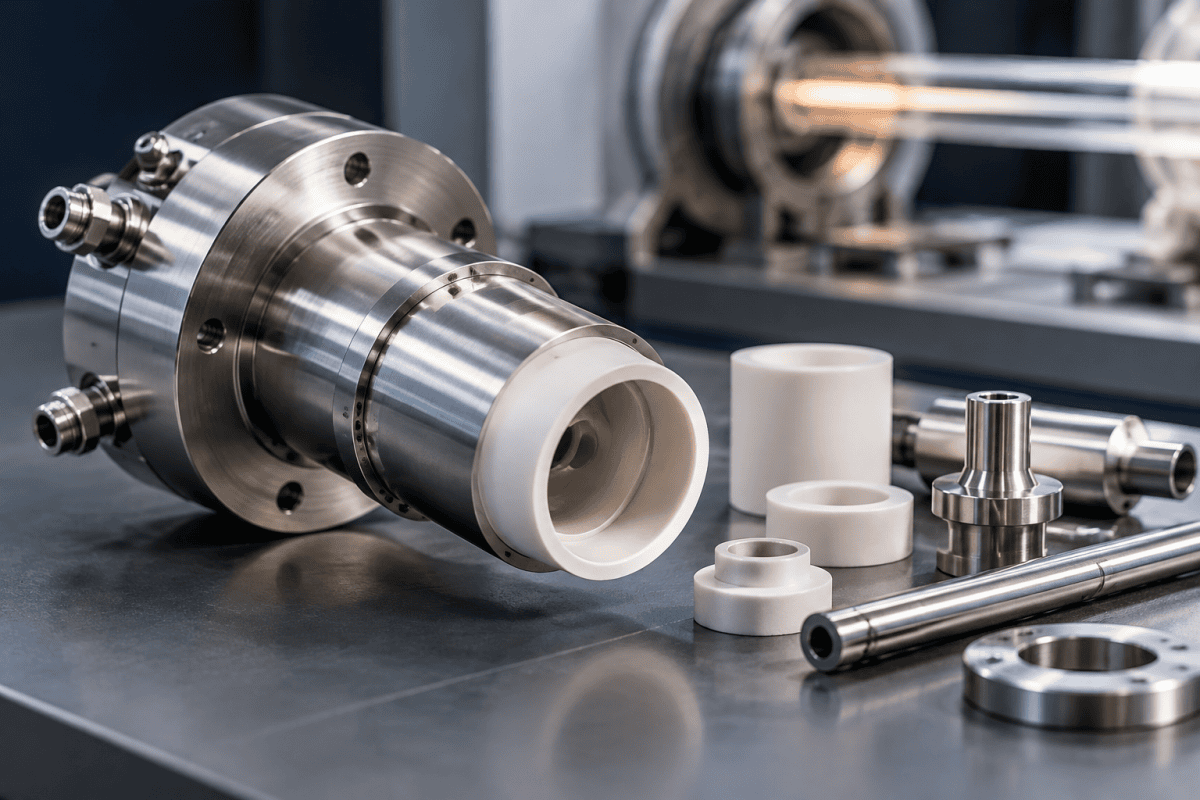
10월
Replacing heating burner components on an MCVD lathe is rarely a simple parts-swap decision, especially when the task involves Nextrom MCVD heating burner components. When the original burner no longer delivers a stable, symmetric heat zone along the rotating silica tube, engineers face a choice: source a like-for-like replacement, repair what is serviceable, or commission a custom MCVD burner built to the drawing rather than the brand name. This article looks at how to evaluate Nextrom MCVD heating burner components, what to inspect before ordering, and how to turn that evaluation into a clear sourcing request for custom MCVD parts. A methodical assessment of Nextrom MCVD heating burner components protects both process yield and maintenance budget.
MCVD (modified chemical vapor deposition) differs from OVD and VAD in a fundamental way: instead of depositing soot onto a growing outside surface, MCVD deposits layers 버너 본체 a rotating fused silica tube and then collapses that tube into a solid preform. The heating burner, often a traversing hydrogen/oxygen torch, is therefore an internal-deposition and collapse tool. Its flame shape, axial position, and heat distribution directly influence layer uniformity, tube-wall shrinkage, and final core geometry. That makes MCVD heating burner behavior sensitive to details that might be tolerable in other processes, and it explains why a careful evaluation of Nextrom MCVD heating burner components pays off.
Why Nextrom MCVD Heating Burner Components Are Not Interchangeable With OVD or VAD Torches
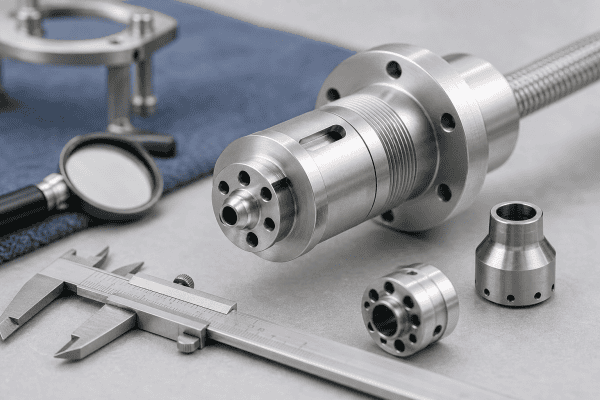
An OVD or VAD burner usually produces a broad soot stream aimed at a growing preform. A Nextrom MCVD heating burner component performs a different job: it delivers a concentrated, controlled heat zone that must sweep along a rotating tube without introducing axial or circumferential temperature asymmetry. This distinction matters when evaluating replacements.
- Heat profile: Nextrom MCVD heating burner components are typically judged on the shape of the hot zone along the tube axis, not on soot production.
- Flame stability during traverse: The burner moves relative to the tube. A flame that is acceptable when stationary can distort under translation.
- Tube interaction: The work piece is a hollow, rotating tube that softens and collapses — a geometry with no equivalent in outside deposition.
- Nozzle geometry: Internal-deposition and collapse burners usually emphasize different porting, spacing, and mixing characteristics than soot-generating torches.
For a broader comparison of how burner nozzles differ across deposition processes, the guide to custom MCVD burner nozzles and the operating details to supply provides useful context before you commit to a replacement route. A parallel reference for outside-deposition torches is the drawing-based approach to Nextrom OVD burner replacement parts, which shows how much of a sourcing request can be answered by geometry alone. Reading that material alongside your own notes on Nextrom MCVD heating burner components will highlight where the process requirements genuinely diverge.
What to Inspect Before Deciding on a Nextrom MCVD Burner Replacement
A Nextrom MCVD burner replacement is best treated as a specification exercise, not a catalog lookup. Start by documenting the current component in enough detail that a machinist who has never seen the machine can reproduce it. The following inspection sequence generally applies.
1. Identify the actual function of the component
A heating burner assembly may include a body, one or more nozzle or faceplate elements, gas and oxygen passages, mounting features, and adjustment interfaces. Establish which of these are worn or damaged and which remain within tolerance. A faceplate issue may not justify replacing the entire body, and replacing only the visible part can leave an underlying alignment problem unaddressed. Inspection guidance for an OVD burner faceplate replacement covers hole geometry and seating checks that transfer well to an MCVD faceplate, because both rely on exact port placement rather than visual similarity.
2. Measure, do not assume
Record critical dimensions: overall length, mounting interfaces, gas and water connection types and sizes, port hole diameters, port spacing, angular relationships between ports, and any keyed or indexed features. Photograph the component from multiple angles with a scale in frame, and note any stamped or engraved identifiers. If a drawing exists, treat it as the primary reference and use the physical part to confirm it. For many Nextrom MCVD heating burner components, the drawing and the as-found part disagree slightly, and only measurement reveals which is correct.
3. Assess material condition in the context of service environment
Nextrom MCVD Heating Burner Components operate at high temperature in an oxidizing environment and may also see thermal cycling and process gases. Material suitability must be judged against the specific component’s function, temperature exposure, chemical environment, and the engineering requirements of the application — not against a generic “high-temperature” label. Examine the part for oxidation scaling, dimensional distortion, cracking at stress concentrators, erosion around ports or seats, and discoloration that suggests localized overheating.
Where a component is aluminum-bodied — common in some mounting and manifold applications — the Nextrom OVD torch spare parts sourcing guide illustrates how aluminum and other non-flame-facing materials are handled in practice, since they serve thermally separated or structural functions rather than the hottest flame-facing surfaces.
4. Benchmark the replacement against the drawing, not the brand
It is easy to assume that a component described as fitting a particular lathe will drop in without adjustment. That assumption should be verified for every order. Compatibility must be confirmed against drawings, dimensions, gas connections, materials, and application requirements. Brand association is not a substitute for dimensional verification, and no supplier should be treated as an authorized OEM representative unless they actually are. The same reasoning applies to VAD core deposition burner parts, where a custom manufacturing specification guide is more useful than a model number.
Common Reasons Nextrom MCVD Heating Burner Components Underperform
Not every heat-profile problem requires a new burner. Before committing to a replacement, it helps to separate likely causes from confirmed ones. Each candidate cause below includes a way to check it.
- Port erosion or partial blockage (possible): Deposits or erosion can change flow distribution and flame shape. Verify by inspecting and cleaning the faceplate and ports per the equipment documentation, then re-checking the heat profile. Do not alter gas flows or operating parameters without guidance from qualified personnel and the equipment documentation.
- Mechanical distortion (possible): Thermal cycling can cause warping or seat wear that shifts the flame axis. Verify by checking flatness, bore alignment, and seat condition against the drawing.
- Misalignment in the mounting or traverse system (possible): A correctly built burner can still produce an asymmetric heat zone if the mounting, carriage, or tube alignment is off. Verify by checking alignment independently of the burner.
- Incorrect or worn replacement component (possible): A substitute part that differs slightly in port geometry can shift the heat profile. Verify by comparing the installed part dimensionally to the original specification.
- Process parameter drift (possible): Changes elsewhere in the process can masquerade as burner problems. Verify by confirming other variables are stable before attributing the effect to the burner.
When the symptom is a shifting heat profile rather than a clear defect, the relationship between burner concentricity and refractive index profile drift offers a useful diagnostic framework, even though the geometry of the two processes differs. The dimensional and assembly checks described for VAD burner nozzle replacement are a reasonable starting checklist for the same class of problem. A complementary drawing package for the outside-deposition equivalent is described in the Nextrom VAD burner replacement parts sourcing guide.
Understanding why a flame stays stable over a long traverse also depends on basic combustion and fluid mechanics rather than on the part alone. The combustion and fire research resources published by NIST are a useful neutral reference for engineers who want to reason about flame stability from first principles.
Serviceable Components Versus Replacement
The economics of MCVD heating burner maintenance usually favor inspecting before replacing. Practical guidance:
- Clean and inspect first. Faceplate and port condition often dominate flame quality. Follow the equipment documentation for cleaning methods; avoid abrasive practices that change critical dimensions.
- Replace consumable elements on a defined interval. Where nozzles or inserts are designed as consumables, track them and replace based on condition, not solely on a calendar.
- Retain worn parts as reference. Even a failed component is a dimensional reference for the replacement. Keep it until the new part is verified.
- Record what changed. If a replacement alters the heat profile, noting the dimensional differences helps isolate the cause — and helps the next sourcing request be more precise.
For a systematic approach to condition assessment and replacement intervals, the burner maintenance and lifespan guide covers general principles that translate well to Nextrom MCVD heating burner components when adjusted for the different process. Build a condition history for each of your Nextrom MCVD heating burner components so that decisions rest on documented trends rather than on recollection.
Preparing a Sourcing Request for Custom MCVD Parts
Custom MCVD parts are usually manufactured against a drawing, a sample, or both. The clearer the input, the fewer iterations are needed. A complete request typically includes:
- Drawing or CAD model of the original component, with tolerances for critical features.
- Physical sample where no drawing exists, accompanied by photos and dimensional notes.
- 재질 사양 for each element, stated in terms of function, temperature exposure, and chemical environment rather than a vague “high temperature” requirement.
- Connection details for gas, water, and mounting interfaces, including thread types and sealing methods.
- Quantity and usage context — one-off replacement, spare, or periodic consumable.
- Application notes describing the process, any observed failure mode, and the performance the replacement must achieve.
Where reverse engineering is required, dimensions should be taken from the worn part only after accounting for wear and distortion — measuring a distorted part and reproducing it exactly will reproduce the problem. This is where OEM/ODM machining services and a clear drawing package become valuable: they allow the replacement to be built to the intended geometry rather than the as-worn geometry.
자주 묻는 질문
Can I replace only the nozzle or faceplate instead of the whole MCVD heating burner?
Often yes, provided the nozzle or faceplate is a separately serviceable element and the body remains within specification. The decision depends on whether the remaining components pass dimensional and material inspection. Replacing only the visible worn part without checking the body can leave alignment or seat issues in place. Many Nextrom MCVD heating burner components are designed so that the nozzle, faceplate, and insert can be renewed while the body and mounting features are retained.
How do I confirm a replacement burner will fit my equipment?
Confirm it against drawings, dimensions, gas and water connections, materials, and application requirements. Do not rely on a brand name or model reference alone, and do not assume that any supplier is an authorized OEM representative. A dimensional cross-check against the original part is the only reliable confirmation. For Nextrom MCVD heating burner components that are no longer available as catalog items, that cross-check is the entire basis of the order.
What information should I provide for a custom MCVD burner quotation?
Provide a drawing or CAD model, a physical sample if available, material requirements stated in terms of function and environment, connection details, quantity, and any notes on the failure that prompted the replacement. If the drawing is incomplete, say so — the supplier can then request the missing dimensions rather than guessing. Suppliers who regularly quote Nextrom MCVD heating burner components will have a standard checklist of dimensions they need, and matching that checklist on the first submission shortens the lead time considerably.
Why does a new burner sometimes give a different heat profile than the original?
Small differences in port geometry, spacing, or surface condition can shift the flame shape. So can mounting alignment, carriage position, and tube condition. Treat any profile change as a diagnostic signal: compare the installed part dimensionally to the original, then check alignment and related process variables before concluding the part is defective. A replacement set of Nextrom MCVD heating burner components that is dimensionally correct but installed with different preload or indexing can behave differently for reasons that have nothing to do with the parts themselves.
How many spare parts should we keep on hand?
That depends on the failure history of your lathe, the lead time for a custom replacement, and the cost of an unplanned stoppage. A reasonable starting point is one serviceable nozzle or faceplate set per active MCVD lathe, plus a documented dimensional record that allows a replacement to be reordered without shipping the original to the supplier. Review the levels after the first replacement cycle, when actual wear rates are known.
Can a worn Nextrom MCVD heating burner component be repaired instead?
Sometimes. Repair is most credible when the worn feature is a replaceable insert or a sealing surface, and least credible when the distortion affects port geometry or mounting alignment. Repairing a distorted body usually costs more than sourcing a new one and leaves the original problem unresolved, so it is worth documenting the failure mode before deciding.
다음 단계
If you are evaluating Nextrom MCVD heating burner components for replacement, the most useful first step is to assemble a complete dimensional and material record of the current component. Gather your drawings, take measurements and photographs, note the connections and materials, and describe the failure mode you are trying to solve. With that package in hand, a supplier can quote against real geometry instead of a model number, and you can compare Nextrom MCVD heating burner components on the basis that actually determines process performance. Request a quotation against that package, and review other components on the same lathe so that parts nearing the end of their life are identified before they interrupt a deposition run.
