
지식
Custom MCVD Burner Nozzles: Drawings and Operating Details to Supply
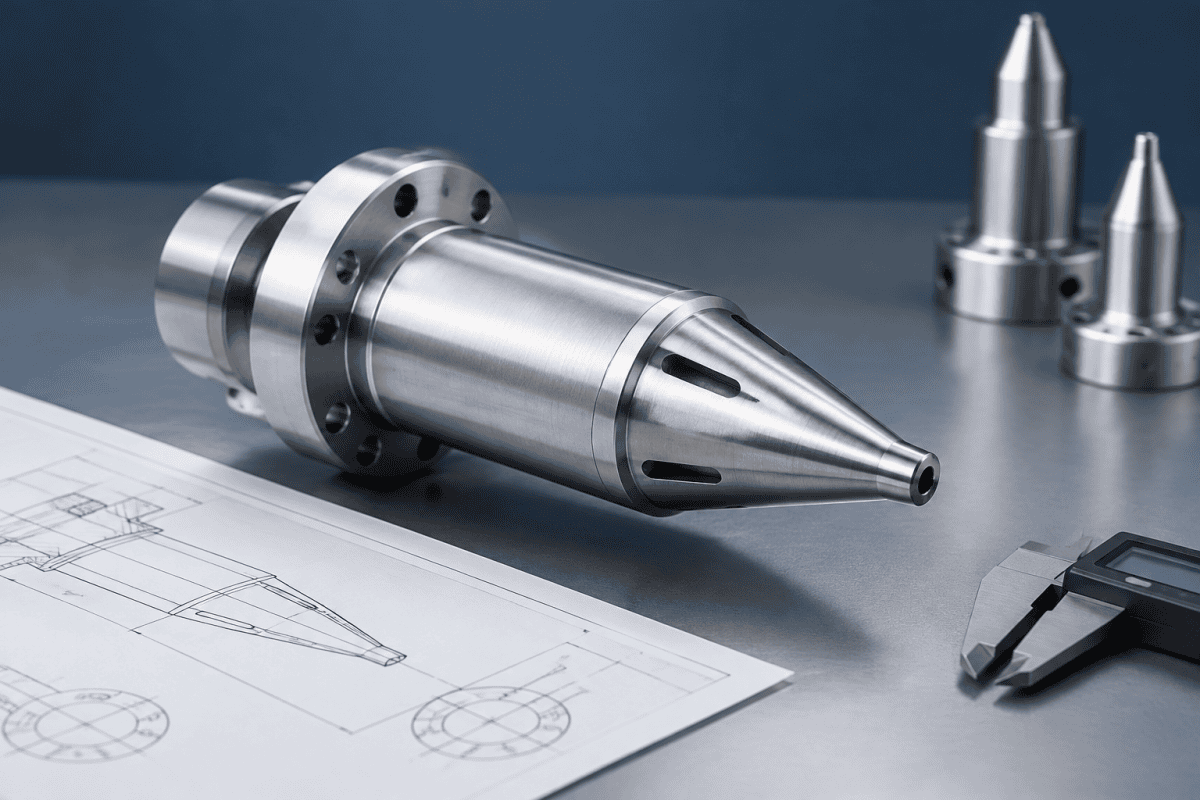
10월
Ordering custom MCVD burner nozzles is less like buying a catalog part and more like commissioning a small precision instrument. MCVD (Modified Chemical Vapor Deposition) torches operate in a different regime from OVD and VAD burners: the burner traverses a rotating silica tube on a glass-working lathe, depositing doped and undoped layers on the inside wall, so flame shape, heat distribution, and axial symmetry along the tube matter as much as raw heat output.
That difference is why a supplier cannot quote accurately from a part name alone. A usable quotation depends on drawings, dimensions, and operating details that only the fiber producer can supply. This guide covers what to prepare before requesting custom MCVD burner nozzles, how to distinguish drawing-level information from process-level information, and where the common gaps appear in sourcing conversations. It is written for process engineers, equipment owners, and purchasing teams who need replacement torch hardware that behaves like the original design rather than a generic lookalike.
One framing idea helps throughout: treat the request as a specification package, not a purchase order. A specification package tells the supplier what the part must do in service, what it must mate with, and how success will be verified. A purchase order simply names a part. The gap between those two documents is where most quotation delays, first-article rejections, and repeat failures originate.
Why custom MCVD burner nozzles Are Sourced Differently from OVD and VAD Torches
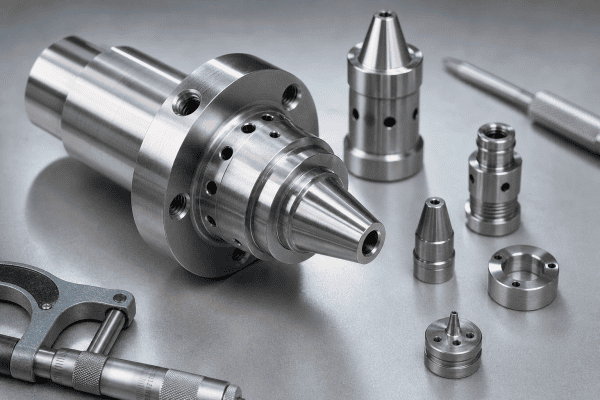
In OVD and VAD, the torch deposits soot onto the outside of a growing preform, and the flame is typically aimed at a deposition face. In MCVD, the torch moves along a rotating tube and heats it from the outside while precursor gases flow inside. The tube itself becomes part of the thermal system: wall thickness, rotation speed, traverse speed, and torch standoff all interact, and custom MCVD burner nozzles must deliver a stable, repeatable heat profile as they travel.
This changes what “fit” means. For an MCVD torch, mechanical mounting still matters, but so do flame symmetry, the position of the hot zone relative to the tube axis, and consistency between passes. A torch that burns unevenly can produce axial temperature variation along the deposit, which in turn affects layer uniformity and the collapse behavior later in the process. Small differences that would be invisible on an OVD soot face can show up as layer non-uniformity in an MCVD tube.
Because of this, MCVD torch replacement parts should be specified against the original design intent, not selected by general size similarity to OVD or VAD components. Nozzle geometry, hole patterns, and gas channel arrangements are not interchangeable between the three processes, even when the hardware looks broadly similar. Readers comparing nozzle families across processes may find the OVD vs VAD and MCVD burner nozzle guide useful as background before opening a sourcing conversation.
There is also a maintenance-cycle dimension. MCVD torches often run in campaigns, with the same burner used for many passes before it is inspected or replaced. That means wear accumulates gradually and can be mistaken for normal process drift. Documenting the baseline behavior of a new custom MCVD burner nozzles set — visually, dimensionally, and in process performance — makes later wear detection far easier than relying on operator memory.
What Belongs on a Drawing Package for custom MCVD burner nozzles
A drawing package is the foundation of any accurate quotation, but “drawing” means different things to different people. For torch work, a usable package contains geometry, interfaces, materials, finishes, and tolerances, with critical features clearly distinguished from nominal ones. The sections below break down what to include.
Geometry and interfaces
A complete drawing package for custom MCVD burner nozzles usually includes:
- Overall envelope dimensions and mounting interface, including bolt pattern, thread type, and register or locating features.
- Nozzle or orifice layout: hole diameters, count, spacing, row arrangement, and any angular offsets.
- Face geometry: faceplate thickness, flatness expectations, counterbores, and any recess or step that sets standoff.
- Internal gas passages: channel diameters, routing, and how individual channels terminate at the face.
- Connection details for each gas and, where applicable, coolant line, including thread standard and sealing method.
- Critical tolerances called out separately from general tolerances, with datum references.
If original drawings are unavailable, a reverse-engineering approach can reconstruct them from a supplied sample, but the sample must be in a condition that still represents the original geometry. Heavy soot buildup, eroded orifice edges, or heat distortion can bias measurements.
In those cases, note the sample’s condition on the request so the supplier can decide which features are trustworthy and which need confirmation. Photographs taken from several angles, with a scale or caliper in frame, are a practical supplement. They do not replace a drawing, but they let a machinist sanity-check an interpretation before cutting metal.
Material and finish
Custom MCVD Burner Nozzles see elevated temperatures and repeated thermal cycling, so material selection depends on the component’s function, the peak temperature it actually experiences, the gas environment, and cleanliness requirements. Common engineering choices for torch bodies and nozzles include stainless steels such as 316L, and in some designs nickel alloys or copper where thermal conductivity is central to the function. Quartz or ceramic elements appear where electrical isolation or thermal resistance is required.
Do not assume a material from a product category alone. State the function of each part, the temperature range it sees in service, which gases contact it, and whether contamination from the material is a concern for the deposited glass. These inputs let a machinist select and, more importantly, justify a material.
Surface finish and cleaning requirements belong in the same conversation: internal passage finish affects flow, and residual machining debris or oils are a contamination risk in a deposition environment. If your facility has an incoming-cleanliness specification, attach it. If not, at minimum state whether parts will be cleaned by the supplier and whether oxygen-service cleaning is required.
Quantities, spares, and revision history
A detail that is often overlooked is the intended order structure. Will the first order be a single unit for evaluation, or a small batch with spares held for planned maintenance? Batching affects setup cost, material purchasing, and how tightly tolerances can be held across the lot.
Revision history matters just as much. If the current part is a later revision of an earlier design, say so and describe what changed and why. A supplier working from an obsolete drawing can reproduce a known problem. Where revisions were informal — a reworked orifice, a locally modified mounting flange — document those changes before sending the package.
Operating Details That Shape custom MCVD burner nozzles
Drawings alone rarely close the gap. Suppliers who produce torch components and MCVD replacement parts typically ask a set of operating questions because the answers influence tolerances, orifice sizing, and cooling design. Useful details to prepare include:
- Which gases pass through which channels, and in what approximate proportion. Exact setpoints are not required, but the function of each channel is.
- Whether the torch is water-cooled, gas-cooled, or uncooled, and the coolant or gas type.
- The range of traverse speeds and rotation speeds the torch operates across.
- Typical and peak tube outside diameters, since tube size sets the required standoff and flame envelope.
- Whether the torch runs continuously or in cycles, and roughly how many thermal cycles it sees over its life.
- Any known failure pattern: orifice erosion, faceplate soot buildup, cracking, thread wear, or seal leakage.
The failure pattern is often the most valuable single input. It tells the supplier whether the design should prioritize thermal fatigue resistance, cleanability, orifice stability, or something else. If the current part fails in service, describing where and how helps prevent a replacement from inheriting the same weakness.
It also helps to describe the surrounding system, not just the torch. Lathe type, exhaust arrangement, and any shielding or purge around the burner can change the thermal environment enough to matter. You do not need to document the whole deposition line, but a short description of where the burner sits and what else acts on it will prevent assumptions on the supplier’s side.
Distinguishing observation from diagnosis
Be careful to separate what you observe from what you believe caused it. A sooty faceplate is an observation; “the oxygen channel is undersized” is a hypothesis. Soot buildup can result from inadequate face cooling, contaminated gas, incorrect standoff, or reversed or unbalanced flows, among other causes.
Presenting hypotheses as facts to a supplier can lead to an unnecessary redesign of a part that was never the problem. Where a root cause is uncertain, share the observation and ask for input, or confirm the cause with the process engineer responsible before specifying changes. The safest request format separates three things clearly: measured facts, observed symptoms, and open questions.
How to Compare a Quotation Against Your Original Requirements
Once quotations arrive, they are easier to evaluate if your requirements were written down in the first place. A simple comparison table helps keep the review objective and prevents an attractive price from masking a specification gap.
| Requirement | What to Verify in the Quote |
|---|---|
| Material and finish | Named grade, condition, and surface finish with justification |
| Critical tolerances | Explicit acknowledgement and inspection method for each |
| Gas channel assignment | Confirmation that channel functions were understood as stated |
| Inspection documentation | List of records supplied, and any measurements the buyer performs |
| Change control | How revisions after first article are proposed, approved, and recorded |
| Lead time and spares | Basis for the quoted schedule and any batch or spare provisions |
If a quotation is silent on a line in this table, ask before ordering. Silence is not agreement, and later disputes about a “reasonable interpretation” are expensive in a deposition environment where a single bad pass consumes tube time and precursor material.
Questions to Ask Before Placing an Order
Before committing to a build, clarify these points in writing:
- Which features are critical and which are nominal? Orifice diameters and face geometry are usually critical; cosmetic dimensions are not. Agree on this so inspection effort goes where it matters.
- How will the parts be inspected? For nozzle geometry, this may include dimensional measurement of hole sizes and positions, and visual or optical checks of the face. Ask what the supplier can verify and what requires your own incoming inspection.
- What is the material of construction, and why? The answer should reference function and environment, not a default.
- Can the supplier produce the part from a drawing, a sample, or both? A sample-only path needs a clear statement of which features are being copied and which are being re-created.
- What documentation ships with the parts? Certificates, inspection records, and lot traceability may matter for your quality system.
- What is the change-control process? If a revision is needed after first article, how is it handled?
For non-standard geometry or obsolete parts, a drawing-based OEM/ODM machining service is usually the right path. These engagements work best when the request includes the drawing package, the operating details above, and a clear statement of acceptance criteria. Buyers who bring all three to the first conversation typically receive a more complete quotation and fewer follow-up questions.
Common Gaps That Delay custom MCVD burner nozzles Orders
Most delays in custom MCVD burner nozzles sourcing trace back to a few recurring gaps:
- Missing gas-channel assignment. Without knowing which channel carries which gas, a supplier cannot assess orifice sizing or cooling strategy.
- Undefined critical tolerances. If everything is toleranced equally, cost rises and inspection becomes ambiguous.
- Unstated tube diameter range. Standoff and flame envelope depend on it.
- No failure history. Fatigue, erosion, and clogging each point to different design priorities.
- Material specified by habit. “Same as before” is only useful if the previous material is documented and still appropriate.
- Sample condition not disclosed. A worn sample presented as a reference leads to a part that copies the wear.
- No acceptance criteria. Without a written definition of a conforming part, first-article review becomes subjective.
- Unclear revision status. Working from a superseded drawing reproduces an obsolete problem.
Addressing these before the first quote shortens the loop considerably. The NIST optical fiber and component metrology program is one external reference that can help you connect dimensional accuracy to fiber performance outcomes, and it is a useful neutral citation when your internal quality team asks why a given measurement matters. For MCVD-specific work, the drawing and process details you supply will determine the outcome more than any catalog entry.
Documentation, Traceability, and Incoming Inspection
For many fiber producers, the acceptance of custom MCVD burner nozzles is as much a documentation exercise as a dimensional one. Depending on your quality system, you may need material certificates, dimensional inspection reports, and lot traceability linking the delivered parts to their production batch. It is worth stating these requirements in the original request rather than discovering them at goods-in.
Incoming inspection for torch components typically combines dimensional verification of the critical features with visual checks of the face, orifices, and sealing surfaces. Where measurement of an internal channel is impractical, agree on a functional check — for example, a flow comparison against a reference part under fixed conditions — and document the procedure so results are comparable over time.
Keeping the original request package, the supplier’s quotation, and the first-article inspection record together in one file pays off at the next replacement cycle. The next order can then reference a known baseline instead of starting the definition process from scratch.
A Practical Preparation Checklist
Before requesting quotation for custom MCVD burner nozzles, confirm that you can answer the following:
- Drawings or measured sample, with condition noted
- Interfaces and connection details for every gas and coolant line
- Function of each gas channel, stated in process terms
- Cooling method and media
- Tube outside-diameter range and standoff basis
- Traverse and rotation speed ranges
- Observed failure mode, separated from any hypothesis
- Material and finish requirements, with justification
- Documentation and inspection expectations
- Quantity, spares, and target lead time
A request that covers these ten points usually moves to a buildable quotation within one exchange. A request missing half of them typically needs two or three clarification cycles before pricing is meaningful.
자주 묻는 질문
Can you make custom MCVD burner nozzles from a sample alone?
Often yes, if the sample is in serviceable condition and the critical features can be measured. However, sample-only reverse engineering can miss internal geometry, material specification, and heat treatment if they cannot be measured non-destructively. Where the sample is worn or distorted, expect the supplier to flag the affected features and ask for confirmation before producing a replacement.
How do custom MCVD burner nozzles drawings differ from OVD or VAD torch drawings?
They usually emphasize different features. MCVD torches prioritize axial heat-profile symmetry and stable traverse behavior, so face geometry, orifice layout, and standoff control tend to be more tightly specified. OVD and VAD torches emphasize deposition-face targeting and soot yield. The same drawing format works for both; the critical dimensions and operating context differ.
What material should I specify for custom MCVD burner nozzles?
That depends on the function, peak temperature, gas exposure, cooling method, and cleanliness requirements of the specific part. Stainless steels, nickel alloys, copper, quartz, and ceramics all appear in torch assemblies for different reasons. Specify the environment and let the supplier propose a material with justification, rather than fixing a material before the function is defined.
How long does an order for custom MCVD burner nozzles take?
Lead time depends on the drawing completeness, material availability, and the number of first-article iterations required. The largest controllable variable is how much information you provide up front. Requests that include drawings, operating details, and acceptance criteria move through quotation and production faster than requests that require clarification cycles.
Do I need to provide proprietary process data?
Not necessarily. Suppliers generally need functional context — which channel carries which gas, the temperature range, cooling method, and failure history — rather than exact recipes or setpoints. If confidentiality is a concern, a mutual non-disclosure agreement can be put in place before the technical review, and sensitive process values can be described in ranges rather than precise figures.
다음 단계
If you are sourcing custom MCVD burner nozzles or other preform lathe burner components, gather your drawings, dimensions, material requirements, gas-channel assignments, and the operating conditions described above, then send them to our team for review. You can contact our team to discuss your component requirements and request a quotation based on the actual operating context rather than a part name alone. For related component categories, the optical fiber preform equipment and deposition torch parts FAQ answers common sourcing questions that often come up alongside a torch request.
