
Kawruh
Nozzle Burner MCVD Custom: Gambar lan Detail Operasi kanggo Pasokan
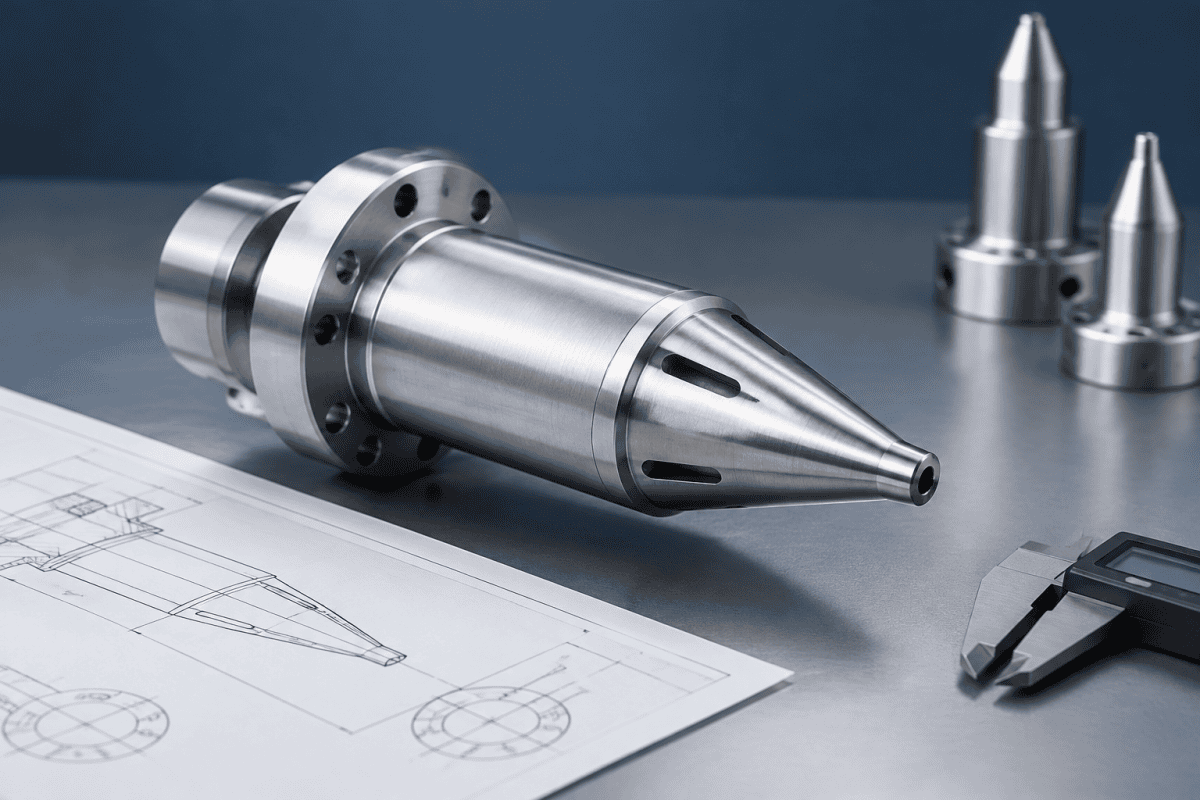
Okt
Pesen nozzle burner MCVD custom iku ora kaya tuku bagean katalog, nanging luwih kaya mrentah instrumen presisi cilik. MCVD (Modified Chemical Vapor Deposition) torch beroperasi ing rezim sing beda karo OVD lan VAD burner: burner ngliwati tabung silika sing muter ing mesin bubut kaca, nyelehake lapisan doped lan undoped ing tembok njero, mula bentuk nyala, distribusi panas, lan simetri aksial ing sadawane tabung penting banget kaya output panas mentah.
Bedane iki sebabe supplier ora bisa menehi penawaran akurat mung saka jeneng bagean. Penawaran sing bisa digunakake gumantung marang gambar, dimensi, lan detail operasi sing mung bisa diwenehake dening produsen serat. Pandhuan iki nyakup apa sing kudu disiapake sadurunge njaluk nozzle burner MCVD custom, carane mbedakake informasi tingkat gambar saka informasi tingkat proses, lan ing ngendi celah umum muncul ing obrolan sourcing. Iki ditulis kanggo insinyur proses, pemilik peralatan, lan tim purchasing sing butuh hardware torch pengganti sing tumindake kaya desain asli tinimbang mirip generik.
Siji gagasan framing mbantu ing saindhenging: anggep panjaluk kasebut minangka paket spesifikasi, dudu pesenan tuku. Paket spesifikasi ngandhani supplier apa sing kudu ditindakake bagean kasebut nalika digunakake, apa sing kudu dipasangake, lan kepiye sukses bakal diverifikasi. Pesenan tuku mung nyebutake bagean. Celah antarane rong dokumen kasebut dadi asal saka akeh keterlambatan penawaran, penolakan artikel pisanan, lan kegagalan bola-bali.
Napa nozzle burner MCVD custom Dijupuk Beda saka OVD lan VAD Torches
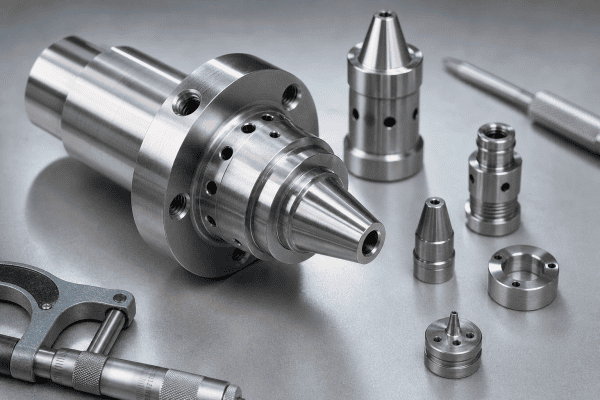
Ing OVD lan VAD, torch nyelehake soot menyang njaba preform sing tuwuh, lan nyala biasane diarahake menyang permukaan deposisi. Ing MCVD, torch obah ing sadawane tabung sing muter lan dadi panas saka njaba nalika gas prekursor mili ing njero. Tabung kasebut dhewe dadi bagean saka sistem termal: kekandelan tembok, kacepetan rotasi, kacepetan traverse, lan jarak torch kabeh sesambungan, lan nozzle burner MCVD custom kudu menehi profil panas sing stabil lan bisa diulang nalika mlaku.
Iki ngganti apa tegese “fit”. Kanggo torch MCVD, pemasangan mekanik isih penting, nanging simetri nyala, posisi zona panas relatif marang sumbu tabung, lan konsistensi antarane pass uga penting. Torch sing kobong ora rata bisa ngasilake variasi suhu aksial ing sadawane deposit, sing banjur mengaruhi keseragaman lapisan lan prilaku collapse mengko ing proses. Bedane cilik sing ora katon ing permukaan soot OVD bisa katon minangka non-uniformitas lapisan ing tabung MCVD.
Amarga iki, bagean pengganti torch MCVD kudu ditemtokake miturut maksud desain asli, ora dipilih kanthi mirip ukuran umum karo komponen OVD utawa VAD. Geometri nozzle, pola bolongan, lan susunan saluran gas ora bisa diijolake antarane telung proses kasebut, sanajan hardware katon meh padha. Pembaca sing mbandhingake kulawarga nozzle antarane proses bisa nemokake Pandhuan nozzle burner OVD vs VAD lan MCVD migunani minangka latar sadurunge mbukak obrolan sourcing.
Ana uga dimensi siklus pangopènan. Torch MCVD asring mlaku ing kampanye, kanthi burner sing padha digunakake kanggo akeh pass sadurunge dipriksa utawa diganti. Tegese keausan saya suwe saya tambah lan bisa disalahake minangka drift proses normal. Ndhokumentasikake prilaku baseline saka set nozzle burner MCVD custom anyar — kanthi visual, dimensi, lan kinerja proses — nggawe deteksi keausan mengko luwih gampang tinimbang ngandelake memori operator.
Apa sing Kalebu ing Paket Gambar kanggo nozzle burner MCVD custom
Paket gambar minangka dhasar saka penawaran sing akurat, nanging “gambar” tegese beda kanggo wong sing beda. Kanggo karya torch, paket sing bisa digunakake ngemot geometri, antarmuka, material, finish, lan toleransi, kanthi fitur kritis dibedakake kanthi jelas saka sing nominal. Bagean ing ngisor iki njlentrehake apa sing kudu dilebokake.
Geometri lan antarmuka
Paket gambar lengkap kanggo nozzle burner MCVD custom biasane kalebu:
- Dimensi envelope sakabèhé lan antarmuka pemasangan, kalebu pola bolt, jinis thread, lan fitur register utawa locating.
- Tata letak nozzle utawa orifice: diameter bolongan, jumlah, jarak, susunan baris, lan offset sudut apa wae.
- Geometri permukaan: kekandelan faceplate, ekspektasi flatness, counterbore, lan recess utawa step sing nemtokake standoff.
- Saluran gas internal: diameter saluran, rute, lan cara saben saluran mungkasi ing permukaan.
- Detail sambungan kanggo saben gas lan, yen ana, jalur coolant, kalebu standar thread lan metode sealing.
- Toleransi kritis diarani kanthi kapisah saka toleransi umum, kanthi referensi datum.
Yen gambar asli ora kasedhiya, pendekatan reverse-engineering bisa mbangun maneh saka sampel sing diwenehake, nanging sampel kudu ing kondisi sing isih makili geometri asli. Akumulasi soot sing abot, pinggiran orifice sing erosi, utawa distorsi panas bisa nyebabake pangukuran.
Ing kasus kasebut, cathet kondisi sampel ing panjaluk supaya supplier bisa nemtokake fitur endi sing bisa dipercaya lan endi sing perlu konfirmasi. Foto sing dijupuk saka sawetara sudut, kanthi skala utawa caliper ing frame, minangka tambahan praktis. Iki ora ngganti gambar, nanging ngidini machinist mriksa interpretasi sadurunge ngethok logam.
Material lan finish
Nozzle Burner MCVD Custom ngalami suhu dhuwur lan siklus termal bola-bali, mula pilihan material gumantung marang fungsi komponen, suhu puncak sing bener-bener dialami, lingkungan gas, lan syarat kebersihan. Pilihan engineering umum kanggo awak torch lan nozzle kalebu stainless steel kayata 316L, lan ing sawetara desain paduan nikel utawa tembaga ing ngendi konduktivitas termal dadi inti fungsi. Unsur kuarsa utawa keramik muncul ing ngendi isolasi listrik utawa tahan termal dibutuhake.
Aja nganggep material mung saka kategori produk. Sebutna fungsi saben bagean, kisaran suhu sing dialami nalika digunakake, gas apa sing kontak, lan apa kontaminasi saka material kasebut dadi masalah kanggo kaca sing disimpen. Input kasebut ngidini tukang mesin milih lan, sing luwih penting, mbenerake material.
Rampungan permukaan lan syarat reresik kalebu ing obrolan sing padha: rampungan saluran internal mengaruhi aliran, lan sisa serpihan mesin utawa lenga dadi risiko kontaminasi ing lingkungan deposisi. Yen fasilitas sampeyan duwe spesifikasi kebersihan mlebu, lampirake. Yen ora, paling ora sebutna apa bagean bakal diresiki dening supplier lan apa reresik layanan oksigen dibutuhake.
Jumlah, suku cadang, lan riwayat revisi
Rincian sing asring dilalekake yaiku struktur pesenan sing dituju. Apa pesenan pisanan bakal dadi unit siji kanggo evaluasi, utawa batch cilik kanthi suku cadang sing disimpen kanggo pangopènan sing direncanakake? Batching mengaruhi biaya persiyapan, tuku material, lan sepira ketat toleransi bisa ditahan ing saindhenging lot.
Riwayat revisi uga penting. Yen bagean saiki minangka revisi mengko saka desain sadurunge, sebutna lan jelasake apa sing diganti lan kenapa. Supplier sing kerja saka gambar sing wis usang bisa ngasilake masalah sing wis dingerteni. Yen revisi ora resmi — orifice sing digarap maneh, flange pemasangan sing diowahi sacara lokal — dokumentasikake owah-owahan kasebut sadurunge ngirim paket.
Detail Operasi sing Mbentuk nozzle burner MCVD custom
Gambar mung arang nutup celah. Supplier sing ngasilake komponen torch lan suku cadang pengganti MCVD biasane takon sawetara pitakonan operasional amarga jawaban kasebut mengaruhi toleransi, ukuran orifice, lan desain pendinginan. Rincian migunani sing kudu disiapake kalebu:
- Gas apa sing ngliwati saluran endi, lan ing proporsi kira-kira pira. Setpoint sing tepat ora dibutuhake, nanging fungsi saben saluran kudu.
- Apa torch digawe adhem banyu, adhem gas, utawa ora adhem, lan jinis coolant utawa gas.
- Kisaran kecepatan traverse lan kecepatan rotasi sing dioperasikake torch.
- Diameter njaba tabung sing khas lan puncak, amarga ukuran tabung nemtokake standoff lan amplop nyala sing dibutuhake.
- Apa torch mlaku terus-terusan utawa siklus, lan kira-kira pira siklus termal sing dialami sajrone uripe.
- Pola kegagalan sing wis dingerteni: erosi orifice, penumpukan jelaga faceplate, retak, aus benang, utawa bocor seal.
Pola kegagalan asring dadi input siji sing paling berharga. Iki ngandhani supplier apa desain kudu prioritas resistensi kelelahan termal, kebersihan, stabilitas orifice, utawa liya-liyane. Yen bagean saiki gagal nalika digunakake, njlentrehake ing ngendi lan kepiye mbantu nyegah panggantos supaya ora nggawa kelemahan sing padha.
It also helps to describe the surrounding system, not just the torch. Lathe type, exhaust arrangement, and any shielding or purge around the burner can change the thermal environment enough to matter. You do not need to document the whole deposition line, but a short description of where the burner sits and what else acts on it will prevent assumptions on the supplier’s side.
Mbedakake observasi saka diagnosis
Be careful to separate what you observe from what you believe caused it. A sooty faceplate is an observation; “the oxygen channel is undersized” is a hypothesis. Soot buildup can result from inadequate face cooling, contaminated gas, incorrect standoff, or reversed or unbalanced flows, among other causes.
Presenting hypotheses as facts to a supplier can lead to an unnecessary redesign of a part that was never the problem. Where a root cause is uncertain, share the observation and ask for input, or confirm the cause with the process engineer responsible before specifying changes. The safest request format separates three things clearly: measured facts, observed symptoms, and open questions.
Cara Mbandhingake Penawaran karo Kebutuhan Asli Sampeyan
Once quotations arrive, they are easier to evaluate if your requirements were written down in the first place. A simple comparison table helps keep the review objective and prevents an attractive price from masking a specification gap.
| Requirement | What to Verify in the Quote |
|---|---|
| Material lan finish | Named grade, condition, and surface finish with justification |
| Critical tolerances | Explicit acknowledgement and inspection method for each |
| Gas channel assignment | Confirmation that channel functions were understood as stated |
| Inspection documentation | List of records supplied, and any measurements the buyer performs |
| Change control | How revisions after first article are proposed, approved, and recorded |
| Lead time and spares | Basis for the quoted schedule and any batch or spare provisions |
If a quotation is silent on a line in this table, ask before ordering. Silence is not agreement, and later disputes about a “reasonable interpretation” are expensive in a deposition environment where a single bad pass consumes tube time and precursor material.
Pitakonan sing Perlu Ditakokake Sadurunge Nggawe Pesenan
Before committing to a build, clarify these points in writing:
- Which features are critical and which are nominal? Orifice diameters and face geometry are usually critical; cosmetic dimensions are not. Agree on this so inspection effort goes where it matters.
- How will the parts be inspected? For nozzle geometry, this may include dimensional measurement of hole sizes and positions, and visual or optical checks of the face. Ask what the supplier can verify and what requires your own incoming inspection.
- What is the material of construction, and why? The answer should reference function and environment, not a default.
- Can the supplier produce the part from a drawing, a sample, or both? A sample-only path needs a clear statement of which features are being copied and which are being re-created.
- What documentation ships with the parts? Certificates, inspection records, and lot traceability may matter for your quality system.
- What is the change-control process? If a revision is needed after first article, how is it handled?
For non-standard geometry or obsolete parts, a drawing-based OEM/ODM machining service is usually the right path. These engagements work best when the request includes the drawing package, the operating details above, and a clear statement of acceptance criteria. Buyers who bring all three to the first conversation typically receive a more complete quotation and fewer follow-up questions.
Celah Umum sing Ngalangi Pesenan nozzle burner MCVD custom
Most delays in custom MCVD burner nozzles sourcing trace back to a few recurring gaps:
- Missing gas-channel assignment. Without knowing which channel carries which gas, a supplier cannot assess orifice sizing or cooling strategy.
- Undefined critical tolerances. If everything is toleranced equally, cost rises and inspection becomes ambiguous.
- Unstated tube diameter range. Standoff and flame envelope depend on it.
- No failure history. Fatigue, erosion, and clogging each point to different design priorities.
- Material specified by habit. “Same as before” is only useful if the previous material is documented and still appropriate.
- Sample condition not disclosed. A worn sample presented as a reference leads to a part that copies the wear.
- No acceptance criteria. Without a written definition of a conforming part, first-article review becomes subjective.
- Unclear revision status. Working from a superseded drawing reproduces an obsolete problem.
Addressing these before the first quote shortens the loop considerably. The NIST optical fiber and component metrology program is one external reference that can help you connect dimensional accuracy to fiber performance outcomes, and it is a useful neutral citation when your internal quality team asks why a given measurement matters. For MCVD-specific work, the drawing and process details you supply will determine the outcome more than any catalog entry.
Dokumentasi, Traceability, lan Inspeksi Masuk
For many fiber producers, the acceptance of custom MCVD burner nozzles is as much a documentation exercise as a dimensional one. Depending on your quality system, you may need material certificates, dimensional inspection reports, and lot traceability linking the delivered parts to their production batch. It is worth stating these requirements in the original request rather than discovering them at goods-in.
Incoming inspection for torch components typically combines dimensional verification of the critical features with visual checks of the face, orifices, and sealing surfaces. Where measurement of an internal channel is impractical, agree on a functional check — for example, a flow comparison against a reference part under fixed conditions — and document the procedure so results are comparable over time.
Keeping the original request package, the supplier’s quotation, and the first-article inspection record together in one file pays off at the next replacement cycle. The next order can then reference a known baseline instead of starting the definition process from scratch.
Daftar Priksa Persiapan Praktis
Before requesting quotation for custom MCVD burner nozzles, confirm that you can answer the following:
- Drawings or measured sample, with condition noted
- Interfaces and connection details for every gas and coolant line
- Function of each gas channel, stated in process terms
- Cooling method and media
- Tube outside-diameter range and standoff basis
- Traverse and rotation speed ranges
- Observed failure mode, separated from any hypothesis
- Material and finish requirements, with justification
- Documentation and inspection expectations
- Quantity, spares, and target lead time
A request that covers these ten points usually moves to a buildable quotation within one exchange. A request missing half of them typically needs two or three clarification cycles before pricing is meaningful.
Pitakonan sing Sering Ditakoni
Apa sampeyan bisa nggawe nozzle burner MCVD custom mung saka sampel?
Often yes, if the sample is in serviceable condition and the critical features can be measured. However, sample-only reverse engineering can miss internal geometry, material specification, and heat treatment if they cannot be measured non-destructively. Where the sample is worn or distorted, expect the supplier to flag the affected features and ask for confirmation before producing a replacement.
Kepiye gambar nozzle burner MCVD custom beda karo gambar OVD utawa VAD torch?
They usually emphasize different features. MCVD torches prioritize axial heat-profile symmetry and stable traverse behavior, so face geometry, orifice layout, and standoff control tend to be more tightly specified. OVD and VAD torches emphasize deposition-face targeting and soot yield. The same drawing format works for both; the critical dimensions and operating context differ.
Material apa sing kudu daktetepake kanggo nozzle burner MCVD custom?
That depends on the function, peak temperature, gas exposure, cooling method, and cleanliness requirements of the specific part. Stainless steels, nickel alloys, copper, quartz, and ceramics all appear in torch assemblies for different reasons. Specify the environment and let the supplier propose a material with justification, rather than fixing a material before the function is defined.
Suwene pesenan nozzle burner MCVD custom?
Lead time depends on the drawing completeness, material availability, and the number of first-article iterations required. The largest controllable variable is how much information you provide up front. Requests that include drawings, operating details, and acceptance criteria move through quotation and production faster than requests that require clarification cycles.
Apa aku kudu menehi data proses proprietary?
Not necessarily. Suppliers generally need functional context — which channel carries which gas, the temperature range, cooling method, and failure history — rather than exact recipes or setpoints. If confidentiality is a concern, a mutual non-disclosure agreement can be put in place before the technical review, and sensitive process values can be described in ranges rather than precise figures.
Langkah Sabanjure
If you are sourcing custom MCVD burner nozzles or other preform lathe burner components, gather your drawings, dimensions, material requirements, gas-channel assignments, and the operating conditions described above, then send them to our team for review. You can contact our team to discuss your component requirements and request a quotation based on the actual operating context rather than a part name alone. For related component categories, the optical fiber preform equipment and deposition torch parts FAQ answers common sourcing questions that often come up alongside a torch request.
