
Kawruh
Optical Fiber Guide Roller Shafts: Precision Machining lan Assembly Checks
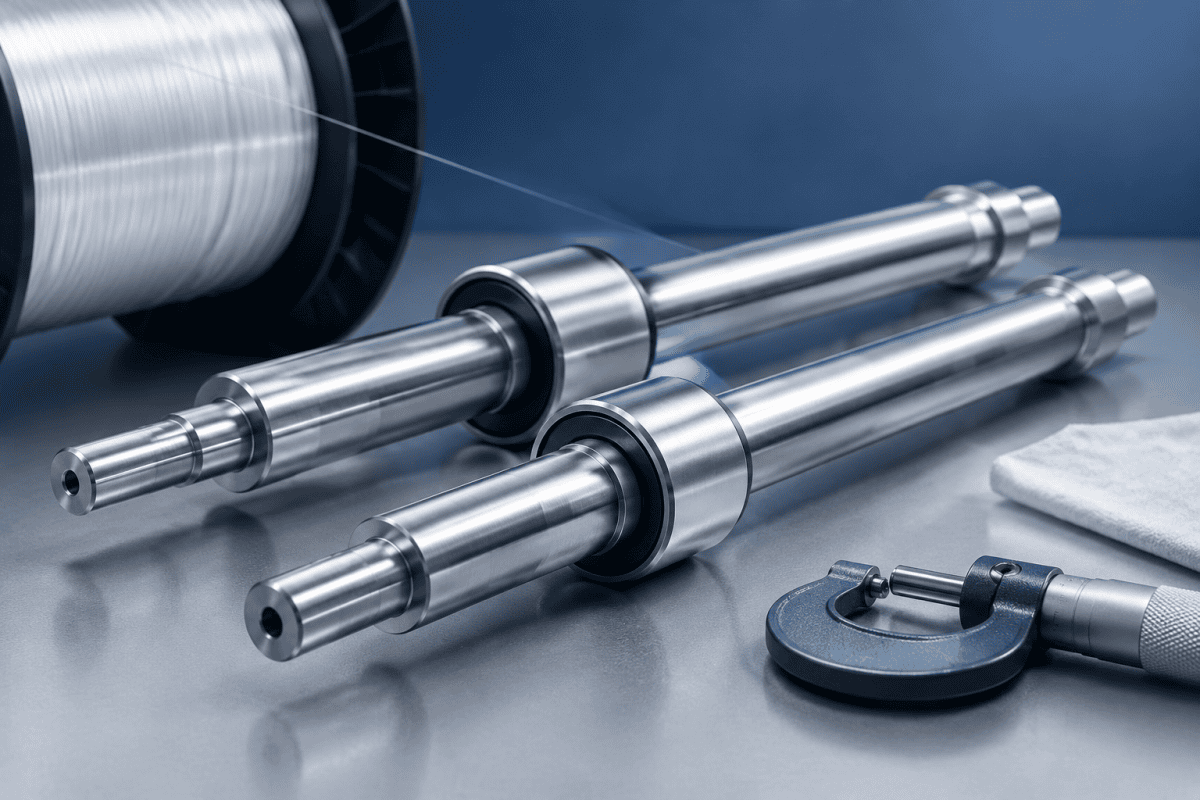
Okt
Optical Fiber Guide Roller Shafts gampang dilalekake amarga ora ana ing jalur geni utawa ndemek kaca ing suhu deposisi. Nanging ing praktik, optical fiber guide roller shafts nemtokake carane glass fiber, coated fiber, utawa preform handling fixtures didhukung, diselarasake, lan diputar ing stasiun winding, drawing, lan take-up. Yen shaft metu saka toleransi, ora lungguh kanthi apik ing bantalan, utawa ora cocog karo roller body, asile katon minangka fiber wander, tension sing ora rata, utawa tandha permukaan sing angel dilacak menyang siji komponen.
Artikel iki nliti apa sing penting nalika nemtokake optical fiber guide roller shafts, carane diproses kanthi presisi, lan apa sing kudu dipriksa sajrone perakitan lan sawise panggantian.
Apa sing Bener-bener Dilakoni Guide Roller Shaft
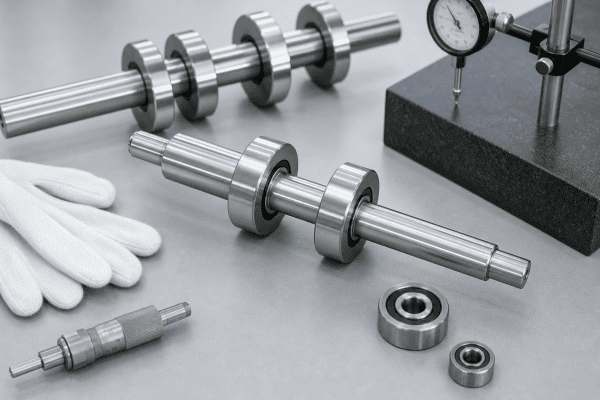
Optical Fiber Guide Roller Shafts dadi antarmuka struktural lan rotasi antarane roller body lan machine frame. Gumantung ing stasiun, guide roller shaft bisa tetep tinimbang muter, kanthi roller muter ing bantalan sing dipasang ing sakubenge, utawa bisa muter karo roller minangka bagean saka driven assembly. Ing posisi fiber winding lan take-up, shaft kudu nahan roller ing posisi aksial sing stabil nalika ngidini rotasi sing lancar lan kurang getaran ing kacepetan line sing dibutuhake proses.
Amarga shaft nggabungake sawetara toleransi, penyimpangan cilik bisa digedhekake. Straightness shaft, diameter journal, shoulder squareness, posisi keyway utawa flat, kualitas thread, lan surface finish kabeh mengaruhi carane roller lungguh lan muter. Ing winding station, posisi roller face mengaruhi ing ngendi serat dilebokake; ing posisi guide, runout bisa nyimpangake jalur serat lan ngganti tension rada saka siji sisih roller menyang sisih liyane.
Efek kasebut biasane kumulatif, mula kualitas shaft ditaksir sajrone perakitan tinimbang kanthi kapisah.
Uga mbantu misahake peran shaft saka peran roller dhewe. Roller ngontrol geometri kontak, kondisi permukaan, lan gesekan marang serat. Shaft ngontrol posisi, alignment, lan stabilitas rotasi. Nalika stasiun ngalami fault, loro kasebut asring disalahake kanthi gantian, mula langkah pisanan sing migunani yaiku nemtokake fungsi endi sing bener-bener gagal sadurunge bagean dicopot.
Pertimbangan Mesin Presisi kanggo Optical Fiber Guide Roller Shafts
Pemilihan Material Didorong dening Aplikasi
Ora ana siji material sing bener kanggo optical fiber guide roller shafts. Pilihan kasebut gumantung ing beban, kacepetan, lingkungan nyandhang, paparan korosi, watesan bobot, lan apa shaft didorong. Opsi umum kalebu stainless steels kanggo tahan korosi lan cleanability, alloy steels kanggo kekuatan lan tahan nyandhang sing luwih gedhe nalika heat treated, lan aluminum alloys nalika massa rotasi sing luwih murah penting.
Kesesuaian material kudu dikonfirmasi marang fungsi nyata komponen lan kondisi operasi tinimbang dianggep saka kategori produk sing amba. Shaft sing mlaku cedhak area coating utawa cleaning bisa uga mbutuhake tahan korosi sing beda karo sing ana ing winder garing lan tertutup. Yen komponen aluminium digunakake ing hardware sing cedhak, logika sing padha ditrapake kanggo OVD aluminum parts sing digunakake ing papan liya ing mesin, sanajan syarat roller shaft kudu dievaluasi miturut syarate dhewe.
Keputusan heat treatment lan surface treatment kudu didokumentasikake bebarengan karo material dhasar. Case hardening, nitriding, passivation, lan coatings saben ngganti dimensi rada, mula spesifikasi sing nyathet material tanpa treatment bisa ngasilake bagean sing pas ing bench lan macet sawise dipasang. Kanggo shaft sing tahan korosi, syarat passivation lan cleaning asring padha pentinge karo pilihan alloy.
Toleransi sing Ngontrol Perilaku Roller
Fitur mesin sing paling berpengaruh ing optical fiber guide roller shafts biasane:
- Jurnal bantalan. Toleransi diameter lan roundness nemtokake bearing fit lan internal clearance. Yen longgar banget, shaft bisa creep utawa fret; yen kenceng banget, bearing preload mundhak, sing nambah panas lan drag.
- Kelurusan. Mlengkung ing sadawane sumbu shaft ngasilake runout ing roller face, sing nyebabake gerakan serat lateral.
- Kothak pundhak. Shoulder sing ora persegi karo sumbu nyurung roller utawa bantalan rada metu saka sumbu nalika dijepit.
- Concentricity antarane journals. Yen journal sisih drive lan sisih roller ora concentric, roller ora bisa mlaku kanthi bener sanajan saben journal kanthi individu ana ing ukuran.
- Rampung permukaan. Finish journal mengaruhi bearing seating lan nyandhang; sealing surfaces lan fiber-facing surfaces bisa uga duwe syarat finish sing kapisah.
Runout, ora mung diameter, asring dadi watesan praktis. Shaft bisa ngukur diameter kanthi bener lan isih nyebabake roller wobble sing katon yen total indicated runout dhuwur.
Fitur sing Ngaruhi Perakitan
Optical Fiber Guide Roller Shafts biasane nggawa fitur retensi: bahu, alur ring penahan, benang, keyways, flats, utawa bolongan bor silang. Toleransi posisine penting kaya ukurane. Keyway sing dipotong rada metu saka posisi sudut bakal muter roller relatif marang indeks sing dituju, sing penting ing rakitan sing didorong ing ngendi wektu roller utawa pitch dikontrol. Benang sing digunakake karo locknuts kudu persegi menyang sumbu; benang sing metu saka tengah radial bakal ngiringake nut lan, sabanjure, balapan bantalan njero.
Rincian geometris cilik uga nyebabake biaya lan wektu timbal. Chamfer utawa radius ing entri jurnal nglindhungi bantalan sajrone instalasi, nanging lead-in sing gedhe banget nyuda dawa lenggahan sing efektif. Undercuts kanggo relief benang kudu ukurane supaya nut sing cocog lenggah kanthi lengkap marang bahu. Nemtokake fitur kasebut ing gambar nyegah shaft sing akurat saka mbutuhake rework sawise pangiriman.
Pemeriksaan Perakitan Sadurunge Line Diwiwiti
Praktek perakitan sing apik nyekel sebagian besar masalah sing ana gandhengane karo shaft sadurunge tekan produksi. Pemeriksaan ing ngisor iki umum lan kudu diadaptasi menyang stasiun tartamtu lan dokumentasi peralatan.
Verifikasi Kebersihan lan Kesesuaian Dhisik
Priksa jurnal lan bolongan sing cocog kanggo burrs, nick, lan lebu sisa saka mesin. Burrs ing jurnal bisa ngeruk bantalan sajrone instalasi lan nggawe pas sing palsu sing owah sawise burr rusak. Dry-fit antarmuka kritis yen bisa kanggo konfirmasi yen komponen lenggah kanthi tangan utawa kanthi gaya penet sing dikontrol, ora mung kanthi gaya.
Ukur Runout Sawise Perakitan, Ora Mung Sadurunge
Shaft sing mlaku bener ing bangku bisa nuduhake runout sawise roller, bantalan, lan hardware penahan dipasang. Pasang rakitan ing dhukungan utawa ing fixture pemeriksaan sing cocog lan tuduhake pasuryan roller lan ekstensi shaft. Yen runout mung katon sawise perakitan, panyebabe asring lenggahan, kontaminasi, utawa bahu sing ora persegi tinimbang shaft dhewe. Mbedakake antarane kemungkinan kasebut yaiku bedane antarane diagnosis sing bener lan panggantos sing ora perlu.
Priksa Posisi Aksial lan End Float
Konfirmasi yen roller lenggah ing posisi aksial sing dituju lan bantalan duwe end float utawa preload sing ditemtokake. End float sing berlebihan ngidini roller pindah ing tension serat; clearance sing ora cukup bisa nyebabake ikatan lan panas. Retaining rings, spacers, lan locknuts kudu lenggah kanthi lengkap lan dikencengake miturut metode sing ditemtokake, kanthi fitur ngunci apa wae sing dipasang.
Konfirmasi Kualitas Rotasi
Rotate the assembly by hand and then at low speed where safe to do so. Look for smooth rotation, absence of rough spots, and no audible or felt catching. Roughness can come from a damaged bearing, a contaminated journal, or a shaft that is slightly bent. If the roller has a driven input, check that the coupling or drive feature engages without forcing the shaft off-axis.
For related take-up and cutting hardware, the same assembly discipline applies to the optical fiber winder clamp and cutter assembly, where alignment and seating affect cut quality and bobbin changeover.
Gejala Umum lan Apa sing Dituduhake
When a winding or guide station misbehaves, optical fiber guide roller shafts are one of several possible causes. The table below frames symptoms as possibilities to investigate, not confirmed diagnoses. Verification steps are included because guessing at the cause usually leads to replacing the wrong part.
- Fiber wanders laterally across the roller. Possible causes include shaft runout, a bent shaft, worn bearings, or incorrect roller axial position. Verify by indicating the roller face and checking bearing condition and spacer stack-up.
- Uneven tension from side to side. Possible causes include roller misalignment, a tapered or worn roller surface, or a shaft that is not parallel to the fiber path. Verify alignment against the equipment datum and inspect the roller surface.
- Vibration that increases with speed. Possible causes include imbalance, bearing damage, or shaft straightness error. Verify with a low-speed run and, where available, vibration measurement before disassembly.
- Bearing overheating or short life. Possible causes include incorrect journal fit, excessive preload, insufficient clearance, or lubrication issues. Verify journal dimensions and the specified fit before replacing bearings.
- Surface marks on fiber. Possible causes include a damaged roller surface, contamination, or a guide misalignment that increases contact pressure. Verify the fiber path and inspect all contact surfaces, not only the shaft.
Recording the measurements taken at each step makes it easier to decide whether the shaft needs replacement, the assembly needs re-shimming, or another component is at fault. A simple log that tracks runout, end float, and bearing temperature over time is often more useful than a single measurement taken after a failure.
Checklist sing Digawa menyang Line
A compact checklist keeps the sequence consistent between shifts and between technicians. The order matters, because checking rotation quality before verifying fit can hide a seating problem behind a temporarily smooth feel.
- Confirm the correct part number and revision against the equipment documentation.
- Inspect journals, shoulders, threads, and retention features for damage.
- Clean all mating surfaces and verify that bores and bearings are free of debris.
- Dry-fit the assembly and confirm seating by hand or with controlled press force.
- Indicate the shaft extension and roller face after assembly, not before.
- Confirm axial position, end float, and locking hardware engagement.
- Rotate by hand, then at low speed, and note any roughness or sound.
- Record the measured values so the next check has a baseline to compare against.
Kapan Kudu Diganti Tinimbang Dipasang Maneh
Replacement is usually justified when a journal is worn below its specified range, when straightness cannot be restored, when retention features are damaged, or when corrosion or galling has degraded a critical surface. Reusing a marginal shaft often transfers the problem to new bearings, which then fail early and obscure the original cause.
Before ordering, gather the information a supplier needs: a drawing or sketch with dimensions, the material and any heat treatment, critical tolerances and surface finish requirements, the quantity, and the operating conditions the shaft sees. For non-standard or obsolete optical fiber guide roller shafts, drawing-based production and reverse engineering may be the practical route, which is where OEM/ODM CNC machining services can produce components to matched dimensions rather than forcing a redesign around an off-the-shelf part.
It is also worth checking whether the failure is recurring. A shaft that fails repeatedly at the same station may point to an alignment problem, a drive issue, or an overload condition that a new part alone will not correct. In those cases, measuring the installed geometry before ordering a replacement saves a second failure.
Nemtokake Custom Guide Roller Shafts
Custom guide roller shafts are typically specified when the original dimensions must be matched, when a station has been modified, or when material and finish need to change for a specific environment. A clear specification should state:
- Overall geometry and all functional dimensions, with datums identified
- Material grade and condition, plus any required treatment
- Critical tolerances, runout limits, and surface finish
- Retention features and their position tolerances
- Quantity and whether prototype and production quantities are both expected
If only a worn sample is available, a measured drawing plus notes on the original function helps the supplier interpret which features are critical and which have latitude. For broader replacement needs across a line, reviewing optical fiber winder shafts and sleeves can help identify which components are standard versus made to order, and the same drawing-based approach applies to related hardware such as optical fiber winding spool hubs where bore and shaft interface tolerances matter.
Detail Drawing sing Ngurangi Back-and-Forth
Suppliers can usually quote faster when the drawing answers a few questions up front. Datum selection should reflect how the part is measured and installed, not just how it is machined. Critical dimensions should be marked rather than leaving every dimension at the same tolerance, since a fully tight drawing raises cost without improving function.
Inspection expectations should also be stated. If optical fiber guide roller shafts will be verified for runout or journal diameter on receipt, the drawing should define how that measurement is taken so supplier and buyer agree on the result. Where a first article inspection is required, noting it in the request avoids a dispute after delivery.
Jumlah Prototipe lan Produksi
Many replacement shafts begin as a single prototype to confirm fit before a larger batch is ordered. Machining setup, tooling, and inspection effort are spread differently across a single unit and a production run, so it helps to state both quantities in the original inquiry. This lets the supplier plan processes that will hold tolerance consistently as volume increases.
Praktik Inspeksi lan Dokumentasi
Inspection records turn a one-time replacement into a repeatable process. When the measured values for journals, runout, and shoulder squareness are documented, the next order can reference actual data instead of a worn sample. This is particularly useful for equipment that is no longer supported by the original builder.
Where possible, measurements should be taken with instruments suited to the tolerance being checked. A caliper is adequate for overall lengths and non-critical diameters, but journal diameter and roundness are better verified with a micrometer and a method that detects lobing. Runout needs a dial indicator and a stable reference, and the reference itself must be clean and undamaged or the reading is meaningless.
Pitakonan sing Sering Ditakoni
Apa optical fiber guide roller shafts bisa diluruskan tinimbang diganti?
Straightening is possible in some cases, but it can introduce residual stress and may not restore journal condition or surface finish. It is generally considered only when the shaft is otherwise sound and the required straightness is modest. Replacing the shaft is more predictable when journals or retention features are also worn.
Kepiye carane aku ngerti yen runout asale saka shaft utawa roller?
Indicate the shaft extension and the roller face separately after assembly. If the shaft extension runs true but the roller face does not, the issue is likely in the roller bore, bearing seating, or spacer stack. If both show runout, inspect the shaft and its support.
Apa material shaft mengaruhi kualitas serat langsung?
Not through contact with the fiber in most stations, but material affects stiffness, mass, corrosion resistance, and dimensional stability. A shaft that bends or corrodes can change alignment over time, which then affects fiber handling indirectly. Material should be selected for the mechanical and environmental demands of the station.
Apa sing kudu daklebokake ing panjalukan kanggo custom optical fiber guide roller shafts?
Provide a drawing or measured sketch, material and treatment requirements, critical tolerances and runout limits, surface finish, quantity, and a description of the operating conditions. Photos of the installed assembly and notes on the failure mode also help the supplier assess which features matter most.
Sepira kerepe guide roller shafts kudu diinspeksi?
Inspection intervals depend on line speed, load, and environment, but a practical approach is to check runout and bearing condition at planned maintenance intervals and after any event that could have overloaded the station. Trending the readings is more valuable than a single pass or fail result.
Apa optical fiber guide roller shafts bisa disedhiyakake tanpa drawing lengkap?
A complete drawing is preferred, but a measured sample with notes on critical features is often enough to begin. The supplier will normally confirm which dimensions are functional and which can vary before production starts.
Langkah Sabanjure
If a winding or guide station is showing runout, tension variation, or premature bearing wear, the fastest path to a reliable fix is a clear specification for optical fiber guide roller shafts. Send your drawings, dimensions, material requirements, and operating conditions to request a quotation and confirm whether a standard replacement or a custom-machined shaft best fits the application.
For additional guidance on precision measurement and tolerance practices, consult the ISO 2768 general tolerances standard, which many suppliers reference when defining default tolerance classes on machined drawings.
