
Wissen
SG Controls Preform-Ausrüstung Ersatzteile: Leitfaden für kundenspezifische RFQ
Okt.
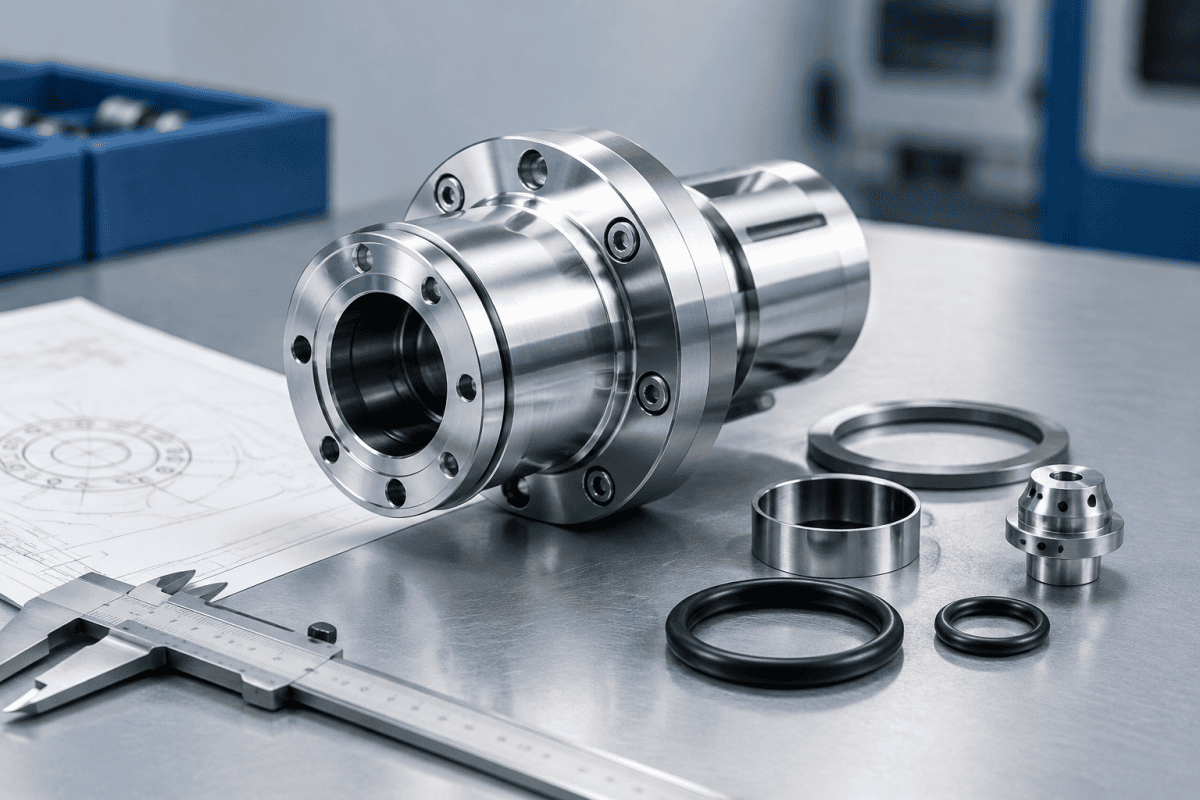
Wenn eine SG Controls Preform-Linie eine Ersatzkomponente benötigt, ist der schnellste Weg zu einem funktionierenden Teil in der Regel eine zeichnungsbasierte RFQ und nicht eine Katalogsuche. SG Controls Preform-Anlagen Ersatzteile befinden sich oft an der Schnittstelle von Altanlagen, nicht standardisierten Schnittstellen und prozesskritischer Geometrie, was bedeutet, dass der Käufer einen Anlagenbedarf in eine Fertigungsspezifikation übersetzen muss, die eine Werkstatt ohne Rätselraten kalkulieren kann. Dieser Leitfaden erläutert, wie Sie eine Spezifikation für SG Controls Preform-Anlagen Ersatzteile erstellen, was in eine kundenspezifische RFQ gehört und wie Sie Lieferanten für kundenspezifische Preform-Anlagen Ersatzteile bewerten, die aus Zeichnungen oder physischen Mustern hergestellt werden.
Warum diese Ersatzteile für Preform-Anlagen oft eine kundenspezifische Beschaffung erfordern
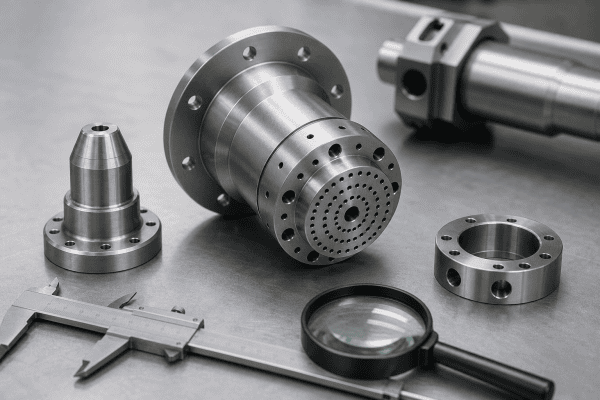
Preform-Fertigungsanlagen — ob OVD, VAD oder MCVD — sind um eine kleine Anzahl von Prozessstationen herum aufgebaut: Drehmaschinen, Abscheidungsbrenner, Gaszufuhrsysteme, Abgasbehandlung und Materialhandhabung. Viele dieser Maschinen bleiben jahrzehntelang in Betrieb, und die Komponenten, die am schnellsten verschleißen, sind selten diejenigen mit der breitesten Aftermarket-Abdeckung.
Drei Faktoren treiben Käufer zur kundenspezifischen Beschaffung:
- Alter und Dokumentationslücken. Originalzeichnungen können unvollständig, überholt oder nur in Papierarchiven vorhanden sein. Ein verschlissenes Teil wird manchmal zur genauesten Referenz dafür, wie das Ersatzteil aussehen muss.
- Prozessspezifische Geometrie. Eine Brennerfrontplatte, ein Gasverteiler oder eine Klemme, die an einem Abscheidungsaufbau funktioniert, lässt sich möglicherweise nicht direkt auf einen anderen übertragen. Kleine Unterschiede im Kanallayout, bei Dichtflächen oder Befestigungsmerkmalen sind entscheidend.
- Werkstoff- und Oberflächenanforderungen. Komponenten, die hohen Temperaturen, thermischen Wechselbelastungen oder reaktiven Gasumgebungen ausgesetzt sind, werden oft aus Materialien spezifiziert, die allgemeine Werkstätten nicht auf Lager haben oder routinemäßig bearbeiten.
Hier werden OEM/ODM-Bearbeitungsdienstleistungen relevant. Ein Lieferant, der regelmäßig Komponenten für optische Faseranlagen herstellt, kann oft aus einer Kombination von Zeichnungen, Messungen und Musterteilen ein funktionsfähiges Ersatzteil produzieren.
Was als “Ersatzteil” an einer Preform-Linie gilt
Bevor Sie eine RFQ schreiben, ist es hilfreich, die Komponente zu klassifizieren. Verschiedene Kategorien haben unterschiedliche Inspektionsprioritäten und unterschiedliche Risiken, wenn das Ersatzteil geringfügig abweicht.
Brenner- und Brennerdüsenkomponenten
Brennerköpfe, Düsenplatten und Brennerkörper beeinflussen direkt die Flammenform, die Gasmischung und die Abscheidungsgleichmäßigkeit. Kleine Abweichungen im Kanaldurchmesser, in der Konzentrizität oder in der Planheit der Stirnfläche können verändern, wie sich Ruß auf dem Target abscheidet. Ersatz-Brennerkomponenten sind typischerweise die geometrieempfindlichsten Teile in einer RFQ.
Abscheidungs- und Gaszufuhrkomponenten
Verteiler, Verteilungsblöcke und Befestigungskomponenten befinden sich zwischen der Gasversorgung und dem Brenner. Hier sind Leckintegrität, interne Oberflächenbeschaffenheit und Portausrichtung in der Regel wichtiger als feine Maßtoleranzen an externen Merkmalen.
Mechanische Handhabungs- und Vorrichtungskomponenten
Klemmen, Spannfutter, Halterungen und Aufnahmehardware sind oft einfacher zu reproduzieren, müssen aber dennoch mit Befestigungsmustern und Greifgeometrie übereinstimmen. Komponenten zur Handhabung optischer Fasern können besonders empfindlich auf die Oberflächenbeschaffenheit an den Stellen reagieren, an denen sie die Faser oder die Preform berühren.
Hilfs- und Stützkomponenten
Endbrenner, Halterungen, Abschirmungen und kleine Verteilerbaugruppen runden die typische RFQ-Liste ab. Dies sind oft die Teile, die eine Linie zum Stillstand bringen, wenn sie ausfallen, gerade weil sie als geringfügig behandelt werden, bis sie es nicht mehr sind.
Erstellung einer zeichnungsbasierten RFQ für SG Controls Preform-Anlagen Ersatzteile
Eine starke RFQ reduziert den Hin-und-Her-Aufwand und gibt dem Lieferanten, was er für eine genaue Kalkulation benötigt. Die folgenden Punkte sind diejenigen, die am wahrscheinlichsten ein Angebot verändern oder beeinflussen, ob das Teil funktioniert.
Identifikation und Funktion
- Teilebezeichnung und eine etwaige interne Anlagen- oder Zeichnungsnummer.
- Anlagenfamilie und Station, an der das Teil verwendet wird (als Kontext, nicht als Kompatibilitätsanspruch).
- Eine kurze Beschreibung der Funktion des Teils — zum Beispiel “Gasverteilungsblock, der den Brenner speist.”
- Ob das Teil ein direkter Ersatz oder eine Verbesserung gegenüber einem bekannten Ausfallmodus ist.
Zeichnungen und Referenzgeometrie
Senden Sie die beste verfügbare Zeichnung, auch wenn sie unvollständig ist. Markieren Sie, welche Maße kritisch und welche Referenzmaße sind. Wenn keine Zeichnung existiert, stellen Sie ein physisches Muster oder einen 3D-Scan bereit und vermerken Sie alle Merkmale, die am Muster verschlissen oder verformt sind.
Für einen tieferen Einblick, wie Zeichnungen, Materialien und Reverse Engineering zusammenpassen, behandelt der Leitfaden zur Beschaffung kundenspezifischer OVD- und VAD-Brenner die Material- und Geometrieentscheidungen, die häufig auftreten. Für einen verwandten Blick darauf, wie bearbeitete Halterungen und Schlittenteile spezifiziert werden, siehe SG Controls MCVD Drehmaschinen-Ersatzteile.
Material- und Oberflächenanforderungen
Die Materialauswahl sollte der Funktion der Komponente folgen, nicht ihrer Produktkategorie. Eine Halterung und eine Brennerfrontplatte mögen beide aus Metall sein, aber sie sind sehr unterschiedlichen thermischen und chemischen Bedingungen ausgesetzt. Geben Sie in der RFQ an:
- Bekanntes oder vermutetes Grundmaterial des Originalteils.
- Whether the material is confirmed or assumed.
- Operating environment in general terms — temperature range, gas exposure, thermal cycling, cleaning methods.
- Required surface finish or sealing requirements on specific features.
- Any restrictions on coatings, platings, or contaminants.
If the material is unknown, say so. A supplier can often propose options based on the application, and that is a more reliable path than assuming a material from a part number.
Schnittstellen und Passung
Replacement parts fail at interfaces more often than in the middle. Call out:
- Gas connection types, thread standards, and sealing method.
- Mounting hole patterns and fastener sizes.
- Mating surfaces that must seal, align, or transmit force.
- Any clearance or alignment features that must match the existing assembly.
Standard threads and fittings are the usual reference for these callouts. The ASME standards for mechanical components are a useful reference when specifying thread and fitting details.
Menge und erwartete Verwendung
Indicate whether the RFQ is for one spare, a small batch, or a planned stocking quantity. Batch size affects manufacturing method and unit cost, and it is useful for the supplier to know whether the part is a one-time replacement or a recurring consumable.
Inspektions- und Dokumentationserwartungen
State what you need to receive with the parts — for example, dimensional inspection reports, material certificates, or photographs of critical features before shipment. Being explicit here prevents a mismatch between what the buyer assumed and what the supplier planned to provide.
Fragen, die Sie einem kundenspezifischen Teilelieferanten stellen sollten
Not every machine shop is set up for preform equipment components. The following questions help separate general machining capacity from relevant experience.
- Can you work from a physical sample when drawings are incomplete or missing?
- How do you handle critical dimensions that are not fully specified on the drawing?
- Which materials do you routinely machine for high-temperature or gas-exposed components?
- How do you verify concentricity, flatness, or port alignment before shipment?
- What information do you need to confirm before quoting?
- Can you produce a first article for approval before a larger batch?
These questions are not a compatibility test. They are a check on whether the supplier’s process matches the precision and documentation your line requires. For a supplier with standard and custom optical fiber equipment parts, browsing the optical fiber equipment parts range can also show whether comparable components are already in production.
Häufige Fehler bei RFQs für Preform-Anlagen
Kompatibilität aufgrund eines Teilenamens annehmen
A part described as an “SG Controls replacement” is not automatically compatible with a specific machine configuration. Compatibility comes from matching drawings, dimensions, gas connections, materials, and application requirements — not from the name on the RFQ.
Die Betriebsumgebung weglassen
Material and finish decisions depend heavily on temperature, gas exposure, and cleaning practice. An RFQ that lists only dimensions leaves the supplier guessing, and the result may be a part that fits but does not last.
Alle Verbrauchsmaterialien gleich behandeln
Replacement intervals and inspection criteria differ across burner components, seals, and mechanical hardware. A single “spares” RFQ that mixes categories can slow down quoting and hide the parts that actually need tighter tolerances.
Warten, bis eine Linie stillsteht
Drawing-based sourcing takes time: review, quoting, material procurement, machining, and inspection. Buyers who keep current drawings and sample parts on file are better positioned when an unplanned replacement is needed.
Inspektionsüberlegungen für eingehende kundenspezifische Teile
Once a custom part arrives, a short incoming inspection routine catches most fit problems before installation:
- Maßprüfung against the RFQ drawing, focusing on critical and interface dimensions first.
- Sichtprüfung for tool marks, burrs, contamination, or damage on sealing surfaces.
- Passungsprüfung against the mating assembly where practical, before the part sees process conditions.
- Dokumentenprüfung to confirm inspection reports and material certificates match the order.
For components that influence deposition, it also helps to compare the new part against the removed part — not to replicate wear, but to confirm that intentional design features have been preserved.
Verwaltung von Lieferzeiten für SG Controls Preform-Anlagen Ersatzteile
Most delays in custom sourcing come from incomplete information rather than machining capacity. An RFQ that arrives with a clear drawing, known material, and defined interfaces can move into quoting quickly. One that arrives with a worn sample and no drawing may need a measurement step first. Buyers who understand this sequence can plan around it instead of reacting to it.
A practical approach is to split parts into two groups: critical spares that stop the line if they fail, and routine consumables that can be replaced during planned maintenance. Critical spares deserve a completed drawing package and a qualified supplier on file before they are needed. Routine consumables can often be handled with simpler sample-based RFQs once the first article has been approved.
Storage also matters. Parts that seal, align, or contact gas should be kept clean, protected, and traceable to their inspection records. A spare that sits on a shelf for two years and loses its documentation is harder to trust than one that was logged on arrival.
Warum Dokumentation wichtiger ist als eine Teilenummer
Legacy equipment often survives longer than the paperwork that came with it. When a drawing is missing, the buyer’s best asset is a clear record of what the part must do and how it interfaces with the rest of the line. That record is what allows a supplier to build SG Controls preform equipment replacement parts that work, rather than parts that merely resemble the original.
This is also why reverse engineering should be treated as a documented process, not a shortcut. Every dimension taken from a worn sample should be flagged as either functional or suspect. Every material assumption should be stated as an assumption. Every interface should be confirmed against the mating component where possible. When those notes travel with the RFQ, the supplier can quote with confidence and the buyer can inspect with a clear standard.
FAQ
Kann ein Ersatzteil ohne Zeichnung hergestellt werden?
In many cases, yes. A physical sample, combined with measurements and notes on worn or deformed features, can serve as the reference. The supplier will typically need to confirm which features are functional and which are artifacts of wear before quoting.
Wie spezifiziere ich das Material, wenn ich nicht weiß, aus welchem Material das Originalteil besteht?
Describe the operating environment instead — temperature exposure, gas contact, thermal cycling, and cleaning methods — and ask the supplier to propose options. If the original material is important to preserve, a material analysis of a sample can confirm it.
Sollte ich ein Ersatzteil oder eine Charge anfordern?
It depends on how often the component is replaced and how long sourcing takes. High-wear consumables often justify a small batch; one-off or rarely replaced components may not. Discuss expected usage with the supplier so the manufacturing method fits the quantity.
Wie lange dauert es, bis eine kundenspezifische RFQ kalkuliert wird?
Quoting time depends on how complete the drawings and sample data are. RFQs with clear dimensions, materials, and interface details generally move faster than those requiring reverse engineering or clarification. Providing a complete package up front shortens the process.
Nächster Schritt
If a preform line component needs replacement and no standard part fits, the most efficient move is to prepare a drawing- or sample-based RFQ with the details above. Gather the best available drawing, note the operating environment, and list the critical interfaces. For a closer look at how the RFQ process supports custom SG Controls preform equipment replacement parts, review this guide before contacting a supplier. To discuss a specific part, contact our team with your drawings, dimensions, material requirements, and operating conditions, and we can review the request against custom optical fiber equipment part production.
