
Kawruh
SG Controls Preform Equipment Replacement Parts: Custom RFQ Guide
Okt
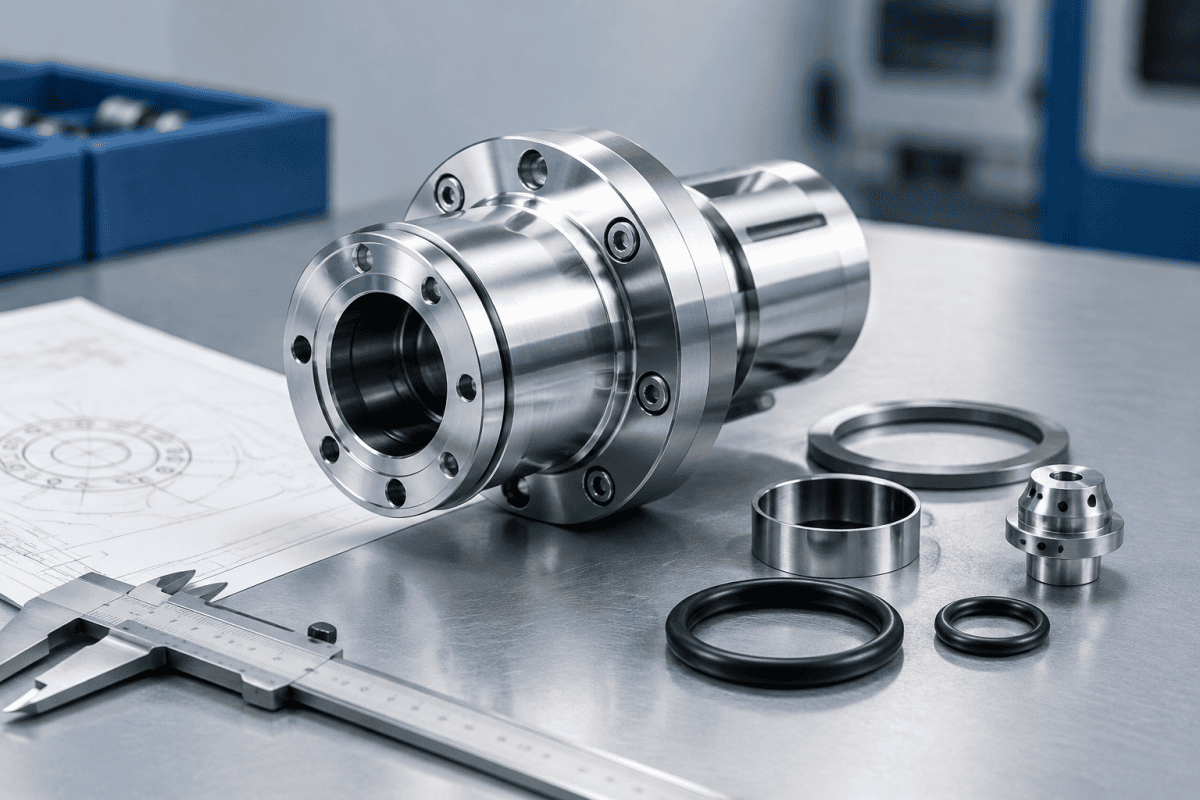
Nalika lini preform SG Controls mbutuhake komponen panggantos, dalan paling cepet kanggo entuk bagean sing bisa digunakake biasane yaiku RFQ adhedhasar gambar tinimbang nggoleki katalog. Bagean panggantos peralatan preform SG Controls asring ana ing persimpangan peralatan warisan, antarmuka non-standar, lan geometri sing kritis kanggo proses, tegese panuku kudu nerjemahake kabutuhan peralatan dadi spesifikasi manufaktur sing bisa ditaksir dening bengkel mesin tanpa guesswork. Pandhuan iki njlentrehake carane nggawe spesifikasi kanggo bagean panggantos peralatan preform SG Controls, apa sing kudu dilebokake ing RFQ khusus, lan carane ngevaluasi supplier kanggo spare part peralatan preform khusus sing diprodhuksi saka gambar utawa sampel fisik.
Why These Preform Equipment Replacement Parts Often Require Custom Sourcing
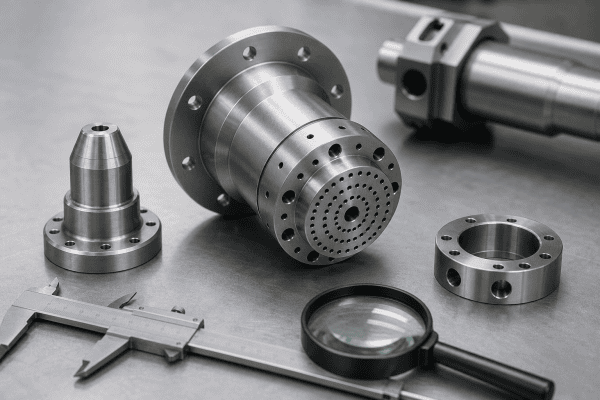
Peralatan fabrikasi preform — apa OVD, VAD, utawa MCVD — dibangun ing sekitar sawetara stasiun proses: lathe, obor deposisi, sistem pangiriman gas, penanganan exhaust, lan penanganan material. Akeh mesin kasebut tetep digunakake nganti pirang-pirang dekade, lan komponen sing paling cepet rusak arang banget sing duwe jangkoan aftermarket paling akeh.
Telung faktor nyurung panuku menyang sumber khusus:
- Umur lan kesenjangan dokumentasi. Gambar asli bisa uga ora lengkap, diganti, utawa mung disimpen ing arsip kertas. Bagean sing wis rusak kadhangkala dadi referensi paling akurat kanggo apa sing kudu katon kaya panggantos.
- Geometri khusus proses. Faceplate obor, manifold gas, utawa clamp sing bisa digunakake ing siji setelan deposisi bisa uga ora langsung ditransfer menyang liyane. Beda cilik ing tata letak saluran, permukaan sealing, utawa fitur mounting penting.
- Syarat material lan finish. Komponen sing ngadhepi suhu dhuwur, siklus termal, utawa lingkungan gas reaktif asring ditemtokake ing bahan sing ora disimpen utawa ora rutin diproses dening bengkel mesin umum.
Ing kene layanan mesin OEM/ODM dadi relevan. Supplier sing rutin ngasilake komponen peralatan serat optik asring bisa kerja saka kombinasi gambar, pangukuran, lan bagean sampel kanggo ngasilake panggantos sing fungsional.
What Counts as a “Replacement Part” on a Preform Line
Sadurunge nulis RFQ, mbantu nggolongake komponen kasebut. Kategori sing beda duwe prioritas inspeksi sing beda lan risiko sing beda yen panggantos rada salah.
Burner and torch components
Kepala burner, piring nozzle, lan awak obor langsung mengaruhi bentuk nyala, pencampuran gas, lan keseragaman deposisi. Penyimpangan cilik ing diameter saluran, konsentrisitas, utawa kerataan permukaan bisa ngganti cara soot disimpen ing target. Komponen burner panggantos biasane minangka bagean sing paling sensitif geometri ing RFQ.
Deposition and gas delivery components
Manifold, blok distribusi, lan hardware mounting ana ing antarane pasokan gas lan obor. Ing kene, integritas bocor, finish permukaan internal, lan keselarasan port biasane luwih penting tinimbang toleransi dimensi sing apik ing fitur eksternal.
Mechanical handling and fixture components
Clamp, chuck, bracket, lan hardware take-up asring luwih gampang direproduksi nanging isih kudu cocog karo pola mounting lan geometri grip. Komponen penanganan serat optik bisa dadi sensitif banget marang finish permukaan ing ngendi dheweke kontak karo serat utawa preform.
Auxiliary and support hardware
Tail burner, bracket, shielding, lan rakitan manifold cilik ngrampungake dhaptar RFQ sing khas. Iki asring bagean sing mandhegake lini nalika gagal, amarga dianggep cilik nganti ora.
Preparing a Drawing-Based RFQ for SG Controls Preform Equipment Replacement Parts
RFQ sing kuwat nyuda bolak-balik lan menehi supplier apa sing dibutuhake kanggo ngutip kanthi akurat. Item ing ngisor iki minangka sing paling mungkin ngganti kutipan utawa mengaruhi apa bagean kasebut bisa digunakake.
Identification and function
- Jeneng bagean lan nomer aset utawa gambar internal.
- Kulawarga peralatan lan stasiun ing ngendi bagean kasebut digunakake (kanggo konteks, dudu minangka klaim kompatibilitas).
- Deskripsi singkat babagan apa sing ditindakake bagean kasebut — contone, “blok distribusi gas sing nyedhiyakake obor.”
- Apa bagean kasebut minangka panggantos langsung utawa perbaikan saka mode kegagalan sing dikenal.
Drawings and reference geometry
Kirim gambar sing paling apik sing kasedhiya, sanajan ora lengkap. Tandhani dimensi endi sing kritis lan endi sing referensi. Yen ora ana gambar, wenehake sampel fisik utawa scan 3D, lan cathet fitur apa wae sing rusak utawa cacat ing sampel kasebut.
Kanggo tampilan sing luwih jero babagan carane gambar, bahan, lan reverse engineering cocog, pandhuan babagan sumber burner OVD lan VAD khusus nyakup keputusan material lan geometri sing umum muncul. Kanggo tampilan sing gegandhengan babagan carane holder mesin lan bagean carriage ditemtokake, deleng SG Controls MCVD lathe spare parts.
Material and finish requirements
Pamilihan material kudu ngetutake fungsi komponen, dudu kategori produk. Bracket lan faceplate burner bisa uga logam, nanging ngadhepi kahanan termal lan kimia sing beda banget. Ing RFQ, nyatakake:
- Known or suspected base material of the original part.
- Whether the material is confirmed or assumed.
- Operating environment in general terms — temperature range, gas exposure, thermal cycling, cleaning methods.
- Required surface finish or sealing requirements on specific features.
- Any restrictions on coatings, platings, or contaminants.
If the material is unknown, say so. A supplier can often propose options based on the application, and that is a more reliable path than assuming a material from a part number.
Interfaces and fit
Replacement parts fail at interfaces more often than in the middle. Call out:
- Gas connection types, thread standards, and sealing method.
- Mounting hole patterns and fastener sizes.
- Mating surfaces that must seal, align, or transmit force.
- Any clearance or alignment features that must match the existing assembly.
Standard threads and fittings are the usual reference for these callouts. The ASME standards for mechanical components are a useful reference when specifying thread and fitting details.
Quantity and expected use
Indicate whether the RFQ is for one spare, a small batch, or a planned stocking quantity. Batch size affects manufacturing method and unit cost, and it is useful for the supplier to know whether the part is a one-time replacement or a recurring consumable.
Inspection and documentation expectations
State what you need to receive with the parts — for example, dimensional inspection reports, material certificates, or photographs of critical features before shipment. Being explicit here prevents a mismatch between what the buyer assumed and what the supplier planned to provide.
Questions to Ask a Custom Parts Supplier
Not every machine shop is set up for preform equipment components. The following questions help separate general machining capacity from relevant experience.
- Can you work from a physical sample when drawings are incomplete or missing?
- How do you handle critical dimensions that are not fully specified on the drawing?
- Which materials do you routinely machine for high-temperature or gas-exposed components?
- How do you verify concentricity, flatness, or port alignment before shipment?
- What information do you need to confirm before quoting?
- Can you produce a first article for approval before a larger batch?
These questions are not a compatibility test. They are a check on whether the supplier’s process matches the precision and documentation your line requires. For a supplier with standard and custom optical fiber equipment parts, browsing the optical fiber equipment parts range can also show whether comparable components are already in production.
Common Mistakes in Preform Equipment RFQs
Assuming compatibility from a part name
A part described as an “SG Controls replacement” is not automatically compatible with a specific machine configuration. Compatibility comes from matching drawings, dimensions, gas connections, materials, and application requirements — not from the name on the RFQ.
Omitting the operating environment
Material and finish decisions depend heavily on temperature, gas exposure, and cleaning practice. An RFQ that lists only dimensions leaves the supplier guessing, and the result may be a part that fits but does not last.
Treating all consumables the same
Replacement intervals and inspection criteria differ across burner components, seals, and mechanical hardware. A single “spares” RFQ that mixes categories can slow down quoting and hide the parts that actually need tighter tolerances.
Waiting until a line is down
Drawing-based sourcing takes time: review, quoting, material procurement, machining, and inspection. Buyers who keep current drawings and sample parts on file are better positioned when an unplanned replacement is needed.
Inspection Considerations for Incoming Custom Parts
Once a custom part arrives, a short incoming inspection routine catches most fit problems before installation:
- Dimensional check against the RFQ drawing, focusing on critical and interface dimensions first.
- Visual inspection for tool marks, burrs, contamination, or damage on sealing surfaces.
- Fit check against the mating assembly where practical, before the part sees process conditions.
- Documentation review to confirm inspection reports and material certificates match the order.
For components that influence deposition, it also helps to compare the new part against the removed part — not to replicate wear, but to confirm that intentional design features have been preserved.
Managing Lead Times for SG Controls Preform Equipment Replacement Parts
Most delays in custom sourcing come from incomplete information rather than machining capacity. An RFQ that arrives with a clear drawing, known material, and defined interfaces can move into quoting quickly. One that arrives with a worn sample and no drawing may need a measurement step first. Buyers who understand this sequence can plan around it instead of reacting to it.
A practical approach is to split parts into two groups: critical spares that stop the line if they fail, and routine consumables that can be replaced during planned maintenance. Critical spares deserve a completed drawing package and a qualified supplier on file before they are needed. Routine consumables can often be handled with simpler sample-based RFQs once the first article has been approved.
Storage also matters. Parts that seal, align, or contact gas should be kept clean, protected, and traceable to their inspection records. A spare that sits on a shelf for two years and loses its documentation is harder to trust than one that was logged on arrival.
Why Documentation Matters More Than a Part Number
Legacy equipment often survives longer than the paperwork that came with it. When a drawing is missing, the buyer’s best asset is a clear record of what the part must do and how it interfaces with the rest of the line. That record is what allows a supplier to build SG Controls preform equipment replacement parts that work, rather than parts that merely resemble the original.
This is also why reverse engineering should be treated as a documented process, not a shortcut. Every dimension taken from a worn sample should be flagged as either functional or suspect. Every material assumption should be stated as an assumption. Every interface should be confirmed against the mating component where possible. When those notes travel with the RFQ, the supplier can quote with confidence and the buyer can inspect with a clear standard.
Pitakonan sing Sering Ditakoni
Can a replacement part be made without a drawing?
In many cases, yes. A physical sample, combined with measurements and notes on worn or deformed features, can serve as the reference. The supplier will typically need to confirm which features are functional and which are artifacts of wear before quoting.
How do I specify material if I do not know what the original part is made of?
Describe the operating environment instead — temperature exposure, gas contact, thermal cycling, and cleaning methods — and ask the supplier to propose options. If the original material is important to preserve, a material analysis of a sample can confirm it.
Should I request one spare or a batch?
It depends on how often the component is replaced and how long sourcing takes. High-wear consumables often justify a small batch; one-off or rarely replaced components may not. Discuss expected usage with the supplier so the manufacturing method fits the quantity.
How long does a custom RFQ take to quote?
Quoting time depends on how complete the drawings and sample data are. RFQs with clear dimensions, materials, and interface details generally move faster than those requiring reverse engineering or clarification. Providing a complete package up front shortens the process.
Langkah Sabanjure
If a preform line component needs replacement and no standard part fits, the most efficient move is to prepare a drawing- or sample-based RFQ with the details above. Gather the best available drawing, note the operating environment, and list the critical interfaces. For a closer look at how the RFQ process supports custom SG Controls preform equipment replacement parts, review this guide before contacting a supplier. To discuss a specific part, contact our team with your drawings, dimensions, material requirements, and operating conditions, and we can review the request against custom optical fiber equipment part production.
