
Знание
Кольца распределения газа горелки OVD: соосность и инспекция
Окт
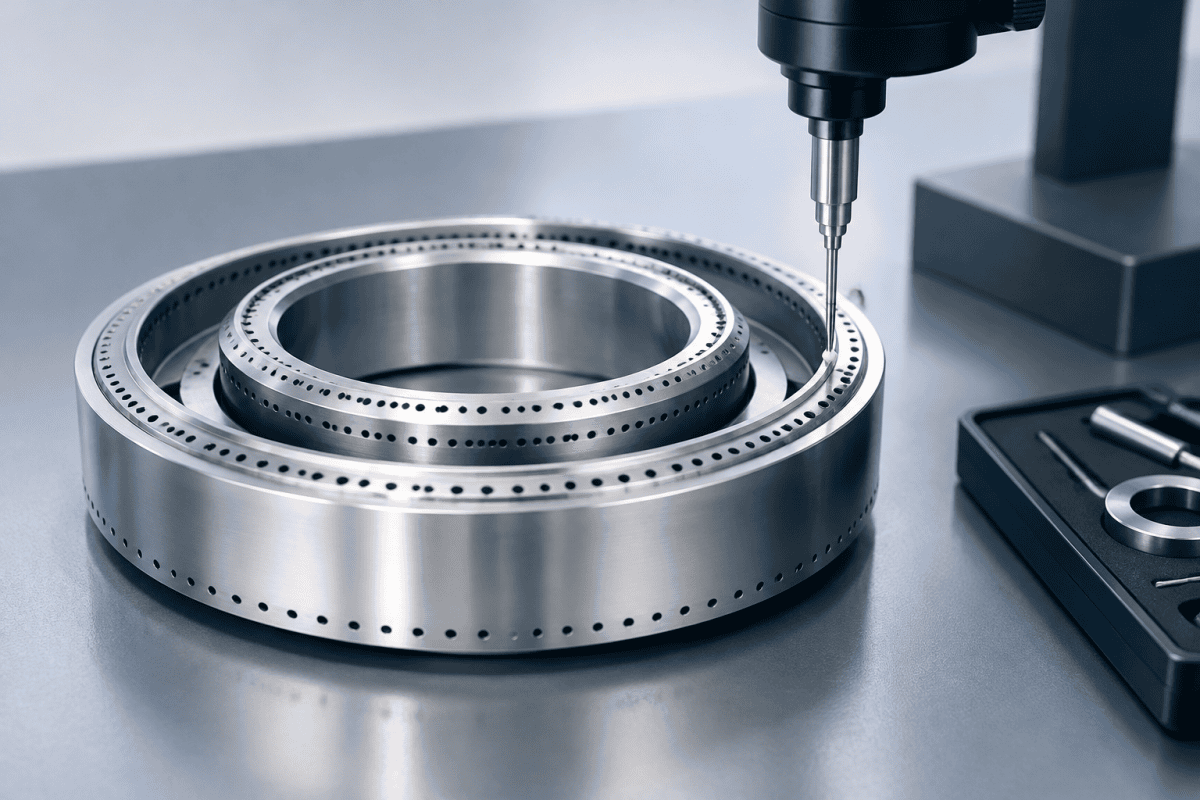
Газораспределительные кольца горелки OVD относятся к наименее заметным компонентам системы осаждения OVD, однако они оказывают существенное влияние на то, как реагентные и топливные газы покидают торец горелки. Для инженеров и специалистов по техническому обслуживанию, работающих с оборудованием для заготовок оптического волокна, понимание того, какие функции выполняют газораспределительные кольца горелки OVD, как соосность влияет на производительность и как проводить их контроль, имеет решающее значение для стабильного осаждения сажи. В данной статье рассматриваются функции газораспределительных колец горелки OVD, распространённые признаки износа или несоосности, практические шаги контроля, а также информация, необходимая при подборе сменных газораспределительных колец горелки OVD или альтернатив, изготовленных по индивидуальному заказу.
Функции газораспределительных колец в горелке OVD
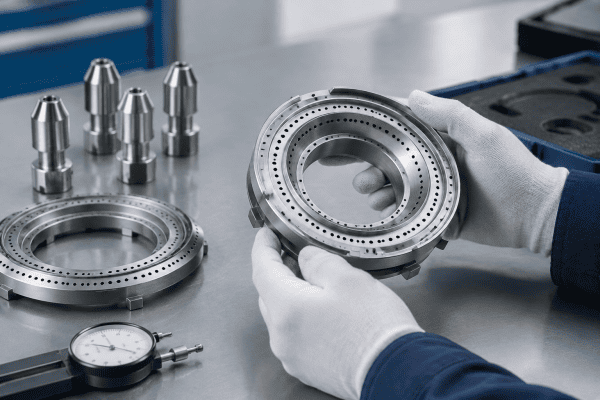
Газораспределительные кольца горелки OVD располагаются внутри узла горелки и помогают управлять подачей технологических газов к сопловому массиву и лицевой панели. В зависимости от конструкции горелки эти кольца могут выполнять функции:
- Направляющих поток элементов которые направляют газ от каналов подачи к отдельным сопловым отверстиям
- Уплотнительных сопряжений которые разделяют смежные газовые контуры, чтобы потоки топлива, кислорода и прекурсора не смешивались преждевременно
- Дистанционных или центрирующих компонентов которые поддерживают взаимное положение внутренних каналов и лицевой панели
- Элементов коллектора или распределительного коллектора которые способствуют более равномерному распределению по многосопловой схеме
Термин “газораспределительные компоненты” охватывает ряд деталей, и не каждая горелка OVD использует одинаковую внутреннюю архитектуру. Некоторые конструкции полагаются на одно кольцо, другие используют наборные кольца или комбинации кольцо-вставка. Это означает, что газораспределительные кольца горелки OVD всегда следует оценивать по конкретному чертежу горелки, а не по общему описанию категории.
Поскольку эти кольца влияют на симметрию потока, небольшие геометрические отклонения могут приводить к неравномерным характеристикам пламени. Соосные газораспределительные кольца горелки OVD — кольца, внутренний и наружный диаметры которых имеют общий центр, а поверхности остаются перпендикулярными оси горелки в пределах допуска — помогают поддерживать баланс газовых путей по окружности. Когда соосность нарушается, эффект может проявляться постепенно, а не как очевидный отказ.
Почему важна соосность
Соосность в данном контексте означает, насколько точно осевые линии внутренних и наружных элементов газораспределительного кольца горелки OVD совпадают с осью горелки и между собой. Кольцо, смещённое от центра, некруглое или неплотно посаженное, может создавать локальные различия в сопротивлении потоку.
Эти различия могут влиять на:
- Симметрию пламени — неравномерная подача газа может вызвать наклон или изменение пламени по торцу горелки
- Равномерность осаждения сажи — искажённое поле потока может смещать зону осаждения частиц кремнезёма на растущей заготовке
- Распределение тепла — асимметричный нагрев может влиять на эффективность осаждения и качество поверхности заготовки
- Стабильность отложений во времени — небольшие дисбалансы могут накапливаться по мере протекания процесса
Важно рассматривать эти факторы как потенциальные эффекты, а не как гарантированные результаты. Единичное смещённое от центра газораспределительное кольцо горелки OVD не обязательно является первопричиной проблемы осаждения; это одна из многих переменных. Практическая ценность контроля соосности заключается в том, что он сужает список возможных причин при отклонении производительности. Читателям, сталкивающимся с проблемами профиля, также может быть полезен контекст в этой статье на тему дрейфа профиля показателя преломления и концентричности горелки, где рассматривается взаимодействие геометрических факторов с поведением при осаждении.
Распространённые причины потери соосности кольца
Распределительные кольца обычно теряют соосность по нескольким повторяющимся причинам. Понимание этих причин помогает службам технического обслуживания решить, следует ли переустановить, переобработать или заменить газораспределительное кольцо горелки OVD.
Термоциклирование и деформация
Burner internals experience repeated heating and cooling. Over many cycles, differential expansion between OVD burner gas distribution rings and surrounding hardware can cause slight warping or relaxation of fits. This is a gradual process, and its severity depends on the material, the torch design, and actual operating conditions.
Механические повреждения при обращении или очистке
Cleaning operations are a common source of unintended damage. Prying an OVD burner gas distribution ring free, using abrasive tools, or dropping a component can introduce nicks, burrs, or bending that shift the centerline. Even small dents on a sealing surface can prevent the ring from seating flat.
Накопление отложений и засорение
Silica soot and process byproducts can accumulate in gas passages and around ring edges. Build-up that is uneven around the circumference can effectively change the flow geometry. Readers dealing with this pattern may benefit from the discussion in preventing cleanroom downtime through OVD/VAD burner maintenance, since faceplate and ring contamination often occur together.
Износ в местах базирования
Pins, shoulders, and counterbores that position an OVD burner gas distribution ring can wear over time. Once a locating feature is worn, the ring may shift slightly under gas pressure, and the resulting position may not be repeatable from one assembly to the next.
Аспекты контроля газораспределительных колец горелки OVD
Inspection should combine visual examination, dimensional checks, and — where possible — functional verification. The following sequence is practical for most maintenance environments.
Задокументируйте состояние при обнаружении
Before cleaning or disassembly, record the ring’s orientation and any visible deposits. Photographs and notes help determine whether a problem is recurring. If OVD burner gas distribution rings have been reinstalled multiple times with the same orientation, mark them so the pattern can be tracked.
Очищайте без изменения геометрии
Use methods recommended in the equipment documentation. Avoid abrasive media or sharp tools on sealing faces and locating diameters. If deposits are stubborn, follow the manufacturer’s or site’s approved cleaning procedure rather than improvising. When in doubt, consult qualified personnel before using any chemical or mechanical cleaning method.
Проверьте плоскостность и посадку
Place the OVD burner gas distribution ring on a known-flat surface such as a surface plate or a verified reference face. Look for rocking, visible gaps, or light leakage under the ring. A ring that does not sit flat will not maintain concentricity when clamped.
Измерьте внутренний и наружный диаметры
Use calipers or micrometers appropriate to the tolerance. Measure at multiple points around the circumference to detect out-of-roundness. Record the maximum and minimum readings rather than a single value; the difference is often more informative than the absolute dimension.
Оцените соосность напрямую, где это возможно
If the OVD burner gas distribution ring has a bore and an outer locating diameter, measure the wall thickness at several points. Consistent wall thickness around the circumference is a practical indicator of concentricity. For tighter requirements, a dial indicator on a rotating fixture or a coordinate measuring machine can quantify runout.
Проверьте базирующие элементы и сопрягаемые поверхности
Check pins, shoulders, and counterbores for wear, burrs, or corrosion. Verify that the surfaces OVD burner gas distribution rings register against are clean and undamaged. In many cases, a concentricity problem originates in the housing rather than the ring itself.
Убедитесь в правильности положения при сборке после установки
After re-assembly, confirm that the ring is fully seated and that any fasteners are tightened in the specified pattern and to the specified values. If the torch design allows, check runout of the installed OVD burner gas distribution ring relative to the burner axis. Re-checking after a short operating interval can reveal movement that was not apparent on the bench.
Интерпретация результатов: причины и подтверждённые диагнозы
It is easy to attribute a deposition problem to OVD burner gas distribution rings when the actual cause lies elsewhere. The table below separates common observations from the verification steps needed to confirm each one.
- Observation: Flame appears asymmetric. Возможная причина: ring concentricity loss. Verification: inspect ring seating and runout, and check for passage blockages. Also consider nozzle condition and gas supply balance before concluding the ring is at fault.
- Observation: Soot deposition varies around the preform. Возможная причина: uneven gas distribution. Verification: confirm ring and faceplate condition, then review flow settings against documentation. Multiple variables can produce this symptom.
- Observation: Ring does not seat flat. Возможная причина: warping, burrs, or damaged housing. Verification: check the ring on a reference surface, then inspect the mating feature in the torch body.
- Observation: Repeatability issues after re-assembly. Возможная причина: worn locating features. Verification: measure pin and bore wear, and compare assembly position across multiple builds.
Only after verification should an OVD burner gas distribution ring be replaced or re-machined. Replacing a component that is within specification may mask the real issue temporarily while leaving the underlying cause unaddressed.
Факторы материала и конструкции при подборе замены
Material selection for OVD burner gas distribution rings depends on the component’s function, temperature exposure, chemical environment, and the engineering requirements of the torch. Common considerations include:
- Thermal stability — the ring must maintain geometry across the operating temperature range of the torch
- Corrosion and oxidation resistance — relevant where process gases or cleaning agents are aggressive
- Обрабатываемость и чистота поверхности — sealing faces and flow passages often require specific finishes
- Compatibility with mating materials — differences in expansion or hardness can affect fit and wear
Do not assume a material is suitable simply because it appears in a similar application. One OVD burner gas distribution ring may see very different conditions than another used elsewhere in the same torch. Where aluminum components are relevant to a specific OVD application, they are covered separately in the range of aluminum OVD parts; suitability still depends on the actual operating environment and design intent.
For non-standard rings or legacy torch designs, drawing-based manufacturing is often the most reliable route. Providing a complete drawing — including dimensions, tolerances, surface finish, material specification, and any heat treatment or coating requirements — allows a supplier to evaluate feasibility and propose a suitable manufacturing approach. OVDParts offers OEM/ODM machining services for custom optical fiber equipment parts, including reverse engineering when original drawings are unavailable. In those cases, a physical sample plus key measurements can support the process, though the resulting OVD burner gas distribution ring should always be verified against the application requirements.
For broader guidance on matching burner geometry, materials, and gas connections to an existing torch, the overview of замена головки горелки OVD provides useful context on how individual components must align with the assembly as a whole.
Информация для подготовки перед запросом коммерческого предложения
A clear sourcing request reduces back-and-forth and helps ensure the delivered OVD burner gas distribution ring matches the application. Useful items to prepare include:
- Drawings or sketches with dimensions and tolerances
- Material specification, or the operating conditions that drive material choice
- Surface finish and flatness requirements for sealing faces
- Quantity needed and whether the requirement is one-time or recurring
- Any known constraints, such as mating hardware dimensions or installation clearance
- Photos of the existing component, including any wear or damage
If the original OVD burner gas distribution ring is no longer available, note which dimensions are critical to function and which have flexibility. This distinction helps a machinist prioritize tolerances that affect concentricity and sealing.
Стандарты и справочные материалы для компонентов горелки
When specifying tolerances for sealing faces, flatness, or surface finish, referencing recognized dimensional and geometric standards helps both the requester and the machinist share the same expectations. For example, the ISO 1101 specification for geometrical product specifications (GPS) — geometrical tolerancing provides a common vocabulary for form, orientation, and location tolerances, which are exactly the characteristics that govern whether OVD burner gas distribution rings will seat and center correctly inside a torch body.
Standards alone do not replace the original torch drawing, but they provide a neutral reference when the drawing is incomplete, when reverse engineering is required, or when a supplier and an end user need to agree on how a concentricity or flatness requirement will be measured. Weld quality and material documentation for welded assemblies are also commonly covered by references such as ISO 13920 on general tolerances for welded constructions, which can be relevant when a ring is part of a fabricated or repaired assembly.
Where inspection is carried out in-house, documenting which standard or method was used to verify a given OVD burner gas distribution ring makes the records far more useful during a later failure investigation. A dimensional result without a stated method is difficult to compare against a supplier’s data sheet.
Часто задаваемые вопросы
Можно ли восстановить газораспределительные кольца горелки OVD механической обработкой вместо замены?
In some cases, light re-machining of a seating face may restore flatness, provided the operation stays within the drawing’s dimensional limits and does not compromise the sealing function. Whether this is acceptable depends on the specific OVD burner gas distribution ring, the amount of material available, and the engineering requirements. Consult the equipment documentation and qualified personnel before committing to re-machining.
Как часто следует проводить контроль распределительных колец?
Inspection frequency for OVD burner gas distribution rings depends on the torch design, operating conditions, and maintenance history. Many facilities include ring inspection in scheduled burner maintenance rather than on a fixed interval. Any event that involves disassembly, cleaning, or a change in deposition behavior is a reasonable trigger for inspection.
Взаимозаменяемы ли газораспределительные кольца между моделями горелок OVD?
Not automatically. OVD burner gas distribution rings differ in diameter, thickness, passage geometry, material, and locating features. Interchangeability must be verified against drawings, dimensions, gas connections, and application requirements. Do not assume compatibility based on a shared product category or equipment brand.
Какой наиболее распространённый признак того, что кольцо требует внимания?
Difficulty seating the OVD burner gas distribution ring flat, visible warping, uneven wall thickness, or a change in deposition uniformity after re-assembly are common indicators. Because these symptoms can have other causes, they should be confirmed through measurement and inspection rather than assumed.
Как точность сопла горелки связана с газораспределительными кольцами?
Both influence the flow field at the burner face. OVD burner gas distribution rings control how gas is fed to the nozzle array, while nozzle geometry controls how it exits. Precision in one cannot fully compensate for wear in the other, which is why burner nozzle precision and optical fiber preform yield are usually reviewed together with ring condition during troubleshooting.
Лучшие практики для долгосрочной работы кольца
Concentricity is easier to preserve than to restore. A few practical habits reduce the likelihood that OVD burner gas distribution rings will drift out of tolerance between scheduled maintenance events.
- Handle rings as precision parts. Store them in protective packaging or dedicated trays, and avoid stacking components loosely, since a bumped sealing edge is often enough to cause a seating problem.
- Keep spares on hand. Having a verified spare OVD burner gas distribution ring available reduces the temptation to reinstall a suspect part just to keep a run going.
- Track orientation and history. A simple log of installation date, orientation, and observed condition makes it much easier to spot a pattern.
- Re-verify after every re-assembly. Even a ring that measured perfectly on the bench can shift once fasteners are torqued, so installed-position checks matter.
- Review gas supply and cleaning records together. Many apparent ring problems are actually flow or contamination problems that show up first at the ring.
These practices do not eliminate wear, but they make the condition of OVD burner gas distribution rings far more predictable, which in turn makes preform yield more predictable.
Следующий шаг
If you are evaluating replacement OVD burner gas distribution rings or need a custom-machined component for a non-standard torch, having the right information ready speeds up the process. Send your drawings, dimensions, material requirements, and operating conditions to request a quotation, and the team can review the application and discuss suitable manufacturing options for your OVD burner gas distribution rings.
