
지식
SG Controls MCVD 선반 예비 부품: 맞춤형 가공 홀더 및 캐리지
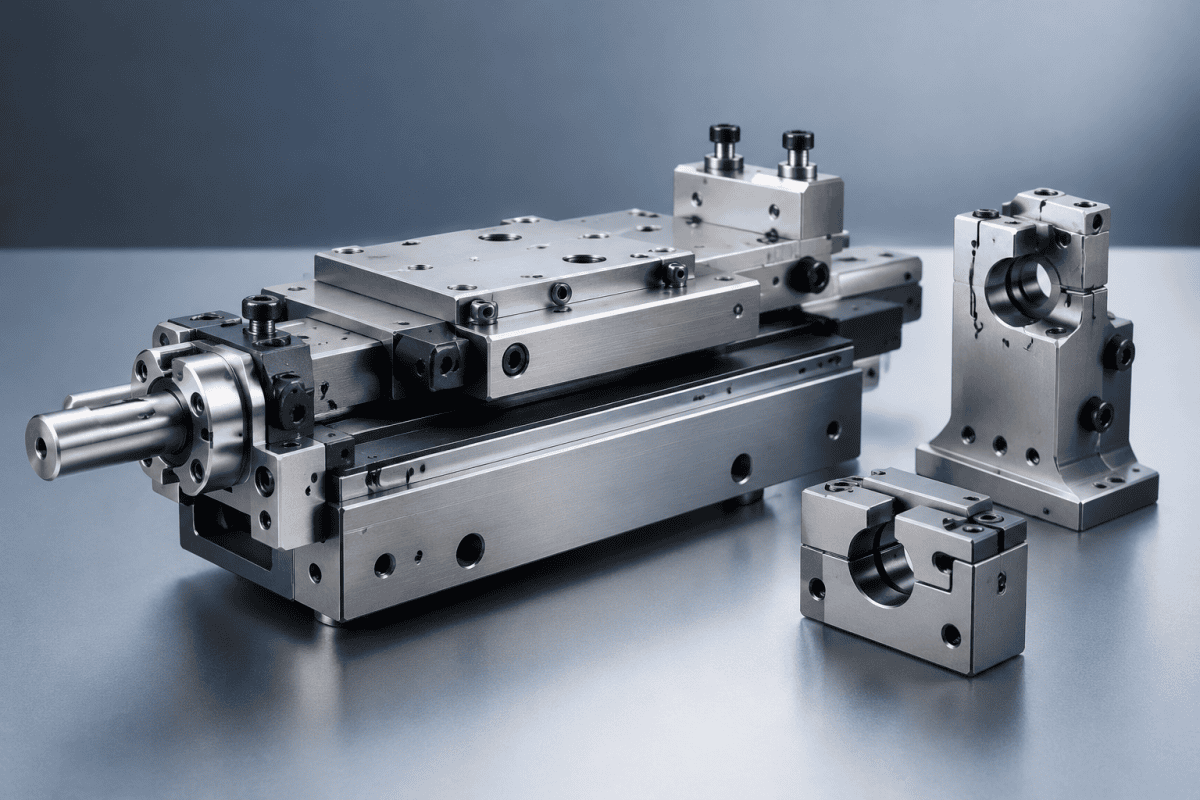
10월
신뢰할 수 있는 SG Controls MCVD 선반 예비 부품을 찾는 것은 종종 레거시 장비 문서, 단종된 구성품 번호, 그리고 오늘날의 유지보수 일정을 위해 설계되지 않은 공급망을 다루는 것을 의미합니다. MCVD(Modified Chemical Vapor Deposition) 선반을 운영하는 엔지니어와 유지보수 팀에게 가장 마모되기 쉬운 두 가지 기계적 인터페이스는 일반적으로 기판 튜브를 위치시키는 홀더와 증착 축을 따라 토치를 위치시키는 캐리지입니다. 이들은 카탈로그 소모품이 아니라 종종 가공된, 피팅 전용 부품이기 때문에 SG Controls MCVD 선반 예비 부품의 교체는 정확한 도면, 재료 지식, 그리고 브랜드명 부품 번호가 아닌 치수 데이터를 기반으로 작업하려는 공급업체에 달려 있습니다.
이 글에서는 MCVD 선반 홀더와 맞춤 토치 캐리지 구성품이 하는 일, 어떻게 마모되는지, 주문 전에 무엇을 검사해야 하는지, 그리고 기계 가공업체가 추측 없이 견적을 낼 수 있는 소싱 요청을 준비하는 방법을 다룹니다.
MCVD 소스와 소모품이 더 넓은 광섬유 프리폼 공급망에 어떻게 맞는지에 대한 broader context는, Corning의 광섬유 기술 개요 가 이러한 선반이 제공하는 공정에 대한 유용한 참고 자료입니다. 이 사이트 내에서 OVD, VAD, MCVD 버너 소싱이 어떻게 다른지에 대한 관련 내용은 다음 가이드에서 확인할 수 있습니다: OVD vs. VAD vs. MCVD 토치 노즐, 그리고 캐리지 전용 하드웨어는 다음 글에서 별도로 다룹니다: MCVD 버너 캐리지 부품.
MCVD 선반 홀더와 캐리지 구성품이 실제로 하는 일
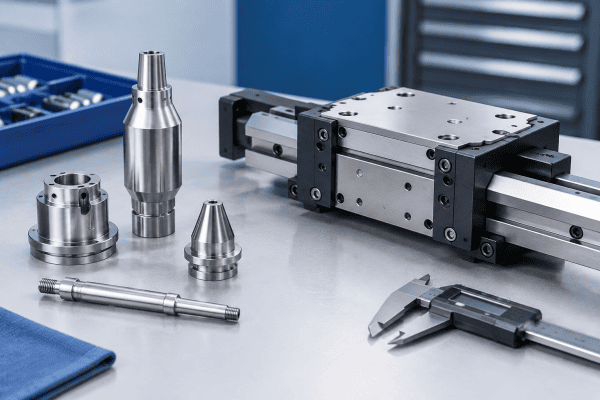
MCVD는 OVD 및 VAD와 같은 외부 증착 공정과 근본적인 방식에서 다릅니다: 기판 튜브가 유리 가공 선반에서 회전하는 동안 토치가 그 길이를 따라 이동하며, 증착된 수트는 외부 맨드릴에 축적되는 것이 아니라 동일한 튜브 내에서 Consolidation됩니다. 이러한 차이는 구성품 선택에 중요합니다. MCVD 선반 홀더는 OVD 또는 VAD 버너 마운트와 호환되지 않으며, 외부 증착 시스템의 캐리지 구성품은 일반적으로 엔지니어링 검토 없이 MCVD 설정으로 이전할 수 없습니다.
대략적으로, MCVD 선반 하드웨어는 세 가지 기능 그룹으로 나뉩니다:
- 튜브 홀더 및 척 — 한쪽 또는 양쪽 끝에서 기판 튜브를 위치시키고 고정하며, 회전 정렬을 유지하고, 트래버스 사이클의 열적 및 기계적 하중에 저항합니다.
- 캐리지 및 슬라이드 구성품 — 베드를 따라 토치 어셈블리를 운반하고, 이동의 부드러움을 제어하며, 튜브로부터 일관된 이격 거리에 토치를 유지합니다.
- 토치 장착 인터페이스 — 공정 개발 중에 설정된 위치와 각도를 유지하면서 토치 본체를 캐리지에 연결하는 브래킷, 클램프 및 어댑터.
각 그룹은 서로 다른 고장 모드를 가집니다. 홀더는 그립이나 동심도를 잃는 경향이 있고; 캐리지 구성품은 유격, 스틱-슬립 또는 위치 드리프트가 발생하는 경향이 있으며; 장착 인터페이스는 반복적인 열 사이클링과 재클램핑 후 반복성을 잃는 경향이 있습니다.
대체 위험이 높기 때문에, 대체품을 찾기 전에 기계에 있는 모든 SG Controls MCVD 선반 예비 부품 항목을 기능별로 분류하는 것이 도움이 됩니다. 이 단일 작업만으로도 대부분의 상호 호환성 실수를 방지할 수 있습니다.
이러한 부품이 일반적으로 맞춤 가공되는 이유
운용 중인 많은 MCVD 선반은 소량 생산으로 제작되었으며, 일부는 수십 년의 운영 기간 동안 재제작되거나 개조되었습니다. 결과적으로, “동일한” 선반 모델이라도 여러 가지 기계적 변형이 있을 수 있습니다. 원본 도면이 존재하는 경우에도, 더 이상 기계에 있는 것과 일치하지 않는 구식 재료 사양이나 체결 표준을 참조할 수 있습니다.
이것이 SG Controls MCVD 선반 예비 부품 소싱이 종종 리버스 엔지니어링 작업이 되는 실질적인 이유입니다. 유지보수 팀은 특정 부품 번호를 검색하는 대신 일반적으로 기존 구성품을 측정하고, 피팅과 기능을 문서화하며, 해당 치수에 맞게 교체품을 가공합니다. 당사의 OEM/ODM 가공 서비스는 바로 이 워크플로우를 중심으로 구성되어 있습니다: 고객이 제공한 도면, 스케치 또는 실제 샘플이 정의된 재료와 공차를 가진 제조 가능한 부품으로 변환됩니다.
두 가지 주의 사항이 적용됩니다. 첫째, 제품 카테고리나 사진만으로 구성품의 재료를 가정하지 마십시오 — 홀더, 브래킷 및 캐리지 플레이트는 유사해 보일 수 있지만 서로 다른 열적 및 구조적 역할을 합니다. 둘째, 브랜드 호환성을 절대 가정하지 마십시오. 교체 부품은 도면, 장착 치수, 해당되는 경우 가스 또는 공압 연결부, 그리고 선반의 실제 운전 조건에 대해 검증되어야 합니다.
OVD 및 VAD 프로그램 전반에서 리버스 엔지니어링 결정이 어떻게 이루어지는지에 대한 상위 수준의 지침은 다음을 참조하십시오: 광섬유 프리폼 엔지니어를 위한 재료 과학 및 리버스 엔지니어링 가이드.
재료: 부품을 용도에 맞추기
MCVD 선반 홀더 및 캐리지 구성품의 재료 선택은 하나의 합금에 대한 일반적인 선호가 아니라 부품의 특정 기능에 달려 있습니다. 관련 요소는 다음과 같습니다:
- 온도 노출 — 부품이 열 영역 근처에 위치하는지, 복사열을 받는지, 또는 선반의 상대적으로 서늘한 영역에 남아 있는지.
- 열팽창 거동 — 온도 변화에 걸쳐 위치를 유지해야 하는 부품은 단독 부품이 아니라 어셈블리에 적합한 팽창 특성이 필요합니다.
- 기계적 하중 및 마모 — 파지 면, 슬라이딩 인터페이스, 나사 연결부는 각각 다른 마모 요구 사항을 가집니다.
- 화학적 환경 — 공정 가스, 세정제, 일반 작업장 분위기에 대한 근접성은 재료 선택에 영향을 미칩니다.
- 가공성 및 치수 안정성 — tight features on small holders may favor materials that hold tolerance well during and after machining.
Aluminum alloys are common for lightweight brackets and some carriage-adjacent components, but suitability always depends on the application. For components exposed to higher temperatures or heavier structural loads, other alloys may be appropriate. Where an aluminum replacement is genuinely suitable, our aluminum OVD parts page illustrates the kind of machined components we produce, though the same material logic applies to MCVD hardware only after the operating conditions are reviewed.
Material choice is one input, but so is the component’s role. Treating every SG Controls MCVD lathe spare parts item as a uniform material decision is a common and expensive shortcut.
교체품 주문 전 검사 체크리스트
Most sourcing delays come from incomplete measurement, not from machining capacity. A thorough inspection before requesting a quote will shorten the process and reduce the risk of a part that fits but does not function. The checklist below reflects how we typically review SG Controls MCVD lathe spare parts prior to quoting.
홀더 및 척
- Measure bore diameter, taper angles, and grip length at multiple points to detect wear or out-of-roundness.
- Record the tube diameter range the holder must accommodate, including any thermal growth during operation.
- Note the mounting pattern: bolt circle, thread size and pitch, keyway or dowel locations.
- Check for cracks, galling, or deformation at clamping surfaces.
- Document any runout observed at the tube surface, and whether it correlates with holder position.
캐리지 및 토치 장착 구성품
- Measure slide engagement surfaces and record any measurable play at the torch mount.
- Record mounting hole positions relative to the torch axis, not just to the carriage body.
- Note standoff distance from torch face to tube surface as currently set.
- Check for wear patterns that indicate misalignment rather than uniform wear.
- Document any shims, spacers, or field modifications present on the machine.
Where torch-side hardware is also due for replacement, related components such as the OVD torch replacement parts we produce can be reviewed alongside carriage work — provided the application requirements are confirmed for MCVD rather than assumed from an outside deposition process. The same caution applies to any SG Controls MCVD lathe spare parts item that interfaces directly with the torch assembly.
문제 해결 논리: 증상, 가능한 원인, 검증
Mechanical problems on an MCVD lathe often present as process symptoms. Distinguishing a holder issue from a carriage issue from an unrelated process variable requires deliberate verification.
증상: 튜브 길이 방향을 따른 불균일한 증착
가능한 원인: carriage travel irregularity, torch mount position drift, holder runout, or a process-side change such as gas delivery.
확인 방법: first check whether the variation correlates with carriage position along the bed or with tube rotation. If it follows carriage position, inspect slide surfaces and mount security. If it follows rotation, inspect holders. If neither correlates, the cause is more likely process-side, and burner or gas delivery components should be reviewed separately.
증상: 위치 반복성의 점진적 손실
가능한 원인: worn clamping surfaces, loose fasteners, thermal cycling effects on a mounting bracket, or accumulated debris on a sliding interface.
확인 방법: re-zero the carriage, run a dry traverse, and measure return-to-position at both ends of travel. Any deviation should be traced to a specific joint or interface before ordering parts.
증상: 튜브에서의 가시적 런아웃
가능한 원인: holder wear, chuck misalignment, tube straightness, or bed level issues.
확인 방법: indicate the tube at multiple points and at both ends. If runout is localized to one holder, that holder is the primary suspect. If runout is present along the full length, the cause may be bed or alignment related rather than the holder itself.
None of these checks confirm a diagnosis on their own. They narrow the candidate causes so that replacement SG Controls MCVD lathe spare parts address the actual problem rather than a symptom.
교체 경로 비교: OEM, 수리, 맞춤 가공
Once a worn component is identified, there are usually three practical routes: source an OEM part, repair the existing component, or have a new one custom-machined. Each has trade-offs that maintenance and purchasing teams should weigh against throughput and process stability.
- OEM replacement — best when the original manufacturer still supports the lathe and the part number is documented. Lead times can be long, and pricing can be high, especially for low-volume legacy SKUs.
- Repair or refurbishment — viable for non-critical features, cosmetic wear, or components where the critical locating surfaces are still within tolerance. Risk is that hidden wear in locating features is missed during repair.
- Custom machining — often the fastest route for legacy MCVD lathes where drawings are incomplete or OEM support has ended. Success depends on accurate dimensional data and clear critical-fit identification.
In many maintenance programs, the pragmatic approach is a hybrid: OEM where genuinely available and price-effective, custom-machined for legacy SG Controls MCVD lathe spare parts that no longer have a supported supply path, and repair only where wear is confined to non-critical areas.
신속하게 견적을 받을 수 있는 소싱 요청 준비
A complete request package typically includes:
- Drawings or dimensioned sketches of the existing part, including tolerances where they matter to fit or function.
- Photographs of the installed component, showing mounting context and any surrounding hardware.
- Material requirements, or a description of the operating conditions if the material is not yet decided.
- Quantity needed, including any spares planned for stocking.
- Any known constraints such as maximum weight, clearance limits, or interface dimensions that cannot change.
- A note on whether the part must be an exact replacement or whether minor design improvement is acceptable.
Where the original drawing is unavailable, a physical sample can often be used as the basis for reverse engineering. In that case, clearly identify which dimensions are critical fits and which are non-critical.
Requests for SG Controls MCVD lathe spare parts are handled more efficiently when the initial submission already includes dimensions, material notes, and photographs. Follow-up questions during quoting usually trace back to missing basics rather than technical complexity.
설치 전 품질 검사
When a replacement part arrives, a short incoming inspection prevents installation problems that could otherwise be misdiagnosed as process faults.
- Verify critical fit dimensions against the original measurements, not against the drawing alone.
- Check surface finishes on sliding and sealing interfaces.
- Confirm mounting hole patterns and thread engagement by test-fitting fasteners.
- Inspect for machining burrs, sharp edges, or handling damage.
- Compare weight and balance against the original for rotating or traversing components.
These checks take minutes and consistently reduce installation rework on SG Controls MCVD lathe spare parts and similar precision components.
자주 묻는 질문
원본 도면 없이 교체품을 만들 수 있습니까?
In many cases, yes. A physical sample or a detailed dimensioned sketch can serve as the basis, provided the critical fit dimensions and material requirements are identified. The more context you provide about how the part functions in the assembly, the better the result.
SG Controls MCVD 선반 예비 부품은 OVD 또는 VAD 구성품과 호환됩니까?
No. MCVD, OVD, and VAD use different deposition geometries and mechanical arrangements. Even where components look similar, they should be evaluated independently against the specific lathe and process requirements.
마모된 홀더를 수리할지 교체할지 어떻게 결정합니까?
It depends on where the wear is located. Wear on a gripping surface or a critical locating feature usually favors replacement, since restoring these features accurately is often more involved than producing a new part. Wear on non-critical features may be repairable, but the decision should account for the remaining service expectations of the assembly.
맞춤 캐리지 구성품을 견적 내려면 어떤 정보가 필요합니까?
At minimum: dimensions, mounting interface details, material or operating conditions, and quantity. Photographs of the installed part and a note on which dimensions are critical help avoid back-and-forth during quoting.
다음 단계
If a holder or carriage component is no longer available through original channels, the practical path is a drawing-based or sample-based replacement. Gather your dimensions, photographs, material notes, and operating conditions, and contact our team to discuss the component requirements. Clear inputs at the start are the difference between a part that fits and a part that performs — and the most reliable way to keep an MCVD lathe running without depending on discontinued SG Controls MCVD lathe spare parts.
