
Kawruh
Panggantian OVD Auxiliary Tail Burner: Gambar lan Pemeriksaan Antarmuka
Okt
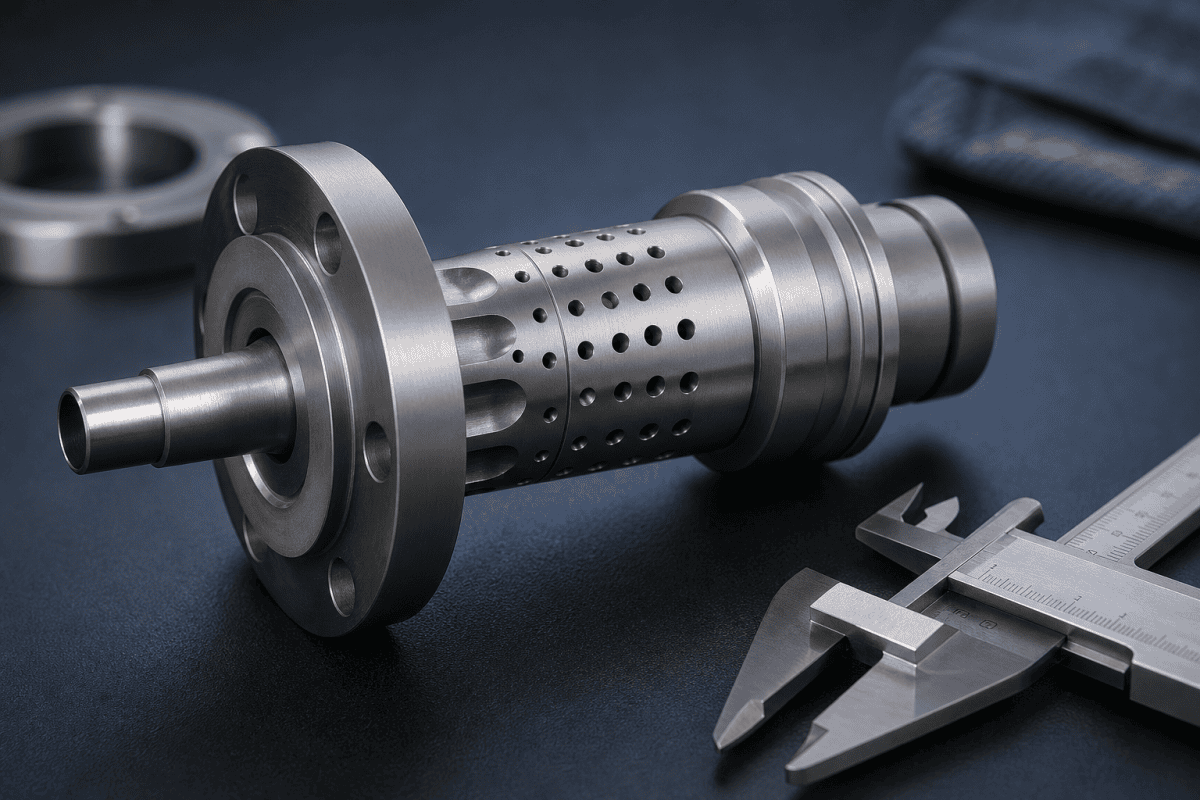
Panggantian OVD auxiliary tail burner arang banget gagal amarga siji alasan sing jelas. Ing pirang-pirang kasus, burner wis metu saka alignment, faceplate wis akumulasi soot, distribusi oksigen wis dadi ora rata, utawa bagian panggantian mung ora cocog karo antarmuka asli kanthi cukup cedhak. Amarga tail burner makarya ing mburi preform ing ngendi awak soot paling rentan marang stres termal, kesalahan dimensi cilik bisa nggawe cacat sing katon adoh sadurunge burner kasebut katon aus. Artikel iki fokus ing apa sing kudu dipriksa sadurunge pesen panggantian, carane maca gambar burner, lan detail antarmuka endi sing paling penting sajrone instalasi.
Napa Panggantian OVD Auxiliary Tail Burner Kudu Duwe Rencana Dhewe
Ing OVD lathe, auxiliary tail burner dudu duplikat saka main deposition burner. Biasane mlaku ing standoff sing beda, nutupi area sing luwih cilik, lan diposisikan kanggo ngatur panas ing mburi preform sing tuwuh. Bedane tugas kasebut tegese kudu dianggep minangka item pangopènan sing kapisah kanthi kriteria inspeksi dhewe, dokumentasi suku cadang, lan interval panggantian.
Nalika tail burner diabaikan, akibate cenderung katon ing ujung preform tinimbang ing tengah. Insinyur asring ngerteni end-taper cracking, konsolidasi soot sing ora rata, utawa wilayah tail sing ora cocog karo geometri sing dikarepake. Yen sampeyan ngatasi masalah wilayah kasebut, review babagan preform end-taper thermal stress lan burner head replacement nyedhiyakake latar mburi sing migunani babagan carane distribusi panas ing ujung mengaruhi awak pungkasan.
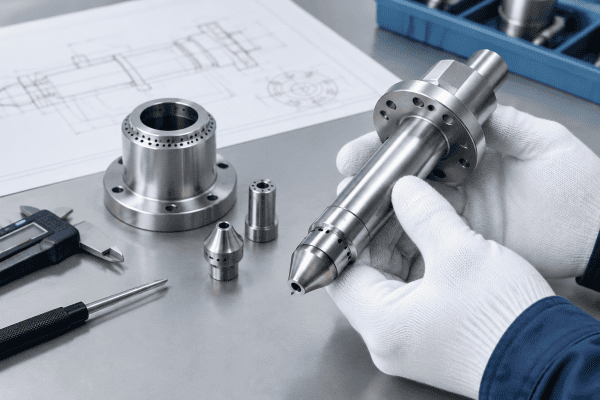
Perencanaan panggantian kudu diwiwiti kanthi premis yen tail burner minangka rakitan presisi. Ora cukup kanggo nemtokake multi-channel torch generik. Gambar, antarmuka gas, geometri pemasangan, lan kondisi faceplate kabeh kudu diverifikasi sadurunge bagian kasebut dipesen. Nyedhaki OVD auxiliary tail burner replacement minangka proyek sing ditemtokake, tinimbang pesenan suku cadang darurat, nyegah langkah-langkah verifikasi supaya ora dilewati ing tekanan jadwal.
Maca Gambar Auxiliary Tail Burner kanthi Bener
Gambar burner ngandhani luwih saka mung dawa sakabèhé. Kanggo tujuan panggantian, gambar sing migunani yaiku sing nemtokake fitur sing ngontrol fit lan pangiriman gas. Nalika sampeyan njaluk penawaran, atur informasi kasebut dadi kategori ing ngisor iki.
Fitur dimensi sing kudu dikonfirmasi
- Dawa sakabèhé lan ambane insersi: Nemtokake carane burner lungguh ing holder lan ing ngendi tip lungguh relatif marang preform. Kesalahan sawetara milimeter bisa ngganti standoff efektif.
- Geometri flange utawa thread pemasangan: Pitch, diameter, lan kekandelan flange kudu cocog karo holder. Thread sing melu nanging mandheg luwih awal bisa ninggalake tip ing ambane sing salah.
- Tata letak nozzle array: Jumlah saluran, jarak bolongan, lan distribusi diameter bolongan. Iki mengaruhi bentuk flame lan jangkoan panas ing tail.
- Profil faceplate: Datar, bertingkat, utawa kontur. Profil mengaruhi cara flame nempel lan cara soot akumulasi.
- Konsentrisitas lan runout: Utamane penting ing ngendi burner samesthine ngasilake pola panas sing simetris.
Yen gambar asli ora lengkap, inspeksi dimensi saka bagian sing dicopot bisa mbangun maneh fitur kritis. Iki minangka bagean normal saka reverse engineering kanggo peralatan serat optik, lan kudu didokumentasikake sadurunge bagian lawas dibuwang. Detail sing dijupuk ing tahap iki dadi kriteria penerimaan kanggo OVD auxiliary tail burner replacement.
Detail antarmuka gas lan sambungan
Antarmuka gas minangka papan ing ngendi akeh proyek panggantian nemoni masalah. Cathet ing ngisor iki kanggo saben saluran:
- Jinis sambungan (compression fitting, threaded port, flange, utawa manifold-mounted)
- Ukuran port lan spesifikasi thread
- Metode sealing (gasket, O-ring, metal-to-metal, utawa welded joint)
- Jumlah jalur gas independen lan tata letake
- Apa burner dipasang langsung menyang manifold utawa nyambung liwat garis fleksibel
Yen tail burner dipasang ing oxygen distribution manifold, konfirmasi pola port lan permukaan sealing ing loro-lorone. OVD auxiliary tail burner lan oxygen distribution manifold minangka conto komponen ing ngendi antarmuka, ora mung burner, nemtokake apa panggantian bakal seal lan mili kanthi bener.
Uga kudu dicathet yen OVD auxiliary tail burner replacement sing sukses gumantung marang konfirmasi loro-lorone saben sambungan: sisih burner lan sisih peralatan. Manifold sing wis diowahi wiwit gambar asli diterbitake bisa mbatalake gambar burner sing bener, mula nganyari dokumentasi antarmuka saben hardware hulu owah.
Pemeriksaan Antarmuka Sadurunge lan Sawise Panggantian OVD Auxiliary Tail Burner
Pemeriksaan antarmuka minangka jembatan praktis antarane gambar lan proses sing mlaku. Iki kudu ditindakake ing bagian sing dicopot, ing bagian anyar, lan ing peralatan sing dipasangake. Nganggep pemeriksaan kasebut minangka checklist tetep tinimbang inspeksi informal yaiku sing nyegah OVD auxiliary tail burner replacement dadi acara pangopènan sing bola-bali.
Sadurunge instalasi
- Verifikasi antarmuka pemasangan. Priksa kondisi thread, flatness flange, lan keausan holder. Holder sing aus bisa misalign burner anyar sanajan burner kasebut akurat.
- Compare nozzle positions. Use the drawing to confirm hole count, spacing, and orientation. Rotational orientation matters when the nozzle pattern is not symmetric.
- Inspect sealing surfaces. Look for scratches, corrosion, or deformation on both the burner and the manifold. Sealing defects often mimic gas-flow problems.
- Check for contamination. Protective caps, machining residue, or handling dust can block small channels. Clean according to your equipment documentation before installation.
- Confirm part identification. Match the replacement to the original by drawing number, revision, and material, not by appearance alone.
Sawise instalasi
- Leak-check the gas connections using your site’s approved procedure. Do not rely on visual inspection alone.
- Confirm the tip position relative to the preform using the same reference used before removal. If the old position was not recorded, establish a baseline before running production.
- Check flame symmetry at low output before bringing the burner to operating conditions. A tilted or asymmetric flame can indicate misalignment or a partially blocked channel.
- Monitor the tail region across the first few preforms. Changes in end taper, soot density, or surface condition are early indicators that the interface is not correct.
For broader guidance on symmetrical flame behavior and its causes, the article on burner flame tilt explains how mounting and channel issues can affect flame direction. A follow-up verification after the first production run, compared against the baseline recorded before the OVD auxiliary tail burner replacement, will confirm that the installation is stable.
Alasan Umum Panggantian OVD Auxiliary Tail Burner Ora Ngrampungake Masalah
Replacing the burner is sometimes the right step, but not every tail-end defect is caused by the burner. Distinguishing burner-related causes from process or equipment causes prevents unnecessary parts spending and repeat maintenance.
- Soot clogging on the faceplate: If the old burner shows heavy deposit, the replacement may clog at a similar rate. Review faceplate condition and cleaning practice. The article on OVD burner faceplate replacement and hole geometry covers this pattern.
- Manifold or distribution imbalance: If gas delivery upstream is uneven, a new burner will reproduce the same asymmetry.
- Holder or mount wear: A loose or worn holder changes the effective tip position. This is an equipment issue, not a burner issue.
- Incorrect material selection: A burner used at the tail may see different thermal and chemical exposure than a main deposition burner. Material suitability depends on the component’s function, temperature exposure, and the surrounding environment.
- Process setpoint drift: Changes in other lathe parameters can shift the heat balance at the tail independently of burner condition. Reviewing drift profil indeks bias lan konsentrisitas burner data alongside burner records helps separate process causes from hardware causes.
None of these causes can be confirmed from a single observation. Use a structured approach: document the defect, compare it against the burner drawing and interface records, and change one variable at a time. This discipline also makes it easier to decide whether a second OVD auxiliary tail burner replacement is justified or whether the root cause lies elsewhere on the lathe.
Pertimbangan Material lan Fabrikasi kanggo Bagian Panggantian
Auxiliary burner components are often specified in materials selected for thermal stability, oxidation resistance, and compatibility with the gases used. The correct choice depends on where the component sits in the assembly. A faceplate exposed directly to the flame has different requirements than a mounting body or a manifold block.
When discussing a replacement with a supplier, describe the function of the part, the expected thermal environment, and any cleaning or handling chemicals it will contact. Avoid specifying a material purely because a similar part was once made from it. If the original material is unknown, a reverse-engineering review can help identify suitable candidates based on the application rather than guesswork. For an OVD auxiliary tail burner replacement, the material review should cover every wetted and heated surface, not just the tip.
For non-standard geometry or obsolete parts, drawing-based manufacturing is often more practical than searching for a catalog equivalent. The guide to sourcing custom OVD and VAD burners outlines how the material science and reverse-engineering process works for fiber preform engineers, and it is a useful reference when the drawing package is incomplete.
How corrosion and high-temperature alloys behave is documented in resources from organizations such as the National Institute of Standards and Technology (NIST) materials data portal, which publishes materials data that can help engineers reason about alloy performance in demanding environments.
Nyiapake Panjalukan Panggantian sing Cetha
A well-prepared request reduces back-and-forth and lowers the risk of receiving a part that fits poorly. Include the following in your inquiry:
- Original drawing number and revision, if available
- Dimensional sketch or measured drawing of the removed part
- Photographs of the burner, faceplate, and mounting interface
- Gas connection details for each channel
- Material information, or a description of the operating environment if unknown
- Quantity required and whether the part is a one-time replacement or a recurring spare
If the tail burner is part of a larger assembly, indicate which components are being replaced and which are being reused. This helps the supplier check interface compatibility across the whole group rather than only the burner body. A clear request also shortens the lead time for an OVD auxiliary tail burner replacement when the line is already down.
When the request concerns a custom nozzle configuration rather than a standard body, confirm the specifications before ordering. The checklist for panggantian nozzle burner OVD custom covers the key points that should be agreed in writing.
Dokumentasi lan Strategi Suku Cadang
Once an OVD auxiliary tail burner replacement has been completed successfully, capture what was learned. Record the as-found dimensions, the as-installed tip position, the leak-test result, and the first-run observations. This record becomes the baseline for the next replacement and reduces the time needed to verify a new part.
A practical spares strategy keeps at least one verified spare on site, with its drawing package and interface checklist stored alongside it. Because tail burner geometry can vary between OVD lines, spares should be labeled against the specific equipment rather than pooled by appearance. Reviewing tail-end defects alongside process data, such as refractive index profile drift, also helps confirm whether an OVD auxiliary tail burner replacement addressed the true cause.
Pitakonan sing Sering Ditakoni
Apa aku bisa ngganti mung auxiliary tail burner tanpa ngganti manifold?
Often yes, but the decision depends on the condition of the manifold sealing surfaces, port threads, and internal channels. Inspect both sides of the interface before deciding. If the manifold shows corrosion, deformation, or blocked passages, replacing only the burner may not restore correct gas distribution.
Kepiye aku ngerti apa tail burner utawa setelan proses sing nyebabake cacat?
Start with documentation. Record the defect location and appearance, inspect the burner faceplate and nozzle channels, and compare the burner’s installed position against the drawing. If the burner and interface are within specification, review upstream gas delivery, holder condition, and process parameters with qualified personnel before changing setpoints.
Kepiye yen gambar asli wis ora kasedhiya maneh?
A dimensional inspection of the removed part can reconstruct the critical features needed for manufacturing. Concentrate on mounting geometry, nozzle layout, gas ports, and overall length. A supplier experienced in reverse engineering can work from measurements and photographs, but the more complete the data, the lower the risk of a mismatch.
Apa auxiliary tail burner saka macem-macem jalur OVD bisa diijolake?
Not automatically. Even within the same process family, tail burners may differ in nozzle layout, mounting, gas interface, and material. Interchangeability should be verified against the specific drawing, dimensions, gas connections, and application requirements of the equipment in question.
Konteks Proses lan Perbandingan Antar-Proses
Tail burner behavior is easier to interpret when it is placed in the wider context of preform deposition practice. The comparison of OVD, VAD, and MCVD torch nozzle designs explains how nozzle geometry and gas delivery conventions differ between processes, which is useful when a team is transferring experience from one line to another. Burners that look similar on the outside may have very different internal channel arrangements, and that difference shows up in flame shape and heat coverage.
Within the OVD family, the auxiliary tail burner usually carries a lighter thermal duty than the main deposition burner, but it operates in a region where the soot body has less mechanical support. This is why interface precision matters as much as raw thermal output. A verified OVD auxiliary tail burner replacement restores the intended heat profile at the tail, but only if the mounting position and gas delivery match the drawing conditions assumed during process development.
From a maintenance planning perspective, it also helps to treat the tail burner as part of a small assembly rather than an isolated torch. The holder, manifold, sealing hardware, and gas lines all influence the final result. When any of those elements is modified, the working drawing set should be updated so the next OVD auxiliary tail burner replacement starts from accurate documentation instead of assumptions.
Kriteria Penerimaan lan Rekaman Verifikasi
A replacement is not complete until it has been verified against defined acceptance criteria. Writing those criteria down before the work begins keeps the verification objective and repeatable. Typical criteria for an auxiliary tail burner include dimensional conformance to the drawing, correct installation depth and rotational orientation, leak-free gas connections, and a symmetric flame at low and operating output.
Verification records should capture what was measured, not only whether the result was acceptable. Recording the as-installed tip position, the leak-test readings, and the observed flame condition creates a trail that can be compared with the next OVD auxiliary tail burner replacement. Over time, that trail reveals whether tail-end problems follow the burner, the holder, or the process, which is difficult to judge from a single event.
For teams running multiple OVD lines, a shared record structure is more useful than separate local notes. Standard fields for drawing revision, material, gas connection type, and first-run observations allow engineers to compare components across lines without translating between formats. When a recurring tail-end defect appears on more than one line, consistent records make the pattern visible earlier and shorten the diagnostic path.
Langkah Sabanjure kanggo Panggantian OVD Auxiliary Tail Burner Panjenengan
If you are planning an OVD auxiliary tail burner replacement, gather the drawing, dimensional data, gas interface details, and photographs of the removed part before contacting a supplier. OVDParts can review these inputs against your application and discuss standard or custom burner components, including drawing-based production for non-standard geometry. Documenting acceptance criteria in advance also gives the supplier a clear target for both dimensions and interface performance. To move forward, contact our team with your component requirements and operating conditions for a quotation. A disciplined OVD auxiliary tail burner replacement process, supported by accurate drawings and complete interface records, is the most reliable way to keep tail-end deposition stable.
