
Knowledge
Optimizing Soot Deposition: How Burner Nozzle Precision Impacts Optical Fiber Preform Yield
Jun
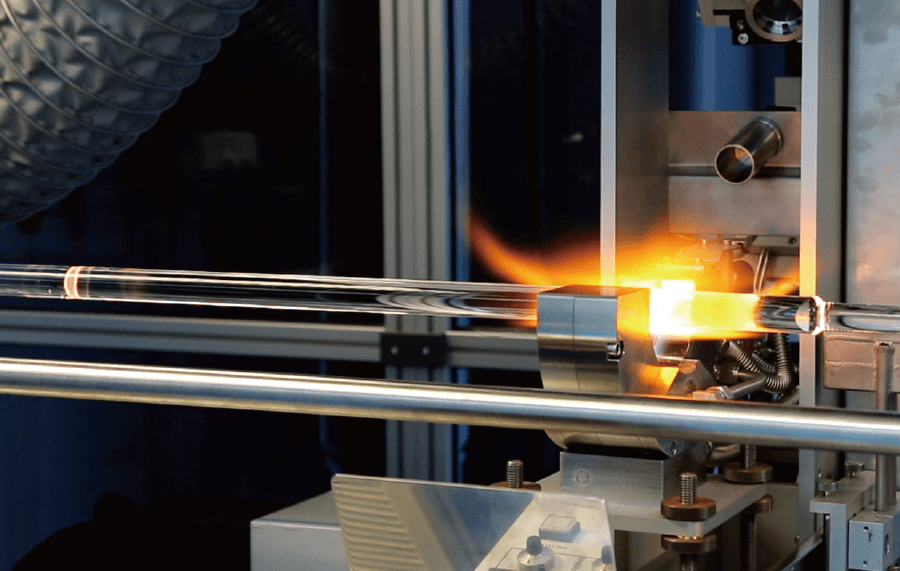
In the production of optical fiber preforms via Outside Vapor Deposition (OVD) or Vapor Axial Deposition (VAD), the deposition room is where the economic viability of your entire run is decided. When a deposition cycle takes dozens of hours, any slight drift in flame geometry doesn’t just lower your soot collection efficiency
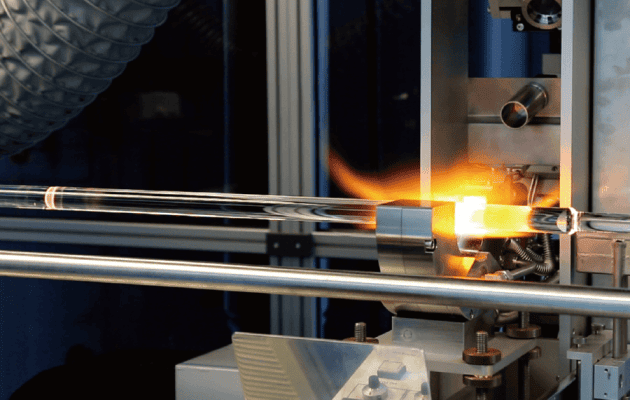
At the heart of this volatile process is a highly stressed consumable: the multi-channel chemical deposition burner.
While many procurement teams view these torches as simple machined metal assemblies, process engineers know better. Let’s look at the underlying mechanical factors within burner heads that directly dictate your deposition yield, maintenance intervals, and cost per kilogram of preform.
1. The Physics of the Flame: Why Concentricity Rules Soot Collection
The OVD and VAD processes rely on the precise high-temperature hydrolysis of silicon tetrachloride (SiCl₄) and germanium tetrachloride (GₑCl₄) within a hydrogen-oxygen (H₂/O₂) flame. For the generated silica (SiO₂) soot particles to deposit uniformly onto a rotating mandrel or target rod, the flame must maintain an absolutely symmetrical, laminar velocity vector.
[SiCl4 / GeCl4 Core Gas] ──> | Perfectly concentric circular airways | ──> Axisymmetric laminar flame ──> Uniform deposition[H2 / O2 Shield Gases] ──> |(Coaxiality error <0.01 mm)|
If the internal gas distribution channels or the shifting burner nozzle assemblies deviate by even 0.01mm from the central axis, the consequences are immediate:
-
Flame Distortion: The flame tilts or warps, shifting the optimal thermal zone away from the deposition target.
-
Density Volatility: Localized “cold spots” form on the soot boule, creating micro-voids or cracking due to thermal stress during the subsequent sintering phase.
-
Soot Wastage: Instead of depositing, a significant percentage of the vaporized silica escapes into the exhaust system, driving up your raw chemical costs.
Achieving this level of geometric perfection requires machining the multi-layer burner components—from the gas inlet body to the outermost nozzle cone—in a single CNC turn-mill setup to eliminate clamping stack-up errors.
2. Micro-Hole Integrity: The Battle Against Internal Burrs and Clogging
Look closely at the face of a high-yield VAD or OVD burner. It is typically populated by concentric rings of dozens of micro-holes designed to introduce shielding and reacting gases at variable pressures.
A common frustration for maintenance teams using sub-par replacement burners is rapid nozzle clogging and premature soot buildup (crusting). The root cause is almost always microscopic internal burrs left behind during the drilling process.
When a gas stream hits a microscopic burr inside a $0.5\text{ mm}$ port:
-
It creates localized turbulence, disrupting the laminar shield gas layer.
-
The chemical vapors (SiCl₄) prematurely mix and react on the face of the burner rather than in the open reaction zone.
-
This creates a hard silica crust over the ports, forcing you to abort the run mid-cycle or increase maintenance downtime.
To avoid this, standard industrial drilling isn’t enough. Burners must undergo specialized mechanical deburring followed by proprietary chemical polishing to guarantee that the interior walls of every single gas port are as smooth as glass.
3. Material Endurance in a Corrosive Cleanroom Environment
OVD burners don’t just fight extreme heat; they operate in a highly corrosive chemical soup. The byproduct of hydrogen-oxygen hydrolysis is hydrochloric acid (HCl) gas, which eagerly attacks hot metal surfaces.
Choosing the wrong grade of material or incorrect surface sealing leads to rapid chemical pitting inside the internal multi-channel gas pathways. Once pitting occurs, the calibrated gas flow rates managed by your Mass Flow Controllers (MFC) become meaningless because the internal aerodynamics of the torch have fundamentally changed.
For long-term reliability, premium burners rely on high-purity 316L Stainless Steel or specialized Copper/Brass alloys paired with advanced surface treatments like hard anodization or anti-corrosion coatings. This ensures the gas channels remain perfectly true to their original CAD specifications across hundreds of heating cycles.
4. Rethinking the Supply Chain: OEM vs. Field-Validated Alternates
For years, optical fiber manufacturers felt locked into original equipment manufacturers (OEMs) for replacement torches, absorbing massive brand markups and coping with unpredictable lead times that risked cleanroom downtime.
However, the global landscape for precision components has matured. Sourcing direct from advanced machining facilities that specialize exclusively in high-tolerance turn-mill components allows fiber manufacturers to decouple from OEM monopolies without sacrificing cleanroom performance.
A Proven Alternative Born from Decades of PrecisionW
At SKY CNC, we have spent over 22 years mastering the exact mechanical tolerances required by the world’s most demanding industrial sectors. We launched our dedicated platform at ovdparts.com to deliver a zero-compromise supply line specifically for optical fiber consumables.
Our precision-engineered OVD and VAD burner components are not untested prototypes. They are field-validated, direct drop-in replacements currently running on the high-intensity production lines of global optical fiber giants, including YOFC, Hengtong Optic-Electric, ZTT, Futong Group, Yongding Stock, Tongding Interconnection, and SDG Information.
By eliminating OEM brand premiums and shipping factory-direct, we help global cleanrooms reduce their annual consumable budgets by up to 40% while maintaining the exact flame stability, micro-hole accuracy, and long-term erosion resistance required to protect your preform yield.
Technical Support & Custom Fabrication
Whether you run standard OVD deposition lines or require customized multi-channel burner configurations for proprietary VAD/MCVD setups, our engineering team can manufacture components exactly to your technical drawings under strict NDA protection.
Need a drop-in replacement or a custom quote? Explore our standard stock models or upload your STEP/CAD drawings today at ovdparts.com.
