
지식
스미토모 전기 프리폼 장비 부품 소싱
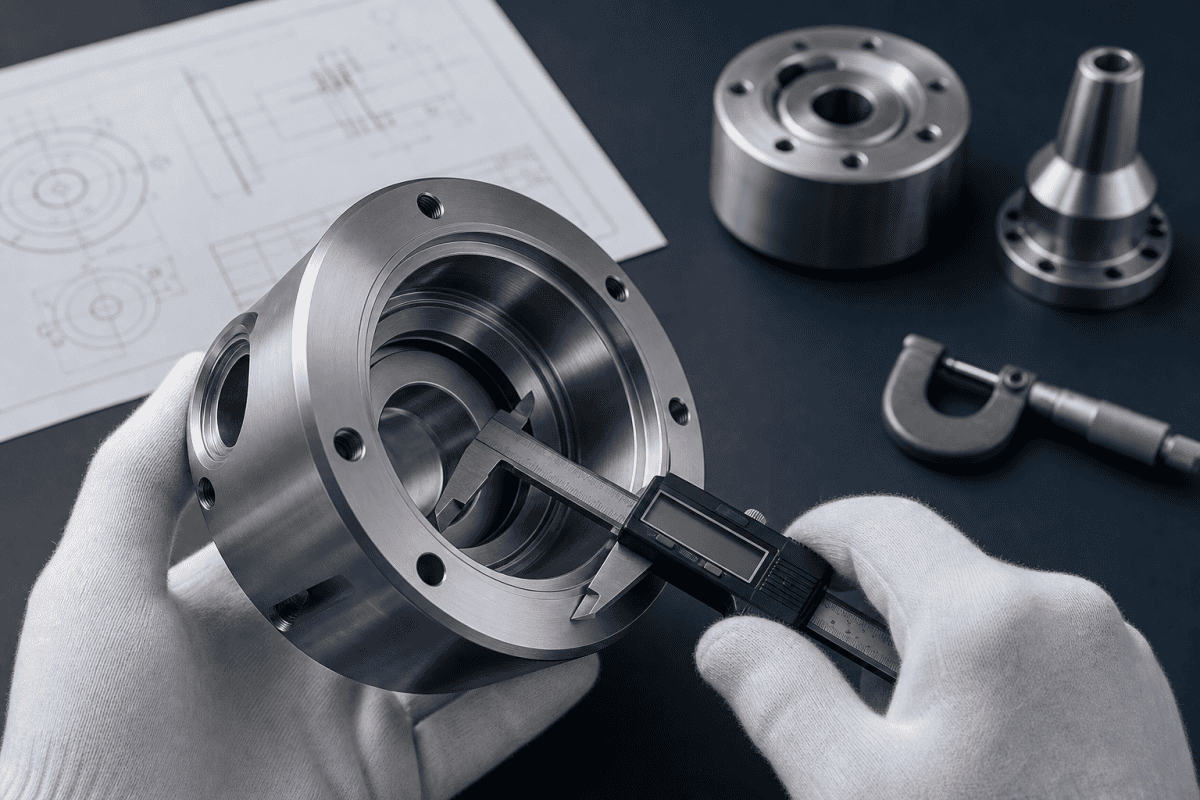
10월
Sumitomo Electric Preform Equipment Parts Sourcing often begins with a familiar problem: the machine is running, the spare is consumed, and the original documentation may be incomplete. For engineers and purchasing teams supporting optical fiber preform production, the challenge is not simply finding a component with the right shape. It is confirming that the replacement matches the drawing, the material specification, the gas interface, and the thermal duty of the position it will occupy. This article explains how to review drawings and plan inspection requirements when sourcing custom preform manufacturing components, whether the need is a one-off replacement or a small production batch.
Because preform equipment spans OVD, VAD, and MCVD platforms, and because configurations vary between lines and generations, no component should be treated as universally interchangeable. Compatibility must be built on evidence: drawings, measured dimensions, material records, and a clear understanding of how the part functions in the process. A disciplined approach to Sumitomo Electric preform equipment parts sourcing protects both schedule and process stability.
Why Drawing Review Comes Before Sourcing
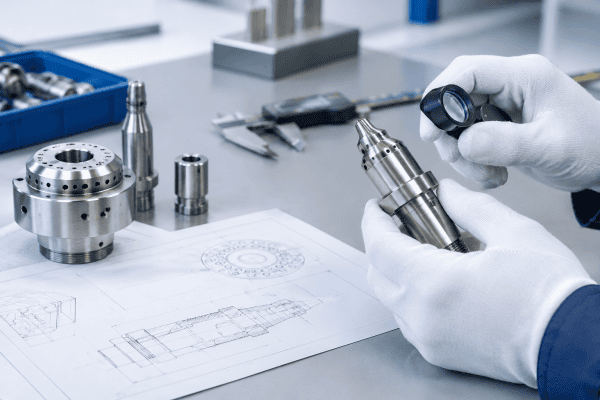
A drawing is the contract between the process requirement and the machined part. When a component must be replaced, the first question is not “who can copy this?” but “what does this drawing actually control?” Some dimensions locate the part; others control flow, sealing, or thermal expansion. Treating all dimensions as equally critical usually leads to either unnecessary cost or an unworkable fit, which is why a structured drawing and inspection review is central to any successful Sumitomo Electric preform equipment parts sourcing project. It is also why experienced buyers reserve time for drawing review before contacting any supplier.
Before requesting a quotation, assemble the best available reference package:
- Original drawings, if available, including revision level
- Measured dimensions from the removed part, with the measurement method noted
- Material identification, ideally from a certificate or mill test report rather than appearance alone
- Photos showing the installed position and surrounding hardware
- Interface details: gas connections, sealing faces, thread forms, and mounting features
- Notes on observed wear, distortion, or failure location
Where drawings are missing, reverse engineering becomes a structured measurement exercise rather than a guess. That work is best handled as a documented process, which is why OEM/ODM machining services typically begin with a drawing or measurement review rather than a simple part number lookup. Related background on component function is available in the article on OVD 버너 부품.
It also helps to identify which features are safety-relevant. Gas seals, threaded connections, and pressure-containing joints must be reviewed with particular care, because a poor fit in these areas can create a hazard rather than a simple quality defect. Flagging those features early keeps the review focused and ensures that inspection resources are directed where they matter most.
Where Inspection Requirements Should Focus
Replacement part inspection requirements should follow function. A part can meet its nominal dimensions and still fail in service if the wrong features were checked. This is why every Sumitomo Electric preform equipment parts sourcing checklist should start from the drawing, then work outward to the features that actually affect process performance. The table below is a practical starting framework, not a universal checklist. It is intended to be adapted to the specific part, process, and quality system in use.
| Check Category | What to Verify | Why It Matters |
|---|---|---|
| Dimensional | Critical diameters, lengths, hole positions, tolerances | Locates the part and controls fit |
| Geometric | Concentricity, runout, perpendicularity, flatness | Affects flame symmetry and alignment |
| 재질 | Alloy, grade, condition, certificate | Governs thermal and chemical behavior |
| Surface | Finish, burrs, edge quality, contamination | Influences sealing and deposit accumulation |
| Interface | Threads, gas connections, sealing faces, mounting | Ensures safe, leak-free installation |
| Documentation | Certificates, test records, revision match | Confirms traceability and acceptance |
How deeply each category is inspected should be proportionate. A simple spacer may need only a dimensional check, while a multi-channel torch head may require verification of every category on the list. Matching the depth of inspection to the consequence of failure keeps the Sumitomo Electric preform equipment parts sourcing process efficient and defensible.
Dimensional and Geometric Checks
Record critical dimensions at controlled temperature, using instruments appropriate to the tolerance. For multi-channel deposition torch components, hole position and diameter matter more than exterior profile. Concentricity and runout affect flame symmetry; even small deviations can shift the deposition pattern over time. If your line has experienced profile drift, the underlying geometry question is discussed in more detail in the article on OVD, VAD, and MCVD burner nozzles. Keeping a record of each measurement builds a history that supports future Sumitomo Electric preform equipment parts sourcing decisions.
Material and Condition Verification
Material suitability depends on the component’s function, its temperature exposure, the chemical environment, and the engineering requirements of the position. A part that performs well in one location may be unsuitable in another. Verification should rely on documentation and, where warranted, independent testing, not on visual similarity. Do not assume a material from a product category name alone; confirm it against the specification for that specific part, and record the result in the sourcing file for that Sumitomo Electric preform equipment parts sourcing activity.
Where a material certificate is not supplied, independent verification becomes more important. Reputable testing labs and metallurgical references, such as the materials data published by NIST’s Material Measurement Laboratory, can help confirm that a proposed alloy or grade is appropriate for the operating temperature and chemistry of the position. Documenting the basis for material acceptance is an important part of Sumitomo Electric preform equipment parts sourcing.
Traceability matters as much as suitability. If the same alloy is sourced from two different heats, the mechanical properties at temperature may differ slightly, so storing certificates alongside the part record makes later comparison possible. This habit is one of the simplest ways to strengthen a long-running Sumitomo Electric preform equipment parts sourcing program.
Surface and Interface Inspection
Sealing faces, orifice edges, and gas connection geometry deserve close attention. Burrs, nicks, or contamination on a sealing surface can create leaks that are difficult to diagnose later. For parts exposed to soot, surface finish and edge quality also influence how deposits accumulate. Practical guidance on this failure mode is available in the article on 버너 노즐 정밀도와 프리폼 수율.
Interface inspection should also confirm that thread forms and sealing methods match the mating hardware. A part can pass dimensional checks and still fail at the interface if the connection geometry is not compatible. This is one of the most common oversights in Sumitomo Electric preform equipment parts sourcing, and it is best addressed during drawing review rather than after installation.
Distinguishing OVD, VAD, and MCVD Requirements
These three processes are not interchangeable, and their consumables should not be treated as such. OVD and VAD both involve flame hydrolysis deposition, but the torch configuration, target geometry, and motion differ. MCVD uses a different arrangement entirely, with reactants delivered inside a rotating substrate tube. A nozzle or manifold designed for one process may have the wrong channel layout, flow distribution, or thermal profile for another, and this distinction directly affects any Sumitomo Electric preform equipment parts sourcing decision.
When reviewing a drawing, confirm which process and which position the part serves. This distinction affects channel count, orifice sizing, cooling provisions, and mounting. A useful comparison of design differences is provided in the guide to OVD, VAD, and MCVD burner nozzles.
Process-Specific Review Points
- OVD: Focus on deposition torch channel layout, soot capture geometry, and end-taper control.
- VAD: Focus on target alignment, flame symmetry, and axial feed compatibility.
- MCVD: Focus on internal reactant delivery, tube rotation interfaces, and thermal profile along the substrate.
Treating these as separate requirement sets is a basic discipline of Sumitomo Electric preform equipment parts sourcing. It prevents the substitution of a part that fits physically but performs incorrectly.
Process documentation often records the platform generation, the burner position, and the gas mixture used at that station. Where such records exist, attach them to the sourcing request so the supplier can see the duty the part actually experiences rather than an idealized description of it.
Inspection Workflow for Incoming Replacement Parts
A repeatable incoming inspection process reduces the risk of installing a non-conforming part. A practical sequence:
- Documentation check. Confirm the drawing revision, material certificate, and any required test records match the purchase specification.
- Visual examination. Look for handling damage, corrosion, machining defects, and contamination before cleaning.
- Dimensional verification. Measure the features identified as critical during drawing review, using calibrated instruments.
- Geometric checks. Verify concentricity, perpendicularity, and runout where the part’s function depends on them.
- Interface trial fit. Where practical and safe, confirm mating with gas connections and mounting hardware before installation.
- Record and compare. Keep results against the baseline so future replacements can be evaluated consistently.
Steps should be adapted to the part. A simple bracket and a multi-channel torch head do not warrant the same inspection depth, and over-inspecting low-risk parts consumes resources without improving reliability. A formal incoming inspection plan is therefore a core deliverable of any mature Sumitomo Electric preform equipment parts sourcing workflow. It also supports supplier qualification, since consistent results make it easier to compare suppliers over time.
Recording the instrument used, the ambient conditions, and the operator adds context that a bare number cannot provide. If a discrepancy arises months later, that context is often what allows the team to determine whether the part or the measurement changed.
Common Pitfalls in Part Sourcing and Review
Several problems appear repeatedly when teams source replacement components:
- Relying on a part number alone. Numbers can change across equipment generations, and equivalent numbers do not guarantee equivalent geometry.
- Skipping material verification. Two parts can look identical while differing in alloy or grade, with very different behavior at temperature.
- Ignoring the installed environment. A replacement should be evaluated against the actual operating conditions, not the conditions assumed from a catalog description.
- Treating one process’s part as a substitute for another’s. OVD, VAD, and MCVD components serve different functions and should be reviewed separately.
- Installing without baseline records. Without a baseline, it is difficult to tell whether a new part changed performance or whether another variable did.
Where a part plays a role in gas distribution or flame shaping, small deviations can have effects that only appear after extended operation. Maintenance planning for these components is covered in the guide to Nextrom OVD burner nozzle replacement. A related review of auxiliary hardware is available in the article on OVD auxiliary tail burner replacement, which covers interface checks for that position. Recognizing these pitfalls early improves the reliability of any Sumitomo Electric preform equipment parts sourcing program and reduces unplanned downtime.
Two further failure patterns are worth noting. First, teams sometimes accept a sample part without a written record of which dimensions were checked, so acceptance cannot be repeated. Second, they allow urgency to compress the review, which is exactly when an interface detail is most likely to be missed.
Preparing a Clear Sourcing Request
A well-prepared request shortens lead time and reduces the chance of a non-conforming delivery. Include the following where available:
- Drawing or measured dimensions with tolerances
- Material specification and any required documentation
- Quantity and expected usage pattern
- Installed position and process (OVD, VAD, or MCVD)
- Interface details: connections, sealing method, mounting
- Observed failure mode of the removed part
- Any inspection or acceptance criteria required by your quality system
For non-standard or obsolete components, state clearly that the part is no longer supported by the original equipment documentation. This signals that reverse engineering and drawing reconstruction may be part of the scope. A range of standard and replacement items can be reviewed through the optical fiber equipment parts collection, while custom work is quoted from drawings and requirements. A clear sourcing request is the foundation of a reliable Sumitomo Electric preform equipment parts sourcing program, and it also shortens the review cycle on the supplier side.
State the acceptance criteria in measurable terms. Phrases such as “good surface finish” or “smooth bore” cannot be verified objectively, so they invite disagreement later. A numeric finish value, a flatness limit, or a defined edge condition removes that ambiguity and makes first-article approval faster.
Supplier Qualification and Documentation
Beyond the individual part, teams should evaluate the supplier’s ability to work from drawings, hold tolerances, and provide the documentation the quality system requires. A supplier that cannot supply material certificates or inspection reports creates risk even when the first article is acceptable. For equipment platforms where supplier qualification is especially demanding, the process described in the guide to Corning preform equipment parts sourcing is a useful reference for structuring that evaluation.
Documentation should be agreed before production, not requested after delivery. The most useful items to define in advance include:
- Drawing revision to be used for production
- Material certificate or mill test report requirement
- Critical dimensions to be reported on the inspection record
- Acceptance criteria for geometric tolerances
- Packaging and preservation requirements
These items form the basis for a consistent and auditable Sumitomo Electric preform equipment parts sourcing process. They also make it easier to resolve any discrepancy before the part reaches the line.
It is also reasonable to ask how a supplier handles a non-conformance. A defined corrective action path, including how the part is reworked, replaced, or scrapped, is a sign of a controlled process rather than a reactive one.
How OVDParts Supports Sumitomo Electric Preform Equipment Parts Sourcing
OVDParts works from drawings, measured dimensions, and process data rather than from catalog guesses. For teams working on Sumitomo Electric preform equipment parts sourcing, that means each request is evaluated against the features that matter: gas interface geometry, sealing surfaces, thermal duty, and the position the part serves on the line. Whether the part is an OVD burner nozzle, an auxiliary tail burner, or a custom manifold, the review follows the same documented path from drawing to inspection.
For projects that involve tooling or documentation gaps, the process starts with a drawing review and a measurement plan. Once the critical features are agreed, production and inspection criteria are set against that list, and the resulting records become the baseline for future replacements. This approach keeps Sumitomo Electric preform equipment parts sourcing decisions traceable and repeatable across generations of equipment.
자주 묻는 질문
Can a replacement part be confirmed compatible with Sumitomo Electric equipment before purchase?
Compatibility should be verified against drawings, dimensions, gas connections, materials, and application requirements. No supplier should claim guaranteed compatibility with a specific brand or model without that review. Provide as much reference data as possible so the part can be evaluated on evidence rather than assumption.
What if no drawing exists for the part being replaced?
Reverse engineering from the removed part, combined with installation photos and interface measurements, can establish a working specification. The resulting drawing should be reviewed and approved by your engineering team before production, particularly for features that control flow, sealing, or alignment.
How much inspection is appropriate for a replacement component?
Inspection depth should reflect the part’s function and the consequence of failure. Flow-controlling, sealing, and alignment features generally warrant closer verification than non-critical mounting hardware. Define the critical features during drawing review, then inspect against that list.
Are OVD, VAD, and MCVD consumables ever interchangeable?
They should not be assumed interchangeable. Each process has different torch geometry, gas delivery, and thermal conditions. A component that fits physically may still perform incorrectly if its channel layout or orifice design was intended for another process.
다음 단계
If you are reviewing a component for replacement or reverse engineering, the most useful first step is to gather the drawing, measured dimensions, material requirements, and a description of the operating conditions. OVDParts can review that information and advise on standard options or custom manufacturing. To move forward, contact our team with your component details and inspection requirements for a quotation. Taking that step turns a difficult Sumitomo Electric preform equipment parts sourcing question into a documented, verifiable plan, and it gives your team a repeatable basis for the next replacement.
