
Kawruh
SG Controls MCVD Lathe Spare Parts: Custom Machined Holders and Carriage
Okt
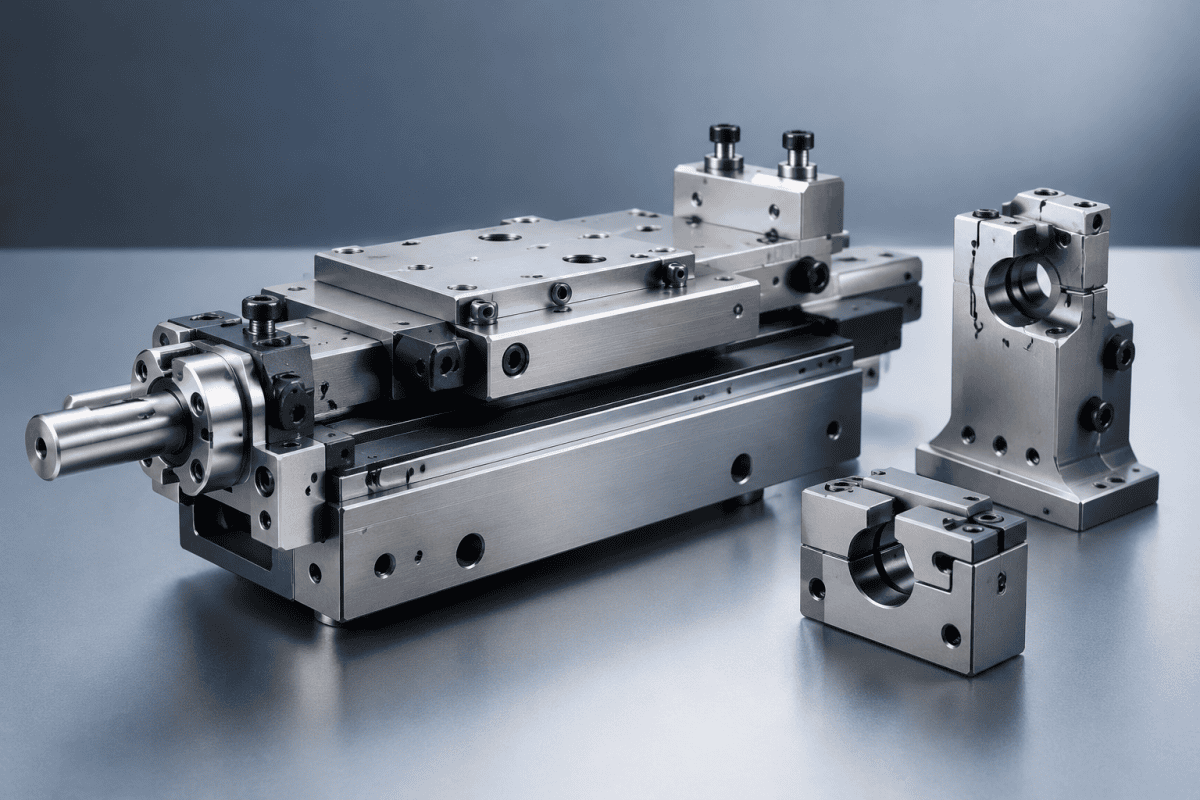
Finding reliable SG Controls MCVD lathe spare parts often means dealing with legacy equipment documentation, discontinued component numbers, and a supply chain that was never designed for today’s maintenance timelines. For engineers and maintenance teams running MCVD (Modified Chemical Vapor Deposition) lathes, the two most wear-prone mechanical interfaces are usually the holders that locate the substrate tube and the carriage that positions the torch along the deposition axis. Because these are often machined, fit-specific parts rather than catalog consumables, replacement SG Controls MCVD lathe spare parts depend on accurate drawings, material knowledge, and a supplier willing to work from dimensional data rather than a brand-name part number.
This article covers what MCVD lathe holders and custom torch carriage components do, how they wear, what to inspect before ordering, and how to prepare a sourcing request that a machine shop can quote without guesswork.
For broader context on how MCVD sources and consumables fit into the wider fiber-preform supply chain, the Corning overview of optical fiber technology is a useful reference on the processes these lathes serve. Within this site, related coverage on how OVD, VAD, and MCVD burner sourcing differ is available in our guide to OVD vs. VAD vs. MCVD torch nozzles, and carriage-specific hardware is covered separately in our article on MCVD burner carriage parts.
What MCVD Lathe Holders and Carriage Components Actually Do
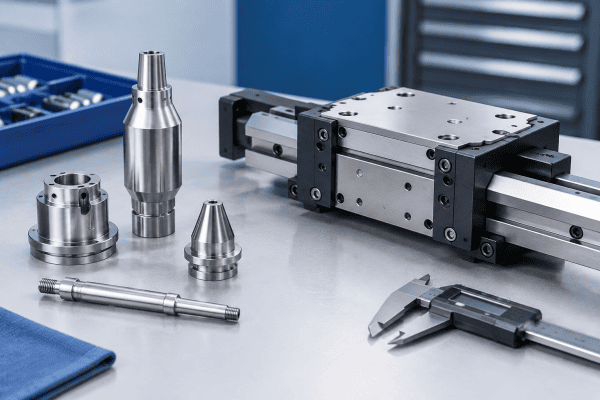
MCVD differs from outside deposition processes such as OVD and VAD in a fundamental way: the substrate tube rotates on a glass-working lathe while the torch traverses along its length, and the deposited soot is consolidated in the same tube rather than built up on an outside mandrel. That distinction matters for component selection. An MCVD lathe holder is not interchangeable with an OVD or VAD burner mount, and carriage components from an outside deposition system generally will not transfer to an MCVD setup without engineering review.
In broad terms, MCVD lathe hardware falls into three functional groups:
- Tube holders and chucks — locate and grip the substrate tube at one or both ends, maintain rotational alignment, and resist the thermal and mechanical loads of the traverse cycle.
- Carriage and slide components — carry the torch assembly along the bed, control travel smoothness, and hold the torch at a consistent standoff distance from the tube.
- Torch mounting interfaces — brackets, clamps, and adapters that connect the torch body to the carriage while preserving the position and angle set during process development.
Each group has a different failure mode. Holders tend to lose grip or concentricity; carriage components tend to develop play, stick-slip, or position drift; mounting interfaces tend to lose repeatability after repeated thermal cycling and re-clamping.
Because the substitution risk is high, it helps to catalog every SG Controls MCVD lathe spare parts item on your machine by function before searching for substitutes. That single exercise prevents most cross-compatibility mistakes.
Why These Parts Are Usually Custom-Machined
Many MCVD lathes in service were built in small production runs, and some have been rebuilt or modified over decades of operation. As a result, the “same” lathe model may have several mechanical variants. Even where original drawings exist, they may reference obsolete material specifications or fastener standards that no longer match what is on the machine.
This is the practical reason SG Controls MCVD lathe spare parts sourcing so often becomes a reverse-engineering exercise. Rather than searching for a specific part number, maintenance teams typically measure the existing component, document the fit and function, and have a replacement machined to those dimensions. Our OEM/ODM machining services are structured around exactly this workflow: customer-supplied drawings, sketches, or physical samples are converted into manufacturable parts with defined materials and tolerances.
Two cautions apply. First, do not assume a component’s material from a product category or photo alone — holders, brackets, and carriage plates may look similar but serve different thermal and structural roles. Second, never assume brand compatibility. A replacement part should be verified against drawings, mounting dimensions, gas or pneumatic connections where applicable, and the actual operating conditions of the lathe.
For higher-level guidance on how reverse-engineering decisions are made across OVD and VAD programs, see our material science and reverse-engineering guide for fiber preform engineers.
Materials: Matching the Part to Its Job
Material selection for MCVD lathe holders and carriage components depends on the specific function of the part, not on a general preference for one alloy. Relevant factors include:
- Temperature exposure — whether the part sits near the hot zone, sees radiant heat, or remains in a relatively cool region of the lathe.
- Thermal expansion behavior — parts that must hold position across a temperature swing need expansion characteristics suited to the assembly, not just to the part in isolation.
- Mechanical load and wear — gripping surfaces, sliding interfaces, and threaded connections each have different wear requirements.
- Chemical environment — proximity to process gases, cleaning agents, and general workshop atmosphere affects material choice.
- Machinability and dimensional stability — tight features on small holders may favor materials that hold tolerance well during and after machining.
Aluminum alloys are common for lightweight brackets and some carriage-adjacent components, but suitability always depends on the application. For components exposed to higher temperatures or heavier structural loads, other alloys may be appropriate. Where an aluminum replacement is genuinely suitable, our aluminum OVD parts page illustrates the kind of machined components we produce, though the same material logic applies to MCVD hardware only after the operating conditions are reviewed.
Material choice is one input, but so is the component’s role. Treating every SG Controls MCVD lathe spare parts item as a uniform material decision is a common and expensive shortcut.
Inspection Checklist Before Ordering Replacements
Most sourcing delays come from incomplete measurement, not from machining capacity. A thorough inspection before requesting a quote will shorten the process and reduce the risk of a part that fits but does not function. The checklist below reflects how we typically review SG Controls MCVD lathe spare parts prior to quoting.
Holders and chucks
- Measure bore diameter, taper angles, and grip length at multiple points to detect wear or out-of-roundness.
- Record the tube diameter range the holder must accommodate, including any thermal growth during operation.
- Note the mounting pattern: bolt circle, thread size and pitch, keyway or dowel locations.
- Check for cracks, galling, or deformation at clamping surfaces.
- Document any runout observed at the tube surface, and whether it correlates with holder position.
Carriage and torch mounting components
- Measure slide engagement surfaces and record any measurable play at the torch mount.
- Record mounting hole positions relative to the torch axis, not just to the carriage body.
- Note standoff distance from torch face to tube surface as currently set.
- Check for wear patterns that indicate misalignment rather than uniform wear.
- Document any shims, spacers, or field modifications present on the machine.
Where torch-side hardware is also due for replacement, related components such as the OVD torch replacement parts we produce can be reviewed alongside carriage work — provided the application requirements are confirmed for MCVD rather than assumed from an outside deposition process. The same caution applies to any SG Controls MCVD lathe spare parts item that interfaces directly with the torch assembly.
Troubleshooting Logic: Symptom, Possible Cause, Verification
Mechanical problems on an MCVD lathe often present as process symptoms. Distinguishing a holder issue from a carriage issue from an unrelated process variable requires deliberate verification.
Symptom: inconsistent deposition along tube length
Possible causes: carriage travel irregularity, torch mount position drift, holder runout, or a process-side change such as gas delivery.
How to verify: first check whether the variation correlates with carriage position along the bed or with tube rotation. If it follows carriage position, inspect slide surfaces and mount security. If it follows rotation, inspect holders. If neither correlates, the cause is more likely process-side, and burner or gas delivery components should be reviewed separately.
Symptom: gradual loss of position repeatability
Possible causes: worn clamping surfaces, loose fasteners, thermal cycling effects on a mounting bracket, or accumulated debris on a sliding interface.
How to verify: re-zero the carriage, run a dry traverse, and measure return-to-position at both ends of travel. Any deviation should be traced to a specific joint or interface before ordering parts.
Symptom: visible runout at the tube
Possible causes: holder wear, chuck misalignment, tube straightness, or bed level issues.
How to verify: indicate the tube at multiple points and at both ends. If runout is localized to one holder, that holder is the primary suspect. If runout is present along the full length, the cause may be bed or alignment related rather than the holder itself.
None of these checks confirm a diagnosis on their own. They narrow the candidate causes so that replacement SG Controls MCVD lathe spare parts address the actual problem rather than a symptom.
Comparing Replacement Paths: OEM, Repair, and Custom Machining
Once a worn component is identified, there are usually three practical routes: source an OEM part, repair the existing component, or have a new one custom-machined. Each has trade-offs that maintenance and purchasing teams should weigh against throughput and process stability.
- OEM replacement — best when the original manufacturer still supports the lathe and the part number is documented. Lead times can be long, and pricing can be high, especially for low-volume legacy SKUs.
- Repair or refurbishment — viable for non-critical features, cosmetic wear, or components where the critical locating surfaces are still within tolerance. Risk is that hidden wear in locating features is missed during repair.
- Custom machining — often the fastest route for legacy MCVD lathes where drawings are incomplete or OEM support has ended. Success depends on accurate dimensional data and clear critical-fit identification.
In many maintenance programs, the pragmatic approach is a hybrid: OEM where genuinely available and price-effective, custom-machined for legacy SG Controls MCVD lathe spare parts that no longer have a supported supply path, and repair only where wear is confined to non-critical areas.
Preparing a Sourcing Request That Gets Quoted Quickly
A complete request package typically includes:
- Drawings or dimensioned sketches of the existing part, including tolerances where they matter to fit or function.
- Photographs of the installed component, showing mounting context and any surrounding hardware.
- Material requirements, or a description of the operating conditions if the material is not yet decided.
- Quantity needed, including any spares planned for stocking.
- Any known constraints such as maximum weight, clearance limits, or interface dimensions that cannot change.
- A note on whether the part must be an exact replacement or whether minor design improvement is acceptable.
Where the original drawing is unavailable, a physical sample can often be used as the basis for reverse engineering. In that case, clearly identify which dimensions are critical fits and which are non-critical.
Requests for SG Controls MCVD lathe spare parts are handled more efficiently when the initial submission already includes dimensions, material notes, and photographs. Follow-up questions during quoting usually trace back to missing basics rather than technical complexity.
Quality Checks Before Installation
When a replacement part arrives, a short incoming inspection prevents installation problems that could otherwise be misdiagnosed as process faults.
- Verify critical fit dimensions against the original measurements, not against the drawing alone.
- Check surface finishes on sliding and sealing interfaces.
- Confirm mounting hole patterns and thread engagement by test-fitting fasteners.
- Inspect for machining burrs, sharp edges, or handling damage.
- Compare weight and balance against the original for rotating or traversing components.
These checks take minutes and consistently reduce installation rework on SG Controls MCVD lathe spare parts and similar precision components.
Pitakonan sing Sering Ditakoni
Can you make a replacement without an original drawing?
In many cases, yes. A physical sample or a detailed dimensioned sketch can serve as the basis, provided the critical fit dimensions and material requirements are identified. The more context you provide about how the part functions in the assembly, the better the result.
Are SG Controls MCVD lathe spare parts interchangeable with OVD or VAD components?
No. MCVD, OVD, and VAD use different deposition geometries and mechanical arrangements. Even where components look similar, they should be evaluated independently against the specific lathe and process requirements.
How do I decide between repairing and replacing a worn holder?
It depends on where the wear is located. Wear on a gripping surface or a critical locating feature usually favors replacement, since restoring these features accurately is often more involved than producing a new part. Wear on non-critical features may be repairable, but the decision should account for the remaining service expectations of the assembly.
What information do you need to quote a custom carriage component?
At minimum: dimensions, mounting interface details, material or operating conditions, and quantity. Photographs of the installed part and a note on which dimensions are critical help avoid back-and-forth during quoting.
Langkah Sabanjure
If a holder or carriage component is no longer available through original channels, the practical path is a drawing-based or sample-based replacement. Gather your dimensions, photographs, material notes, and operating conditions, and contact our team to discuss the component requirements. Clear inputs at the start are the difference between a part that fits and a part that performs — and the most reliable way to keep an MCVD lathe running without depending on discontinued SG Controls MCVD lathe spare parts.
