
Wissen
Nextrom OVD Torch Spare Parts: Component Sourcing und Passgenauigkeitsprüfung
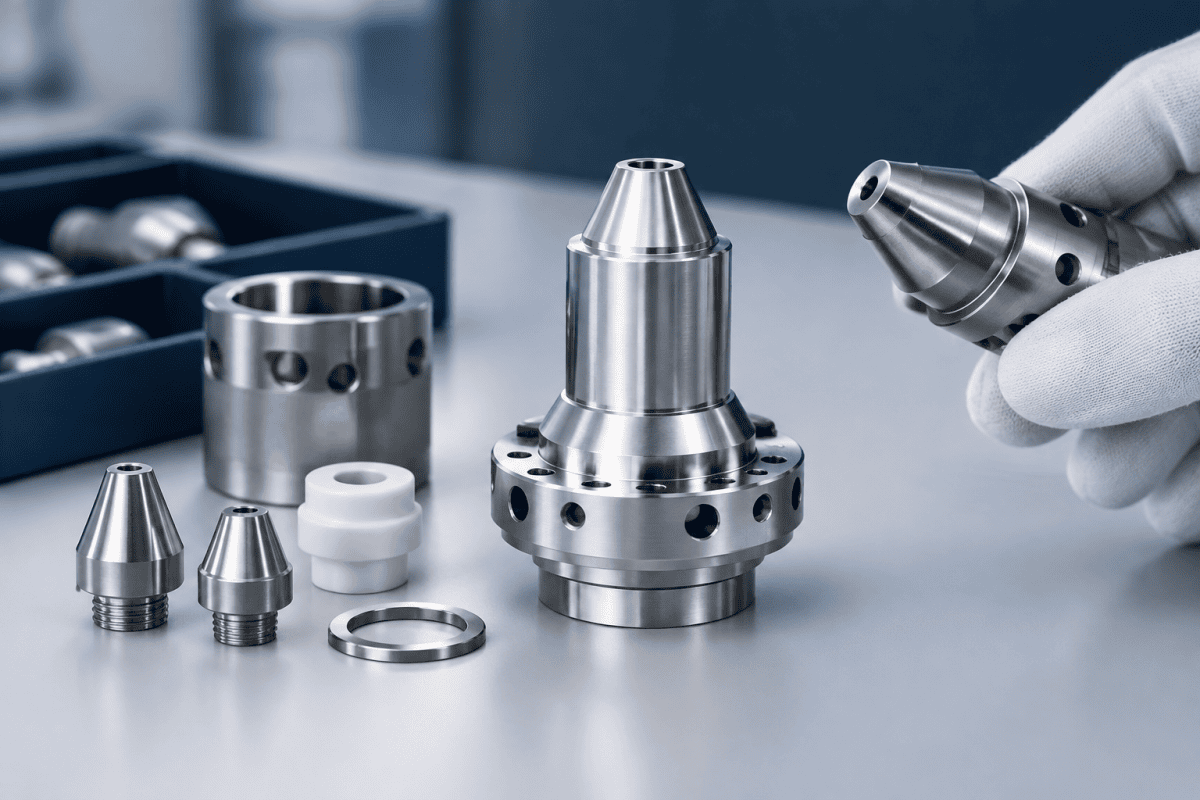
Okt.
Beschaffung Nextrom OVD Brenner-Ersatzteile ist selten eine einfache Katalogübung. Bei der Außenabscheidung (OVD) ist der Brenner kein einzelnes austauschbares Element, sondern eine Baugruppe aus Brennerköpfen, Düsenplatten, Gasverteilungskanälen, Dichtungsmerkmalen und Montageschnittstellen, die unter thermischer und chemischer Belastung zusammenwirken müssen. Wenn ein Ersatz erforderlich ist, lautet die eigentliche Frage nicht nur “Welche Teilenummer passt?”, sondern “Welche Geometrie, welches Material und welche Gasanschlussschnittstelle reproduzieren das Prozessverhalten, auf das die Linie angewiesen ist?” Dieser Leitfaden erklärt, wie Nextrom-Abscheidungsbrennerkomponenten korrekt identifiziert, die Passung vor der Installation verifiziert und eine Beschaffungsanfrage vorbereitet wird, die das Risiko von Ausfallzeiten und Ausschuss reduziert. Da der Brenner im Zentrum der Abscheidungszone sitzt, ist jede Entscheidung zu Nextrom OVD-Brennerersatzteilen letztlich eine Prozessentscheidung, und die unten beschriebenen Prüfungen sind darauf ausgelegt, diesen Zusammenhang von der ersten Messung bis zum finalen Angebot sichtbar zu halten.
OVDParts liefert Standardkomponenten für Glasfasergeräte und fertigt kundenspezifische Teile nach Zeichnungen, sodass der praktische Fokus hier auf Bewertung und Verifizierung liegt und nicht auf irgendeiner Behauptung markenübergreifender Kompatibilität. Passung und Funktion müssen stets anhand Ihrer eigenen Dokumentation und Betriebsbedingungen bestätigt werden. Da die meisten Brennerbaugruppen sicherheitskritisch sind, ist es zudem hilfreich, anerkannte Normen für die Gassystemauslegung heranzuziehen; die SEMI-Normen für Gaszuführung und Anlagensicherheit der Halbleiterindustrie sind eine nützliche Grundlage für Schnittstellen- und Dichtheitsanforderungen.
Warum Nextrom OVD-Brennerersatzteile nicht allein anhand des Namens austauschbar sind
Anlagen aus verschiedenen Generationen derselben Plattform können einen vertrauten Namen teilen und sich dennoch in kritischen Details unterscheiden. Ein “Nextrom OVD-Brenner”-Ersatz kann sich je nach Gesprächspartner auf einen gesamten Brennerkörper, einen Brennerkopfeinsatz, eine Frontplatte, ein Düsencluster oder einen Verteilerblock beziehen. Zwei Nextrom OVD-Brennerersatzteile, die mit demselben generischen Begriff beschrieben werden, können sich unterscheiden in:
- Montageflanschmuster, Schraubenabstand und Positionierungsmerkmalen
- Anzahl, Durchmesser und Anordnung der Gaskanäle
- Düsen- oder Öffnungsgeometrie und Oberflächenbeschaffenheit
- Gaseinlasspositionen, Gewindearten und Dichtungsmethode
- Körpermaterial und etwaiger Schutz- oder Barriereschicht
- Gesamtlänge und Abstand von der Montagefläche zum Flammenaustritt
Da der Brenner die thermischen und chemischen Randbedingungen des Abscheidungsprozesses festlegt, können kleine Geometrieunterschiede das Rußabscheidungsverhalten, die Flammenform und letztlich die Preformqualität verändern. Deshalb sind ein Name, ein Foto oder ein vergleichbar aussehendes Teil ein Ausgangspunkt für die Verifizierung, nicht ein Nachweis der Passung. Zwei Nextrom OVD-Brennerersatzteile, die von außen identisch erscheinen, können vollständig voneinander abweichen, sobald Gas strömt.
Identifizierung des tatsächlich benötigten Teils
Bevor Sie einen Lieferanten kontaktieren, grenzen Sie die Anfrage auf eine bestimmte Komponentenklasse ein. Für OVD-Brenner gehören zu den gängigen Ersatzkategorien:
- Brennerkopf- oder Brennerspitzeneinheiten — die Heißendstruktur, die die Flamme formt und lenkt
- Düsenplatten und Öffnungskomponenten — die Präzisionsmerkmale, die einzelne Gasströme dosieren und formen
- Frontplatten — die exponierte Oberfläche, auf der sich Ruß ansammeln kann und wo der Oberflächenzustand die Flammenstabilität beeinflusst
- Verteiler- und Verteilungsblöcke — interne Kanäle, die Gase aufteilen und zum Düsenarray leiten
- Montage- und Dichtungshardware — Flansche, Dichtungen und Schnittstellenkomponenten, die Ausrichtung und Dichtheit gewährleisten
Wenn Sie noch feststellen, ob ein Brennerproblem ein Verschleißproblem oder ein Prozessproblem ist, kann der Leitfaden zu welchen OVD-, VAD- und MCVD-Brennerkomponenten separate Spezifikationen benötigen helfen, diese Entscheidung einzuordnen, bevor Sie etwas bestellen. Er klärt auch, wie diese Komponenten in die breitere Familie der Preform-Brennerteile passen und wo ein Nextrom OVD-Brennerersatzteil innerhalb dieser Familie einzuordnen ist.
Welche Dokumentation Sie vor der Beschaffung benötigen
Der einzelne wirksamste Schritt bei der Beschaffung von Nextrom OVD-Brennerersatzteilen ist die Zusammenstellung eines vollständigen technischen Pakets. Ein Lieferant, der mit einem klaren Zeichnungssatz arbeitet, kann präzise und schnell anbieten; ein Lieferant, der nur mit einem Teilenamen arbeitet, kann nur raten. Bereiten Sie Folgendes vor, sofern verfügbar:
- Baugruppen- und Detailzeichnungen — einschließlich Schnittansichten, die interne Gaskanäle zeigen
- Critical dimensions — bore diameters, orifice sizes, flange thickness, overall length, and center-to-center distances
- Material and coating requirements — stated as a specification, not a guess from appearance
- Gas interface details — inlet thread standards, tube fitting types, and number of separate gas lines
- Mounting interface data — bolt pattern, pilot diameter, and any rotational alignment key
- Operating context — which process the torch serves, the role of the component, and the environment it sees
- Photographs of the removed part — including any wear, cracking, or deposits that prompted replacement
Where drawings are unavailable, dimensions can often be recovered by measuring the removed component carefully, ideally before it is further damaged or cleaned. Note that reverse engineering a burner begins with measurement discipline, and the guide to custom burner sourcing and reverse engineering explains how material selection and dimensional recovery interact. A clean measurement set is often the difference between a first-time-fit replacement and a costly rework loop.
It also pays to organize the package by component level. A request that mixes a Nextrom OVD torch spare part with unrelated consumables tends to slow review, because the reviewer cannot tell which dimensions belong to the torch and which belong to something else. Keep each drawing, photo, and measurement labelled with the assembly it belongs to, and note the revision or serial context if the torch has been modified over its service life.
Passungsverifizierung: Die wichtigsten Prüfungen
Fit verification is where most replacement problems are caught before they reach the lathe or the line. Treat the following as a checklist and document the results.
Maßliche Verifizierung
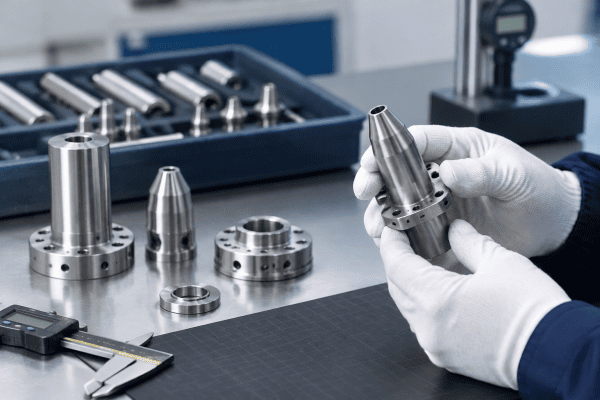
Compare the replacement against the original at the features that control alignment and flow. Concentricity between the mounting datum and the nozzle axis is especially important, because eccentricity can distort the flame and affect the deposited soot profile. Maintained concentricity is also what keeps the refractive index profile stable, so the same dimension values should be treated as process data, not as incidental geometry. Record the readings for each Nextrom OVD torch spare part so later orders can be compared against a verified baseline.
Gasanschluss-Verifizierung
Confirm that the number of gas circuits, the inlet positions, and the connection types match. A physically similar torch with a different channel count or inlet arrangement is not a drop-in replacement. Internal pressure balancing across multiple channels also depends on passage geometry, so a rebuilt or newly manufactured Nextrom OVD torch spare part should be reviewed against the original flow-path assumptions, not just the visible outer dimensions. Where a channel count differs, treat the part as a new design rather than a spare.
Materialverifizierung
Do not assume a material from a product name or category. Material suitability depends on the component’s function, its temperature exposure, the chemical environment, and the engineering requirements of the process. A faceplate, a structural body, and a sealing element may each call for a different alloy or coating. Where aluminum components are part of the assembly, confirm that the application actually supports that choice by reviewing the component role, the thermal load, and the mounting interface in the context of your own equipment records. When in doubt, describe the duty cycle rather than naming a metal.
Oberflächen- und Finish-Verifizierung
Surface finish at nozzle orifices and faceplates influences flow characteristics and deposit build-up. Check that the finish specified on the drawing has been achieved, and inspect for burrs, scratches, or contamination that could disturb the flame or seed soot accumulation. Preventing deposit build-up on the burner faceplate often begins with surface condition at installation, which is why the incoming inspection step deserves the same attention as dimensional checking. For a Nextrom OVD torch spare part, a finish callout is a functional requirement, not a cosmetic one.
Montageversuch-Verifizierung
Where practical, dry-fit the replacement into the torch assembly before connecting gas. Confirm that bolt holes align without force, that the pilot diameter seats correctly, and that no rotationally keyed feature is being installed backwards. Record any shimming, adjustment, or rework required. A dry fit that needs persuasion is a warning sign, because a Nextrom OVD torch spare part that binds at assembly may distort when the assembly heats up to operating temperature. Reviewing the fit sequence on the bench is far cheaper than discovering an interference on the line.
Dokumentation der Ergebnisse
Keep the verification records with the maintenance history for the torch station. Over time, those records show which dimensions drifted, which Nextrom OVD torch spare parts were replaced most often, and whether a supplier’s parts consistently arrive within tolerance. That history is the most reliable input to future spares planning, and it turns each installation into a small data point that improves the next one.
Bewertung eines Ersatzlieferanten
When comparing suppliers for Nextrom deposition torch components, ask questions that separate a genuine engineering supplier from a parts reseller:
- Can they manufacture from your drawing, or must they work from a sample?
- How do they confirm critical dimensions, and what inspection records accompany the part?
- Can they propose a material based on your stated operating conditions rather than a default?
- Do they ask about gas connections and mounting interfaces before quoting?
- Are they clear about what they can and cannot verify without your equipment documentation?
OVDParts provides both catalog components and OEM/ODM machining services for non-standard geometries, which is often the practical route when a legacy torch is no longer supported by the original equipment manufacturer. For a broader view of available component categories, the OVDParts product range includes OVD burner and deposition-related items you can compare against your requirement, whether you need a single replacement or a small batch of Nextrom OVD torch spare parts.
It is also worth asking how a supplier handles a first article. A supplier prepared to produce one piece, document its inspection, and wait for your approval before running a batch is generally a better partner for Nextrom OVD torch spare parts than one who treats every order as a one-shot transaction. The first-article route costs a little more time, but it catches a misread dimension before it multiplies across a production run.
Häufige Beschaffungsfehler und wie man sie vermeidet
Ordering by name only. A part description rarely captures the dimensions and interfaces that determine fit. Always attach a drawing or measured dimensions before you order Nextrom OVD torch spare parts.
Assuming cross-platform compatibility. Components from different torch designs may look similar while differing in nozzle layout or gas routing. No compatibility should be assumed; verify against drawings, dimensions, gas connections, materials, and the application.
Ignoring the reason for the original failure. If a nozzle eroded or a faceplate clogged, the cause may lie in process conditions rather than the part itself. Understanding the process side of the failure can prevent a replacement Nextrom OVD torch spare part from failing the same way.
Skipping incoming inspection. Even a well-made part should be checked against the drawing on receipt. Record the measurements so future orders have a baseline, and keep the record with the asset history for that torch station.
Buying on price alone. A cheaper part that arrives with an out-of-tolerance orifice or a mismatched inlet thread is not a saving. For Nextrom OVD torch spare parts, the cost of a failed installation, a scrapped preform, or an unplanned outage usually dwarfs the difference between two quotations. Compare inspection documentation and lead time alongside price.
Erstellung einer Angebotsanfrage
A strong request includes the drawing or measured dimensions, the material and finish specification, gas connection details, the mounting interface, photographs of the removed part, and a short description of the component’s role and operating environment. If any of these are missing, state which ones are unavailable so the supplier can advise on how to proceed. To move from evaluation to a quote, send your component details and drawings to the OVDParts team for review. A complete package typically shortens the quotation cycle for Nextrom OVD torch spare parts and reduces the number of clarification emails needed before machining begins.
It also helps to state the order context: is this a one-off replacement, a scheduled rebuild, or part of a spares inventory plan? Suppliers can often quote more competitively and schedule more predictably when they understand whether a part is needed urgently or as part of planned maintenance. If the torch has been rebuilt previously, mention which components were changed and when, because that history helps the supplier judge which interfaces may no longer match the original drawing.
Finally, state the acceptance criteria up front. If you intend to inspect the part against specific dimensions, say so in the request. Suppliers who know how a Nextrom OVD torch spare part will be checked can plan the machining sequence and inspection steps accordingly, which reduces the chance of a returned shipment and keeps the replacement routine predictable.
Häufig gestellte Fragen
Kann OVDParts garantieren, dass ein Teil in meinen Nextrom-Brenner passt?
No supplier can guarantee fit without your documentation. Compatibility must be verified against drawings, dimensions, gas connections, materials, and application requirements. OVDParts is not an authorized representative of or affiliated with any equipment manufacturer, and parts are supplied to your specification or to the dimensions you provide.
Was, wenn ich nur das Altteil und keine Zeichnung habe?
Measure the removed component at all critical features and photograph it from multiple angles, including any markings. Reverse engineering from a sample is possible, but the resulting part should be confirmed against your assembly before installation. Identifying which features are process-critical, rather than decorative, determines which measurements matter most when specifying Nextrom OVD torch spare parts.
Welches Material sollte ich für einen Brennerersatz spezifizieren?
Material choice follows function. Consider the component’s temperature exposure, the gases it contacts, its structural or sealing role, and any coating requirements. State these conditions in your inquiry rather than selecting a material by name alone.
Wie erkenne ich, ob ein Brennerproblem ein Teileproblem oder ein Prozessproblem ist?
Inspect the part for wear, cracking, clogging, or dimensional change, then compare findings against process records. A confirmed diagnosis usually requires correlating a physical observation with process data; a suspected cause should be verified before ordering a replacement.
Wie viele Ersatzteile sollte ich auf Lager halten?
That depends on your maintenance history and lead times. Review how often each Nextrom OVD torch spare part has been replaced, note the longest quoted lead time, and hold enough stock to cover the interval plus a safety margin. For parts with long lead times or a history of repeat failures, a small buffer is usually cheaper than an unplanned outage.
Kann ich Teile verschiedener Lieferanten an einem Brenner mischen?
You can, but only if the critical interfaces have been verified. Mixing Nextrom OVD torch spare parts from several sources increases the number of tolerances that must stack correctly. Treat each part against the assembly drawing rather than against another supplier’s part.
Abschließende Überlegungen zu Nextrom OVD-Brennerersatzteilen
Reliable sourcing of Nextrom OVD torch spare parts comes down to treating every replacement as an engineering decision rather than a purchasing transaction. Accurate drawings, disciplined dimensional measurement, careful review of gas and mounting interfaces, and clear communication about the operating environment are what allow a supplier to deliver a part that performs, not merely one that arrives. Buyers who document their Nextrom deposition torch components consistently build a reference base that shortens every future order and makes verification faster. Keep the records, compare each delivery against the verified baseline, and treat the next Nextrom OVD torch spare part as an opportunity to refine that baseline rather than to repeat an old assumption. To evaluate your next order or commission a custom replacement, send your drawings, measured dimensions, material requirements, and operating conditions for an engineering review and quotation, or review the related component guides linked above. Handled this way, each replacement becomes a repeatable part of your maintenance routine rather than a recurring source of uncertainty.
